
A CQC good rating signals that a care home delivers safe, effective, and compassionate care across key areas assessed by regulators. It reflects consistency, not just compliance, giving families a clearer sense of trust when choosing care. In this article, we explain what does CQC good rating mean, how care homes are assessed, what a good rating really looks like in everyday life, and how families can use this insight to make confident decisions.
What Does CQC Good Rating Mean
So, what does CQC good rating mean in practical terms? It means a care service performs well across all key areas assessed by the Care Quality Commission. The service meets expected standards, provides reliable care, and maintains a safe, respectful environment for residents.
A good rating is not just acceptable. It reflects a level of quality where residents receive consistent support, staff understand individual needs, and leadership ensures that standards remain stable over time. In the broader scale of CQC ratings, it sits just below outstanding, which represents exceptional and innovative care.
In real life, a good rating suggests that families can expect a dependable experience. Staff respond appropriately, the environment feels secure, and care plans reflect each resident’s personal requirements rather than a one-size-fits-all model.
What Is a CQC Rating and Why Does It Matter in Care Homes
A CQC rating comes from the Care Quality Commission CQC, which oversees health and social care services across England. The organisation operates as the independent regulator responsible for monitoring care quality and protecting vulnerable individuals.
When the CQC inspects a care service, it evaluates whether that service meets national standards. This matters because families often rely on these ratings when comparing care homes. Without a trusted benchmark, choosing a suitable home would feel uncertain.
For anyone exploring options such as a care home in Chichester or nearby areas, understanding what a CQC rating is can make the process more informed. It provides a clear snapshot of how well a service is performing and whether it delivers the level of care families expect.
How CQC Inspects and Rates Care Services
When people try to understand what does CQC good rating mean, they often overlook how that judgement is actually formed. It’s not based on a quick visit or a checklist alone. The process is layered, detailed, and built around real experiences within the care setting.
Inspectors don’t simply observe; they ask questions, review records, speak with residents and families, and watch how care unfolds throughout the day. The goal is to see whether the service works well when no one is on display. Below is a clearer breakdown of how the inspection process works in practice:
| Inspection Area | What CQC Looks For | Why It Matters for Residents |
| Safe | Protection from harm, proper safeguarding systems | Ensures residents feel secure and protected |
| Effective | Staff training, care planning, and health outcomes | Supports physical and emotional well-being |
| Caring | Kindness, dignity, and respect in daily interactions | Shapes the overall living experience |
| Responsive | Personalised care, adaptability to needs | Ensures care fits the individual, not the system |
| Well-led | Leadership, culture, and accountability | Drives long-term quality and stability |
What matters here is balance. A service might excel in one area, but a good rating only comes when all key areas meet a strong, consistent standard. That’s where the difference lies.
CQC Rating Levels
Before diving deeper, it helps to see how ratings are structured across the sector. These levels provide context when comparing services.
| Rating | Meaning | What It Means for Residents |
| Outstanding | Exceptional care delivery | Residents receive highly personalised, innovative care |
| Good | High-quality and consistent care | Safe, respectful, and reliable daily support |
| Requires Improvement | Some areas fall short | Improvements needed to meet expected standards |
| Inadequate | Serious concerns identified | Service is not performing and may pose risks |
A good rating sits firmly in the upper range. It reflects a service that performs well across all areas without significant gaps. For most families, this level provides reassurance that care is dependable and structured.

What Good Looks Like in a Real Care Home
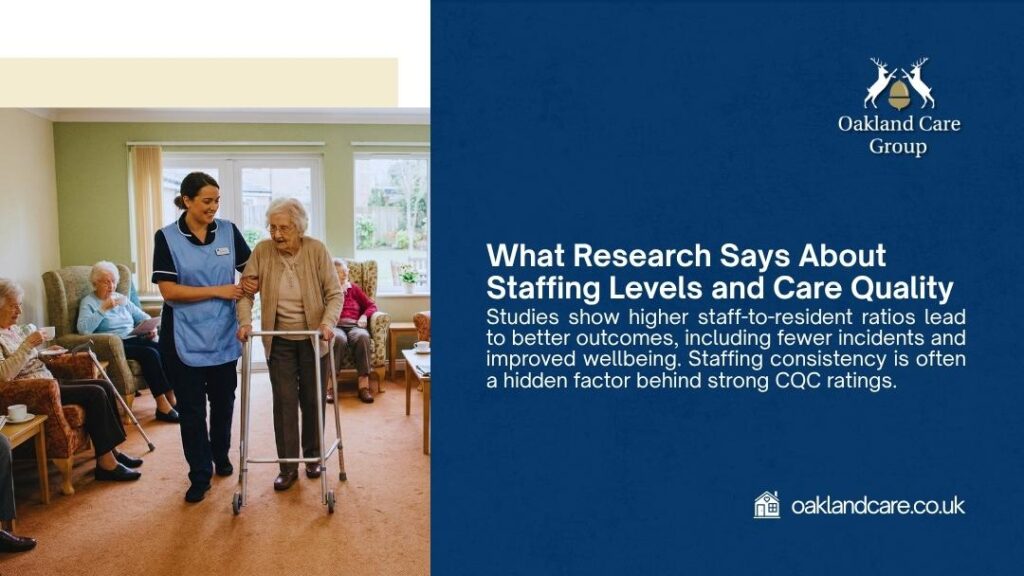
On paper, a good rating sounds reassuring. But in reality, it shows up in ways that feel much more personal. It’s the way staff pause to listen rather than rush through tasks. It’s how residents are encouraged to maintain routines that feel familiar. It’s the quiet consistency of meals arriving on time, medication handled correctly, and conversations that feel genuine rather than rehearsed.
In well-run environments, there’s a noticeable rhythm. Nothing feels forced. Residents move through their day with a sense of ease. Staff communicate clearly, not just with each other but with families too.
This is often what families are really searching for when they explore what makes a good care home. Not perfection, but reliability paired with warmth. A good rating tends to reflect exactly that balance.
Good vs Outstanding: What’s the Real Difference?
It’s easy to assume that anything less than outstanding falls short. In reality, the gap between good and outstanding is more nuanced than most expect.
A good rating confirms strong, consistent delivery. Outstanding, however, signals something more distinctive, often innovation, creativity, or leadership that goes beyond standard expectations.
| Aspect | Good Rating | Outstanding Rating |
| Care Delivery | Consistent and dependable | Highly personalised and exceptional |
| Environment | Comfortable and well-maintained | Enriched, often with enhanced lifestyle options |
| Staff Approach | Skilled and attentive | Proactive, often exceeding expectations |
| Leadership | Stable and effective | Inspirational and forward-thinking |
For many families, a good rating already represents a level of care that meets their needs fully. Outstanding may offer added layers, but good remains a strong and reliable benchmark.
What Families Should Look for Beyond a CQC Good Rating
A rating can guide decisions, but it should not replace personal judgment. Two care homes with the same rating can feel entirely different once you step inside. The real test often lies in what you see and sense during a visit.
| Consideration | What to Notice | Why It Matters |
| Atmosphere | Calm, welcoming, not clinical | Reflects daily living experience |
| Communication | Clear, open dialogue with staff | Builds trust and transparency |
| Personalisation | Individual routines respected | Supports dignity and independence |
| Family Involvement | Encouraged participation and updates | Keeps families connected |
Exploring guidance on how to choose a care home can help families focus on what truly matters beyond the rating itself.
How to Check a Care Home’s CQC Report
Reading a CQC report properly requires more than a glance at the headline rating. The detail within the report often reveals far more than the overall score.
Each section explains how the service performed under specific key questions. These insights help families understand strengths and areas that may need attention.
Pay close attention to the language within the report. Phrases such as service is not performing or requires improvement carry weight and often signal underlying concerns. On the other hand, consistent positive observations across sections indicate stability.
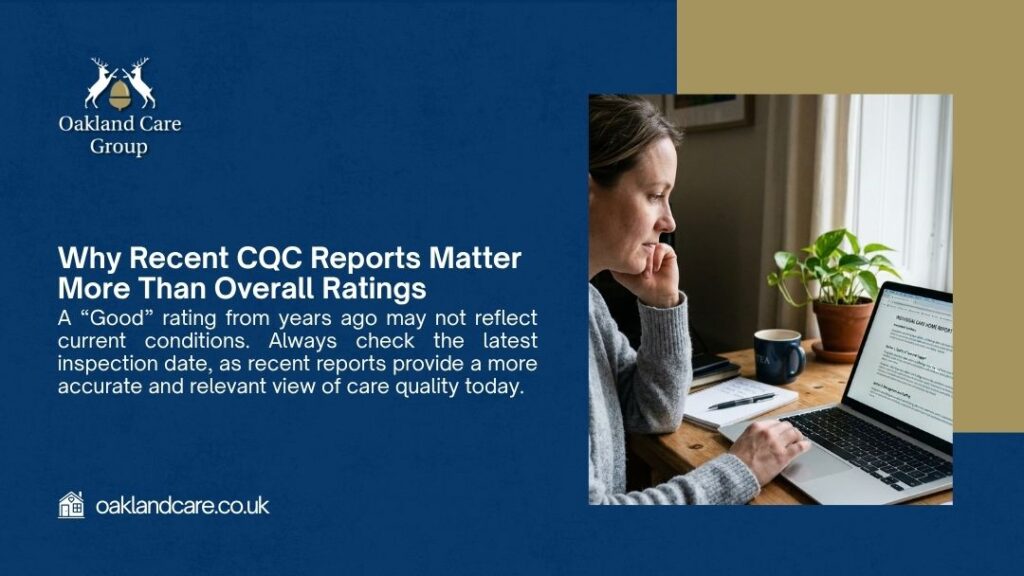
Another detail worth noting is the page’s last updated date. A recent report offers a more accurate picture, while older reports may no longer reflect current standards or improvements made since inspection.
Signs a Care Service Is Performing Well (Even Beyond Ratings)
A strong service often reveals itself in ways that sit outside formal assessments. These are the moments that families notice instinctively.
| Indicator | What It Looks Like | What It Suggests |
| Staff Behaviour | Calm, respectful, unhurried | Confidence and proper staffing levels |
| Resident Mood | Engaged, relaxed, socially active | Positive living environment |
| Daily Flow | Smooth routines without disruption | Strong organisation and planning |
| Environment Feel | Homely rather than institutional | Focus on comfort and dignity |
These details often confirm whether a care home is truly delivering quality of care, not just meeting inspection standards.
Choosing the Right Care Home Near You
Location shapes the entire experience of care, not just convenience. Families who remain close can visit more often, which helps maintain emotional connections and reassurance.
For example, those searching for a care home in Chichester, a care home in Bognor Regis, or a care home in Littlehampton often prioritise familiarity alongside quality. Being near known surroundings can ease the transition for residents.
Beyond geography, it’s worth considering how each care home integrates into its local community. Some services actively engage with nearby areas, creating a stronger sense of belonging. This often aligns with providers that focus on community-led care rather than isolated living.
Common Questions About CQC Ratings
Many families have similar concerns when exploring ratings, especially if this is their first time navigating care decisions.
| Question | Answer |
| Can a rating change? | Yes, ratings can improve or decline after inspections |
| How often are inspections carried out? | Regularly, with additional visits if concerns arise |
| Does good mean perfect care? | No, it means consistent and reliable care |
| What if a service requires improvement? | It may still operate, but changes are expected |
Understanding these points helps place the rating into context rather than viewing it as a fixed judgment.
Why a Good Rating Still Matters More Than You Think
A good rating often carries more weight than people initially assume. It reflects a service that consistently meets expectations across all key areas without significant gaps.
In a sector where trust plays a central role, consistency becomes more valuable than occasional excellence. Families need reassurance that care will remain stable over time, not fluctuate.
This is where a good rating stands out. It indicates that systems are in place, staff are supported, and leadership is functioning effectively. These elements create a foundation that residents can rely on daily.
Making the Right Care Decision for Your Loved One
The decision to move a loved one into care rarely feels straightforward. It often brings a mix of concern, responsibility, and uncertainty.
Guidance around moving a parent into a care home can help families approach this step with more clarity. At the same time, understanding the emotional side, including the guilt of putting a parent in a care home, can make the process feel less isolating.
What often helps is taking time. Visiting multiple care homes, asking questions, and observing daily life can provide a clearer sense of what feels right. When a service combines a good rating with a warm, well-run environment, confidence tends to follow naturally.
What to Check During a Visit
While ratings provide a starting point, visiting in person often confirms whether a care home feels right.
| Area | What to Observe |
| Staff Interaction | Respectful, attentive, and responsive behaviour |
| Environment | Clean, safe, and welcoming surroundings |
| Residents | Engagement, comfort, and social interaction |
| Activities | Variety and meaningful participation |
These observations often reveal more than any written report. A well-run care home tends to show its strengths immediately, without explanation.
A Good Rating Is Just the Beginning
Understanding what does CQC good rating mean gives families a strong foundation, but the decision goes beyond a single label. The real difference lies in how care feels day to day.
For those seeking a setting that combines quality, comfort, and a genuine sense of community, Oakland Care continues to set a strong example through its approach to personalised care and thoughtfully designed environments.
If you’re exploring options for a loved one, taking that first step can make all the difference. Reach out to Oakland Care to discover how their homes support residents not just with care, but with a place they can truly feel at home.
