
Choosing the right care home can feel overwhelming, especially when decisions must balance practicality, dignity, and family dynamics. Understanding how to choose a care home in the United Kingdom requires more than comparing facilities; it involves examining care standards, long-term suitability, and the emotional fit of each environment. This guide walks families through each stage clearly, allowing them to approach the decision with confidence rather than pressure.
How to Choose a Care Home and When a Care Home Becomes the Right Option
The point at which a care home becomes necessary rarely arrives all at once. It often follows several small shifts in day-to-day life, reduced mobility, increasing reliance on a partner or adult child, or growing difficulty managing meals, medication, and personal care.
Before moving into a care home, the first official step in the UK is the care needs assessment. This assessment, arranged through the local authority, evaluates whether residential care, nursing care or other forms of ongoing support are required. Social services oversee the process, and families can request it at any time.
An assessment does not commit anyone to entering a care home. It simply sets the foundation for understanding what level of support is needed now, and what changes may be expected over time. This early clarity prevents rushed decisions later and ensures that the type of care home chosen aligns with clinical needs, safety requirements, and quality-of-life expectations.
Types of Care Homes and How They Shape the Decision
Different homes provide different levels of support, and the match must reflect the individual’s care plan rather than convenience or location alone.
| Type of Care | Who It’s For | What It Supports | When It’s Most Helpful |
| Residential Care Home | Individuals who need day-to-day help but not medical supervision | Washing, dressing, meals, medication reminders, social activities, companionship | When someone is mostly independent but needs steady support with routine living |
| Nursing Home | People with ongoing medical conditions or complex needs | 24/7 clinical oversight, nurses on-site, medical monitoring, rehabilitation support | When a health condition requires consistent medical attention or supervision |
| Dementia-Specialist Home | Individuals living with Alzheimer’s or other forms of dementia | Memory-support environments, structured routines, cognitive activities, trained dementia staff | When memory issues or confusion begin affecting safety, orientation, or daily life |
| Respite Care (Short Stay) | Families needing temporary support or a trial stay | Short-term accommodation, personal care, access to staff and activities | When caregivers need a break or when families want to test whether long-term care is the right next step |
| Multi-Tier / Continuum-of-Care Home | Individuals whose needs may change over time | Residential → nursing → dementia support within the same community | When long-term flexibility and staying in one familiar place are a priority |
Regulation, Safety Standards, and What They Mean in Practice
Every registered care home in England is overseen by the Care Quality Commission (CQC). Inspection ratings reflect safety, leadership, responsiveness, care quality, and whether residents are treated with dignity. Families should read the latest inspection report closely, along with any recent updates following risk reviews or compliance actions. A “Good” or “Outstanding” rating is reassuring, but the narrative sections often reveal more than the headline grade.
It is also essential to understand contractual obligations before signing anything. Contracts explain what is included in the weekly fee, how often costs are reviewed, the circumstances that lead to additional charges, and what happens if personal funds drop below the local authority threshold.
Homes should always provide clear written information on notice periods, personal belongings policies, healthcare arrangements, and end-of-life planning. Any reluctance to disclose this is a warning sign.
Financial Planning, Funding Rules, and Long-Term Affordability
Paying for a care home in the UK is shaped by both personal finances and local council policy. After the care needs assessment, the next step is a financial assessment that determines whether the individual must self-fund or whether support may be available.
Costs vary widely across the country, and the difference between residential and nursing care can be substantial. Families can work through big questions like self-funding, eligibility thresholds, and shifting financial situations by learning how care-home costs actually work, including what to expect when paying care-home fees.
The UK system also includes rules governing deprivation of assets, property disregards, and top-up payments, and these must all be understood before making commitments. Some homes offer fixed-fee packages, while others adjust costs depending on care intensity.
It is vital to request a full written breakdown and ask how often fees are reviewed. Sustainable planning prevents upheaval later, especially when care home fees rise, or savings approach the funding limit.
Researching and Shortlisting Care Homes
When families begin comparing potential care homes, the goal is to gather enough reliable information to decide which places deserve an in-person visit. Online descriptions rarely give the full picture, so structured comparison helps clarify which homes genuinely align with the resident’s needs.
| Factor | What to Examine | How It Helps Narrow the List |
| Location & Accessibility | Distance for family visits, local transport, and GP links | Ensures ongoing support and regular contact |
| Inspection Reports | Latest CQC findings, any recent follow-ups | Confirms safety standards and governance quality |
| Care Services | Residential, nursing, dementia, respite | Matches support needs with the home’s capability |
| Home Reputation | Independent reviews, word-of-mouth, staff retention | Highlights cultural strengths or persistent concerns |
Using this approach gives clarity early on, making each subsequent step more focused and efficient.
What to Look For During a Care Home Visit
A visit reveals more in a single hour than weeks of online research, because atmosphere, staff behaviour, and resident interaction cannot be fully captured in reports. The aim is to observe real everyday life inside the home, not a staged version prepared for visitors.
| Area | What to Observe | Why It Matters |
| Daily Atmosphere | Calmness, resident engagement, noise levels | Reflects comfort, dignity, and emotional stability |
| Staff Interaction | Tone of voice, patience, and familiarity with residents | Indicates whether care is respectful and person-centred |
| Living Environment | Room quality, hygiene, and garden access | Influences wellbeing and long-term comfort |
| Mealtime Experience | Freshness of food, flexibility, and dining atmosphere | Shows whether nutrition and social time are prioritised |
These observations create a realistic picture of everyday routines, helping families understand whether the home’s culture aligns with the resident’s personality and needs.
A Closer Look at Long-Term Well-Being
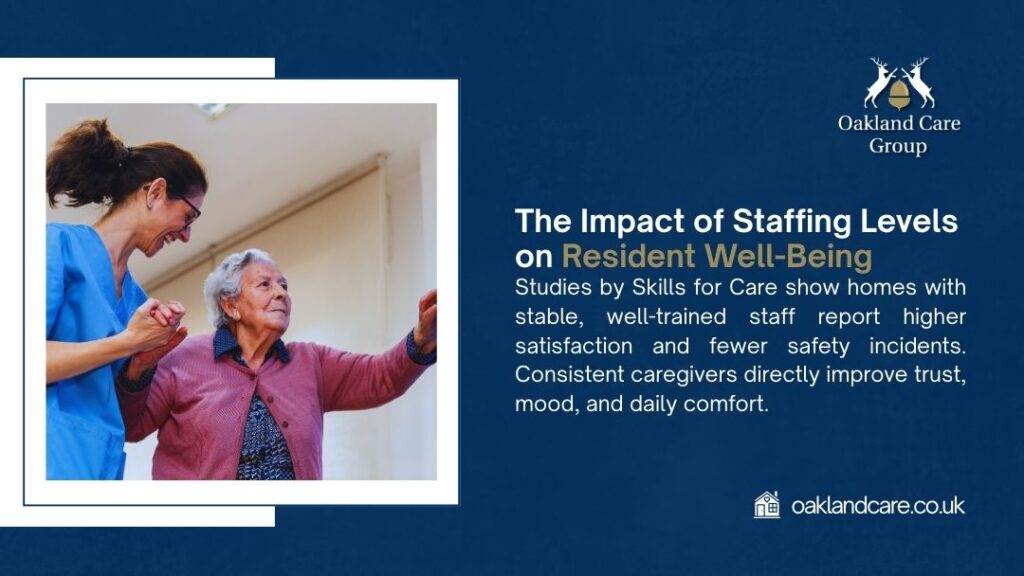
Good care homes focus on more than meeting immediate needs. They help residents maintain emotional stability, social connection, and a sense of purpose. Continuity of care is crucial; frequent turnover in staff disrupts routines and creates anxiety. High-quality homes build relationships over time, involve families in care reviews, and adapt support as conditions change.
Care plans should be updated regularly, reflecting medical guidance and the resident’s own preferences. Relatives should be encouraged to contribute to these discussions, and access should not be limited to formal meetings. Everything, from cultural considerations to dietary needs, should be part of a coordinated approach that respects individuality.
Special Situations That Influence Care Home Choice
Some circumstances require additional consideration, particularly when dementia, mobility challenges, or the needs of couples come into play. These situations often change the features that matter most during the selection process.
| Situation | Key Consideration | Why It Alters the Choice |
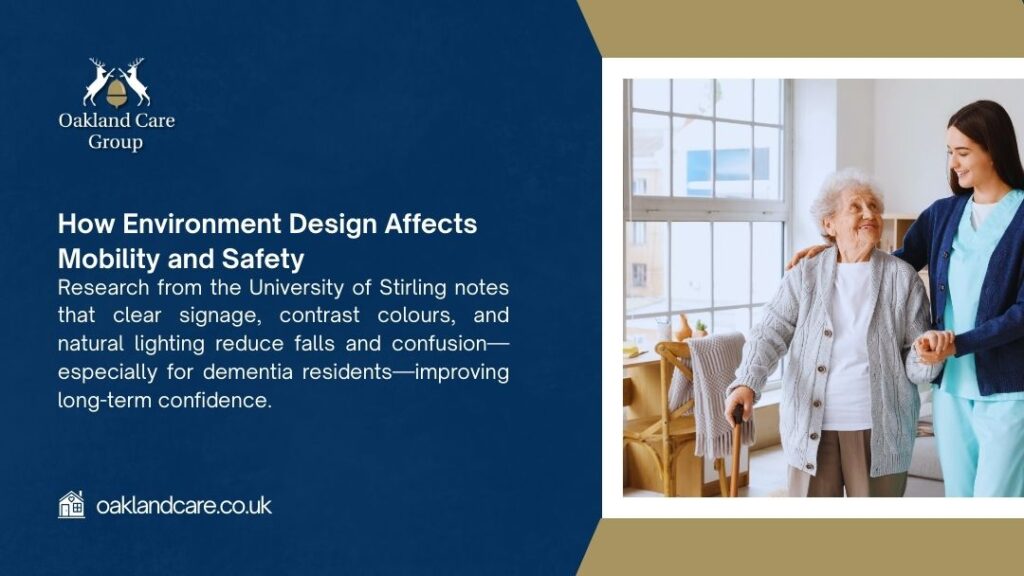
| Dementia Care | Memory-support design, predictable routines, secure layout | Reduces anxiety and supports cognitive stability |
| Couples with Different Needs | Flexible room arrangements, tiered care within one site | Keeps partners together while meeting individual needs |
| Progressive Conditions | Ability to increase support without relocation | Prevents disruption during future health changes |
| Short-Term Recovery | Availability of respite units and rehabilitation programmes | Helps evaluate whether long-term care may later be required |
Recognising these special situations early helps families avoid unsuitable options and directs them toward homes equipped to provide consistent, long-term support.
Comparison Tools to Support Decision-Making
Families often struggle to weigh multiple factors at once. The table below offers a neutral, structured method for evaluating each home after a visit.
Care Home Evaluation
| Category | Points to Compare | Why It Matters |
| Care Quality | Staff stability, responsiveness, and training depth | Indicates long-term consistency and resident safety |
| Environment | Room quality, cleanliness, accessibility | Reflects comfort and suitability for mobility needs |
| Social Life | Activities, community involvement, daily engagement | Supports well-being and reduces isolation |
| Medical Support | Access to nurses, GPs, specialists | Ensures care is appropriate for long-term conditions |
| Financial Clarity | Transparency of fees, review cycles, and included services | Prevents unexpected costs and future disputes |
Another table can help families consider broader life priorities, beyond clinical needs.
Personal Fit
| Area | Questions to Ask | Impact on Resident Experience |
| Independence | How much personal choice is preserved? | Helps maintain confidence and identity |
| Family Access | Are visiting arrangements flexible? | Encourages healthy relationships and emotional support |
| Cultural Comfort | Are dietary, religious, or language needs met? | Ensures inclusion and dignity |
| Future Planning | Can the home support increasing needs? | Reduces the risk of another disruptive move |

A Thoughtful Approach Makes the Transition Smoother
Reaching a confident decision becomes far easier when families take the time to understand how to choose a care home through a combination of assessment, research, and instinct. When families take a structured approach, make use of professional assessments, understand financial rules clearly, and spend time observing daily life within each home, the path becomes far less daunting. A carefully chosen home can restore stability, dignity, community, and a sense of safety.
If you are beginning the search and wish to explore high-quality care environments in established communities across the South East. In that case, you may find it useful to review trusted, purpose-built homes such as those located in Bognor Regis. Visiting homes early and comparing options with an open mind ensures the final decision supports both present needs and future well-being.
