
Quick Summary: What This Guide Covers
The signs an elderly parent can’t live alone safely show up in ordinary daily life, not in one dramatic moment. This guide groups them so you can work through them on your next visit, then sets out practical next steps for families in England.
| What this guide covers | Why it helps |
|---|---|
| Four groups of warning signs: body, mind, home and mood | Something concrete to look for instead of a vague worry |
| Changes that repeat or worsen | Help families explain what has changed over time |
| The point where living alone stops being safe | Settles the question most families circle around |
| What to do when a parent refuses help | Keeps the relationship intact while things still move forward |
| The England route: GP, council assessment, funding review | A practical starting point, with funding considered separately |
| Care options and costs in plain terms | Lets you compare calmly, before any decision is urgent |
Signs an Elderly Parent Can’t Live Alone: The Short Answer
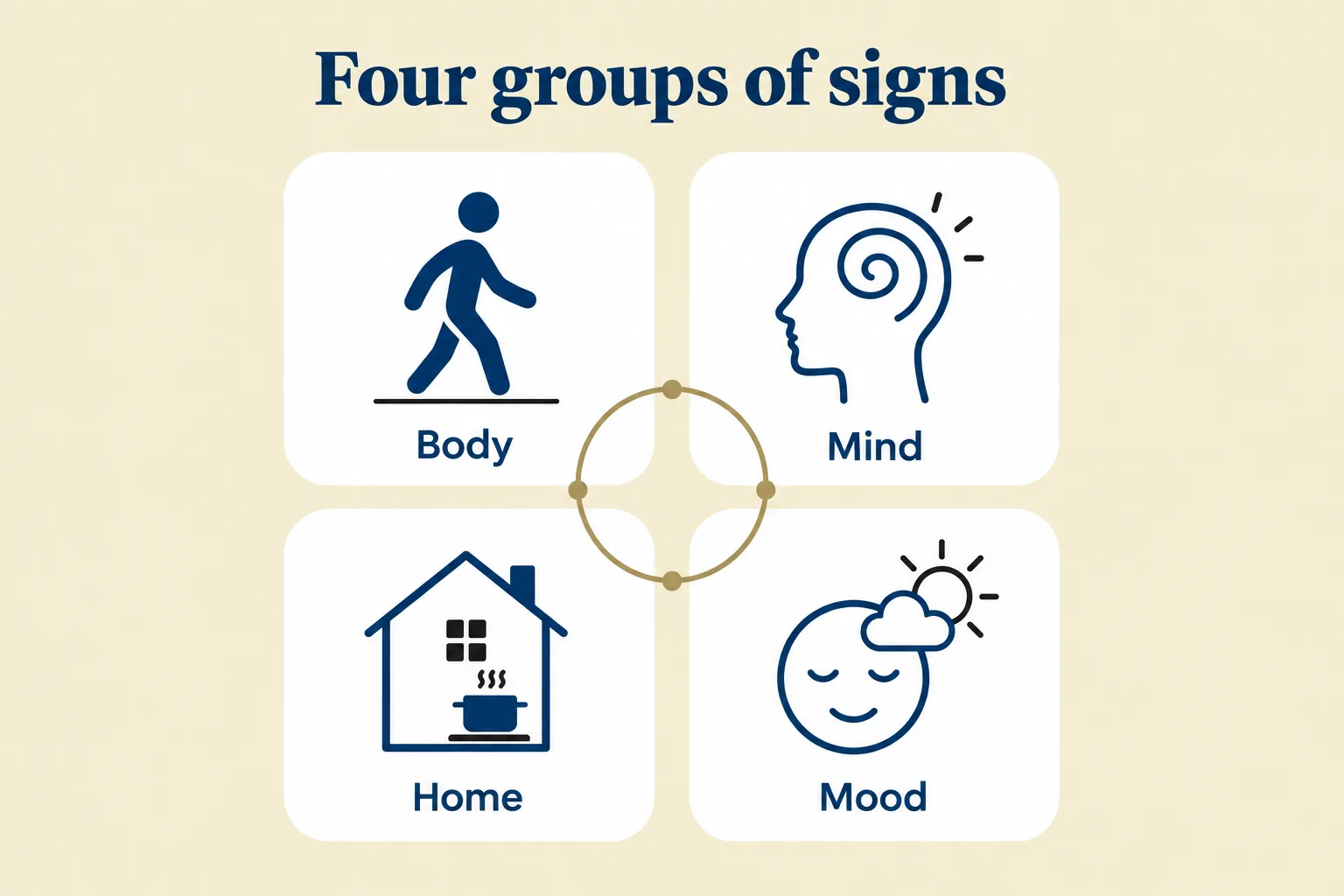
There is no single sign or fixed number of incidents that proves an older person can no longer live alone.
Repeated falls, missed medication, difficulty with daily tasks, or changes in the home can be reasons to ask for a health or care assessment. The right support depends on the person, the risks, and what help is available.
Look for changes that repeat, worsen, or affect more than one part of daily life. Note what happened and when, but do not use a set number of incidents as a pass-or-fail test.
Noticing them is not a betrayal of your parent’s independence. Starting a conversation early can give your family time to understand what is changing and explore support options together.
What to Note Before Asking for Help
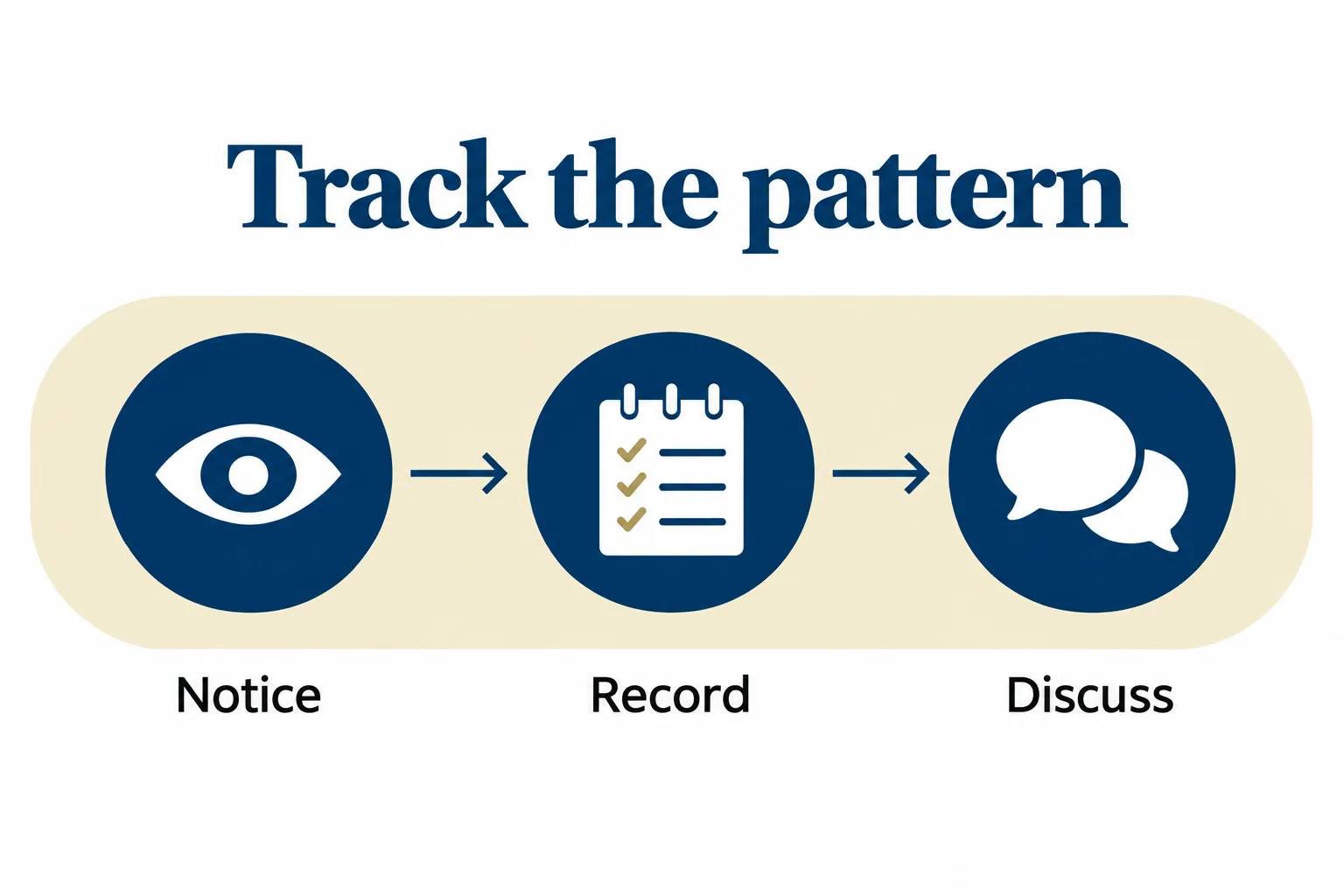
A short record can help your parents explain what is happening and help professionals understand the changes. For each concern, note:
- What happened and the date or approximate time.
- Whether it has happened before or is becoming more frequent.
- Which daily task was affected, such as preparing food, taking medication, bathing, or getting around safely.
- Any recent change in health, medication, hearing, vision, mood, or routine that your parents have mentioned.
- What support is already in place and whether it has helped.
Share observations respectfully. This is a way to prepare for a conversation, not to diagnose your parents or make decisions without them.
Physical and Health Warning Signs
| What you notice | Why it matters | What to check next |
|---|---|---|
| Unexplained bruises, grazes or cuts | Could follow a fall or another injury; ask what happened without assuming the cause. | If injuries recur, or a fall caused injury, contact a health professional. |
| Falls or near misses | Falls can have many causes and may affect confidence as well as safety. | Ask about the circumstances and discuss recurring falls with the GP or local falls service. |
| Difficulty rising or using stairs | A change in mobility can make everyday tasks harder or less safe. | Ask what feels difficult and consider a professional assessment before trying a physical test. |
| Weight loss, loose clothing, or little food at home | May indicate that shopping, preparing meals, appetite, or health has changed. | Ask about meals and arrange a GP review if weight loss or appetite changes are concerning. |
| Fatigue, confusion, or changes in drinking | These changes can have different causes and need context. | Record when they began and discuss sudden or ongoing changes with a health professional. |
| Spending much of the day in bed or a chair | May reflect changes in mobility, pain, mood, sleep, or general health. | Ask what has changed and discuss persistent concerns with the GP. |
| Uncollected prescriptions or confusion about tablets | May mean the medication routine has become difficult to manage. | Ask the GP or pharmacist to review the medicines and how they are being taken. |
| Changes in laundry or personal care | May indicate that washing, dressing, or continence needs have changed. | Raise the concern sensitively with the GP or care professional. |
NHS guidance explains what to do after a fall and why memory concerns are worth discussing with a GP. These resources can help families prepare questions; they cannot determine whether someone is safe to live alone. See NHS advice on falls and NHS advice on memory loss.
Cognitive and Memory Red Flags
A forgotten name on its own does not establish a safety problem. Getting lost on a familiar route, repeated confusion, or difficulty managing familiar tasks deserves attention, especially if it is new or worsening.
Other changes to note include repeated questions, missed appointments, difficulty managing bills, or a noticeable change in driving. These signs can have different causes. Ask the person what they have noticed and discuss new or worsening memory concerns with their GP. If a health professional advises that a condition must be reported to the DVLA, follow the current DVLA guidance.
Immediate safety concerns may include leaving a hob on, becoming lost, or going outside at night without being able to get home safely. Respond to the specific risk and seek professional advice.
None of this is a diagnosis for a family to make. Arrange a GP appointment and describe specific changes rather than offering only a general impression. If you are discussing emergency care preferences, Oakland Care’s page about a ReSPECT form explains that document.
What the Home Itself Tells You
If your parents are comfortable with it, looking around the home together may help you notice practical difficulties that are hard to describe over the phone. Treat what you see as a prompt for a conversation, not proof that your parents cannot manage.
| Room | What to look at | Next step to consider |
|---|---|---|
| Hall and stairs | Clutter, loose rugs, trailing cables, poor lighting | Discuss safer routes and lighting; ask an occupational therapist about adaptations if needed. |
| Kitchen | Burnt pans, spoiled food, or difficulty using appliances | Ask what is becoming difficult; consider suitable aids or appliance safety features. |
| Bathroom | Difficulty getting in or out of the bath, slippery surfaces, or trouble using the toilet | Ask a health or social-care professional about suitable equipment and adaptations. |
| Bedroom | Difficulty getting dressed, changing bedding, or reaching a light at night | Ask which daily tasks feel harder and whether small changes could help. |
| Heating and bills | Heating not being used in cold weather or unopened bills and letters | Ask whether managing bills or heating has become difficult and look into eligible support. |
| Garden and outside | Bins, deliveries, or outdoor paths becoming difficult to manage | Ask whether practical help from family, neighbours, or local services would be welcome. |
Some changes or equipment may make particular tasks easier, but adaptations do not remove every risk. If you are unsure what would help, ask the council or a relevant professional about an assessment.
Emotional, Behavioural and Social Signs
Mood and social connection matter alongside mobility. Notice withdrawal from friends or activities, declined invitations, or anxiety about going out. Ask whether the change is linked to health, transport, confidence, or another concern.
Some people may minimise difficulties because they are worried about losing independence or having to move. Ask what matters most to your parent and discuss specific examples without turning the conversation into an argument.
Irritability or withdrawal can have many causes, including pain, hearing difficulties, medication changes, low mood, or anxiety. Do not assume the cause; note what has changed and raise persistent concerns with the GP.
If caring is affecting your own health or daily life, ask the council about a carer’s assessment and discuss what support may be available. Respite care may be one option; availability and suitability depend on the provider and the person’s needs.
At What Point Should an Elderly Person Not Live Alone?
There is no single threshold that applies to every person. The key question is whether the person’s needs and risks can be managed with the support available, including help at home, equipment, or regular visits. A GP and the local council can help assess what is needed.
Certain events need prompt attention, such as a serious injury, a fire risk, becoming lost, or being unable to access food or fluids. A single event may call for urgent support, but it does not by itself decide which long-term care setting is right.
More support does not always mean moving into a care home. Depending on the person’s needs, options may include home-care visits, equipment, help with meals, day care, respite, or residential care. The appropriate level of support should be based on an individual assessment.
What Happens When an Elderly Person Can No Longer Live Alone?
The steps below describe the system in England. Other UK nations have different assessment and funding arrangements. The order may vary, especially when a concern is urgent.
Step 1: Speak with the GP about health changes. Describe when they began, what has changed, and any recent medication or routine changes. A clinician can advise whether further checks are needed.
Step 2: Ask the local council for a care needs assessment. In England, an adult who appears to need care and support can ask the council to assess their needs, regardless of their finances. A carer can also request an assessment of their own needs. See care needs assessment guidance.
Step 3: Discuss funding if the council may need to arrange support. A financial assessment can help determine what the person may need to contribute. It is separate from the assessment of care needs.
Step 4: Explore support options with your parent. If a move is being considered, our guide to moving a parent into a care home covers practical and emotional questions.
A care home may suit some people, but it is not the only outcome of asking for help. Discuss the options with your parent and the professionals involved before deciding what setting is appropriate.
When a Parent Refuses Help
Raise one topic at a time. Ask questions rather than deliver verdicts, and lead with their goals rather than your fears: staying well enough to see the grandchildren carries more weight than a list of things they can no longer do.
A neutral third party helps enormously. Advice lands differently from a GP, district nurse or trusted friend than from a son or daughter. Offer graduated steps so the choice stays theirs, starting with something reversible such as day care or a short respite stay, then a trial visit to a home.
An adult’s right to make their own decisions depends on the circumstances and, where relevant, an assessment of their capacity for the specific decision. Do not assume that disagreement means a person lacks capacity. If you are concerned about self-neglect or immediate danger, contact the council’s adult safeguarding team or emergency services as appropriate.
Care Options Compared
| Option | Best suited to | Level of supervision | Typical trade-off |
|---|---|---|---|
| Home care | Help with selected daily tasks while remaining at home | Scheduled visits; arrangements vary | Support may not be present between visits unless further care is arranged |
| Day care | Daytime activities, support, or a break for a carer | Daytime sessions | It does not provide overnight support at home |
| Respite care | A temporary stay or other short-term support for the person and carer | Depends on the service arranged | Availability and suitability vary |
| Residential care | Accommodation with help for people who need ongoing personal care | Care staff are based at the home; individual support varies | Involves moving from the person’s home |
| Nursing care | Care for people assessed as needing support from registered nurses | Check the provider’s registration and nursing arrangements | Not every care home provides nursing care |
| Dementia-specific support | Support adapted to a person’s dementia-related needs | Staffing and environment vary by provider | Ask how the service meets the individual’s needs |
Oakland Care’s website lists Oakland Court in Felpham and Oakland Grange in Littlehampton, West Sussex. The home pages describe residential, day and respite care; contact the relevant home to check current services and whether it can meet a person’s needs. The CQC registration for Oakland Grange says the provider must not provide nursing care at that location. For a general comparison, read our guides to care home versus home care and care home versus nursing home.
The Money Question Families Ask Next
In England, a financial assessment looks at capital and income. For 2026–27, the capital limits are:
In England, a financial assessment looks at capital and income. For 2026–27, the upper capital limit is £23,250, and the lower limit is £14,250. Above the upper limit, a person is generally responsible for the full cost of care-home fees; between the limits, a means-tested contribution applies. The council also considers income and other rules, so the thresholds alone do not determine the final amount. Check the current GOV.UK social-care charging guidance.
Families may also have questions about benefits, pensions, property, or what happens if savings change. The rules depend on individual circumstances. Our guide to care home fees is a starting point; get independent later-life financial advice before making decisions about assets or property.
Giving away or restructuring assets to reduce care costs can affect a council’s financial assessment. Read our guide to deprivation of assets and seek independent advice before making property decisions.
Key Takeaways
Related readingMoving Into a Care Home UK Guide (Costs, Choices & What to Expect)Read the guide →| Point | What to do with it |
|---|---|
| Changes over time matter | Record examples and discuss concerns with your parent and relevant professionals. |
| A range of daily tasks can be affected | Consider health, mobility, memory, home safety, and social needs. |
| A needs assessment is not a care-home decision | It can help identify support options; funding is considered separately. |
| Support can take different forms | Ask about home support, day care, respite, or residential care as appropriate. |
Frequently asked questions
Does one fall mean my parent can no longer live alone?
Can my parent stay at home after a care needs assessment?
How quickly should we act once we spot the signs?
What support can we try before a permanent move?
Talk to Our Team About the Next Step
If you are considering care in West Sussex, a visit can help you ask questions and see the home. Oakland Care has two locations: Oakland Court in Felpham and Oakland Grange in Littlehampton. Contact the relevant home to discuss its current services, availability, and whether a visit or respite stay may be appropriate.