
A good care home isn’t the one with the fanciest foyer. It’s the one that proves, day after day, that residents stay safe, cared for, listened to, and treated like adults with real choices. This guide shows what makes a good care home in 2026, how to test quality on a visit, what paperwork to ask for, and what the costs usually look like.
What makes a good care home?
What makes a good care home comes down to one thing: consistent, measurable quality that holds up when nobody’s performing for visitors. The best shortcut to that quality is the Care Quality Commission’s five-question lens: safe, effective, caring, responsive, and well-led. Those questions shape inspections, but they also work as a family’s tour framework, because they translate into what you can observe, verify, and compare.
If you’re asking what a care home is, a care home provides 24/7 personal care and support to UK care home residents. Some offer dementia support, respite stays, or day care. A nursing home (often described as a care home with nursing) adds registered nurses on site for medical needs. If you’re weighing care in the home options, that can suit people with stable needs and strong family support, yet once safety, mobility, or cognition shifts, a care home setting often becomes the safer choice.
A good care home doesn’t just claim person-centred care. It demonstrates it in planning, staffing, daily life, and accountability. And that’s why it matters.
The quality test you can actually use on a tour
The trick is to turn broad promises into practical checks. Here’s how families can map what makes a good care home to observable reality.
| CQC lens | What you should see on a visit | What you should be able to verify in writing |
| Safe | Calm, prompt support; discreet hygiene; staff present and attentive; residents not left waiting | Safeguarding policy; incident reporting approach; medicines management; infection control routines |
| Effective | Staff know residents’ needs; care looks coordinated; mobility and nutrition are supported | Care plans with clear goals, reviews, links to GP/pharmacy, and staff training records |
| Caring | Respectful language; privacy; consent; warmth without patronising tone | Dignity policy; complaints pathway; family involvement notes |
| Responsive | Routines that fit the person; activities that match abilities; flexible visiting approach | Personalised activity plans; review notes; clear escalation process |
| Well-led | Manager visible; staff confident; answers clear; feedback welcomed | Quality audits; improvement actions; staffing approach; complaint outcomes |
This is the backbone of what makes a good care home: not vibes, not decor, proof.
Safe care: The non-negotiables that signal a good care home
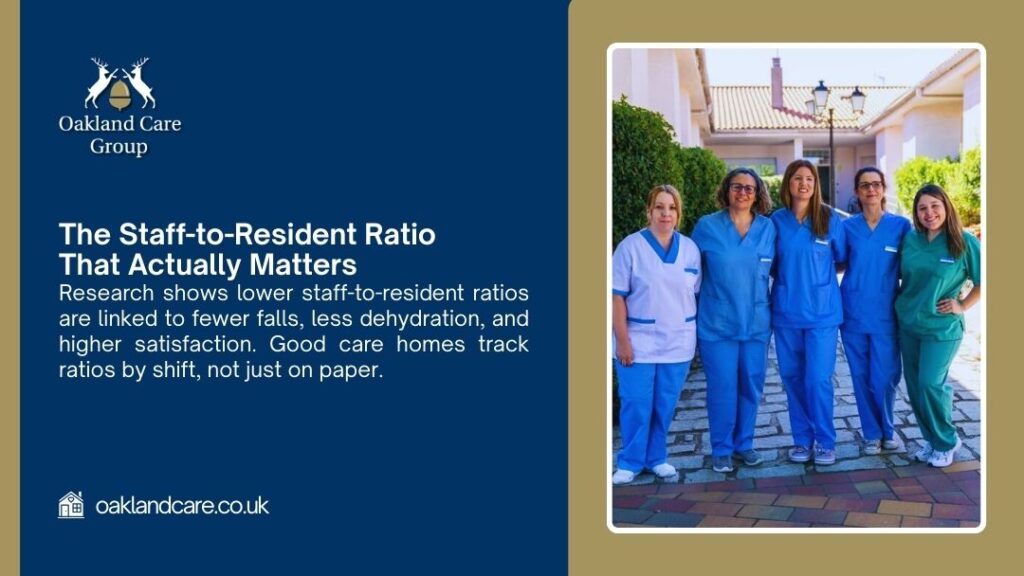
The fastest way to spot whether what makes a good care home exists behind the marketing is to watch how the home handles risk. Safe isn’t just about hand sanitiser stations. It’s about whether staff prevent avoidable harm and respond properly when something goes wrong. The CQC’s safe lens focuses on protection from abuse and avoidable harm, and it’s a useful north star for families too.
A good care home keeps residents safe without making them feel controlled. Doors may be secure in dementia areas, but explanations are respectful. Staff should be visible, not hidden behind an office door. If residents use call bells, the response should look prompt and routine, no dramatic scrambling, no long waits, no residents giving up and trying to do risky things alone.
Families often notice the big things and miss the predictive details. Use this table like a quiet detective.
| What you observe | What it usually indicates | What to ask right then |
| Call bells ring briefly, response is quick | Staffing is adequate and organised | “How do you monitor response times, especially at night?” |
| Corridors feel uncluttered and calm | Falls risk is managed | “How do you review falls and prevent repeats?” |
| Staff greet residents by name, not “love” or “sweetie.” | Respect and dignity culture | “How do you support choice and consent day to day?” |
| No strong odours, clean bathrooms, laundry handled discreetly | Hygiene systems work | “Who oversees infection control and audits?” |
| Residents look engaged, not parked for long periods | Care is active, not passive | “How do you tailor activities to ability and mood?” |
If what makes a good care home is present, staff won’t act defensively when you ask about safeguarding. They’ll explain clearly. They’ll also tell you how concerns get logged and escalated. Good homes don’t rely on silence; they rely on process.
Effective care: Staff competence, routines that work, and the right level of care
What makes a good care home isn’t simply kindness. Kindness matters, but competence prevents hospital admissions and distress. Effective care means the home can meet needs now and as they change. Age UK’s guidance encourages families to check whether a home can meet needs, and to look beyond first impressions into staffing and practical support.
This is where UK care homes differ massively. Two homes can look similar, yet one can manage changing needs smoothly while the other gets overwhelmed and pushes families into crisis decisions. A good care home should be able to explain the resident’s likely journey: mobility shifts, appetite changes, confusion episodes, hospital discharge planning, and end-of-life preferences.
Qualified nurses matter when nursing needs exist. That’s where care home vs nursing home becomes a safety decision. A good care home families trust won’t stretch beyond what it can safely provide. If your relative needs frequent clinical monitoring, complex wound care, or advanced medication regimes, the conversation may need to include a nursing home option rather than residential alone.
You can also sanity-check funding pathways. Some residents with complex needs may qualify for NHS Continuing Healthcare, which can be provided in a care home.
What makes a good care home also shows up at mealtimes. Food isn’t a nice extra. It’s hydration, nutrition, strength, and dignity. Watch whether people who need help actually receive it, without rush or embarrassment. Ask how the kitchen handles allergies, diabetes, texture-modified diets, and personal preferences. A good home answer in specifics, not in vague terms. We can accommodate that.
Caring culture: Dignity, respect, and the daily human stuff
What makes a good care home shows up in everyday moments, how staff speak, how privacy is handled, and whether residents get treated as people with real preferences rather than routines to manage.
| What you notice (real-life cues) | What it usually reveals | What to ask to confirm it |
| Staff knock, wait, and introduce themselves before entering | Respect for privacy is standard, not performative | “How do you support consent and choice in daily care?” |
| Residents are addressed by name, not nicknames by default | Dignity-first culture and adult-to-adult communication | “Do residents choose how they like to be addressed?” |
| Conversations happen at eye level, not over residents’ heads | Staff see residents as partners, not bystanders | “How do you involve residents in care plan reviews?” |
| Toileting and personal care are discreet, without rushed handling | Personal care is done properly even when the home is busy | “How do you manage dignity during peak times?” |
| Visitors are welcomed without awkward gatekeeping | Families are treated as part of the care circle | “How do you keep families updated when needs change?” |
| Residents’ rooms look lived-in and individual | The home encourages identity and independence | “What personal items are encouraged and what’s restricted?” |
A good care home families trust will sound confident here, because dignity and respect aren’t nice to have; they’re the baseline for good care.
Responsive care: personal routines, family involvement, and meaningful life
What makes a good care home is easier to spot once you look at how the home adapts, because people don’t stay the same week after week, especially after a hospital stay or as dementia progresses.
| Area of life | What “responsive” looks like | What it prevents |
| Daily routine | Wake-up, meals, and bedtime reflect the person, not a fixed rota | Distress, refusals of care, and sleep disruption |
| Activities | The schedule fits ability and interest, with options for quiet days | Withdrawal, low mood, accelerated decline |
| Dementia support | Staff anticipate triggers and use calm, familiar approaches | Escalations, agitation, unnecessary medication |
| Family involvement | Regular check-ins, care reviews, and transparent updates after incidents | Mistrust, surprises, conflict over decisions |
| Health changes | Early noticing of appetite, mobility, and confusion shifts | Avoidable hospital admissions and rapid deterioration |
| Social connection | Encouragement of friendships, community contact, and meaningful roles | Loneliness and loss of identity |
A responsive care home doesn’t wait for a crisis; it adjusts early, communicates clearly, and keeps life feeling like life rather than just being looked after.
Well-led homes: management, accountability, and how problems get handled
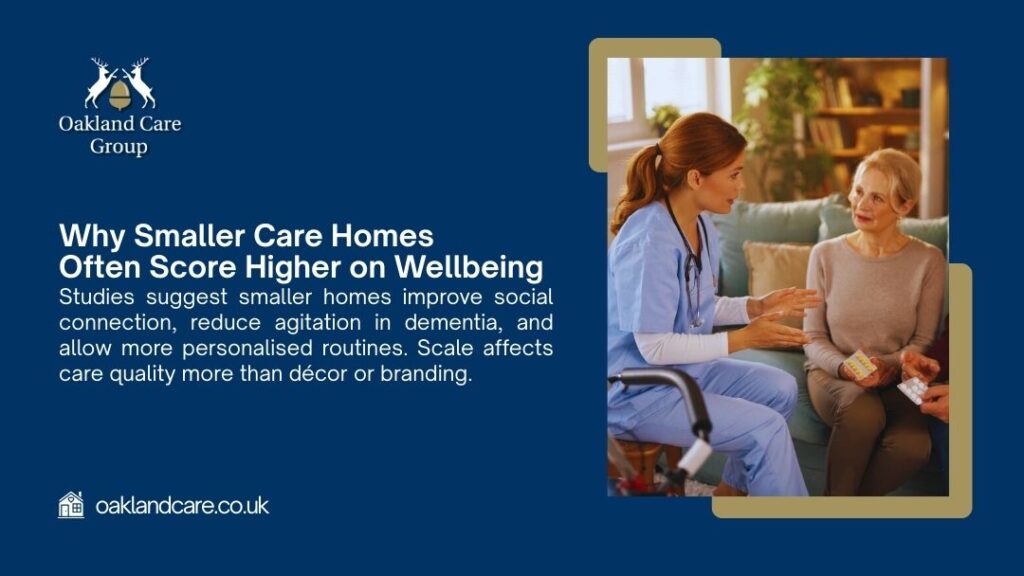
If what makes a good care home is real, leadership will be visible. The manager should know the residents, know the staff, and know the numbers. A well-led home has clear routines for audits, training updates, incident reviews, and complaint handling. CQC uses well-led to assess governance, culture, and improvement; families should use it too.
When something goes wrong, and eventually something will, even in excellent homes, the question becomes: does the home hide, blame, and minimise? Or does it document, learn, and improve? Ask how complaints are handled and whether families receive written outcomes. If the answer is fuzzy, treat that as information.
Costs in 2026: Average cost of care home UK, what fees cover, and how to compare properly
Money talk feels awkward, but avoiding it leads to nasty surprises. What makes a good care home also includes financial transparency. A good home explains fees without pressure and puts key terms in writing.
The average cost of care home figures get quoted a lot, yet families still struggle because average doesn’t equal your situation. Fees vary by region, room type, and level of care. Still, benchmarks help. A cost guide published in January 2026 reports average weekly self-funder costs of £1,298 for residential care and £1,535 for nursing care across the UK. For a fuller picture of what sits behind those benchmarks, our 2026 breakdown of how much a care home costs in the UK explains how region, room type, and care level shape the final weekly figure.
Those figures don’t automatically mean a home is too expensive or too cheap. They mean you should compare like-for-like and ask what’s included.
| Fee item | What many homes include | What often costs extra | What you should request in writing |
| Weekly fee | Room, meals, laundry, and personal care support | Hairdressing, chiropody, some outings, and private therapies | “What’s included” schedule with examples |
| Care level | Standard personal care | Higher dementia support, 1:1 support, complex needs | Trigger points that increase fees |
| Respite | Short stay fee structure | Higher rate in some homes | Refund and notice terms |
| Deposits | Sometimes none, sometimes required | Admin charges | Deposit rules and refund timing |
| Annual uplift | Yearly increases | Mid-year changes in some contracts | Uplift schedule and how it’s calculated |
The red flags: When a care home looks fine but isn’t
What makes a good care home becomes clearer when you know what not good looks like. The most common problem isn’t one dramatic scandal. It’s low-grade neglect through understaffing, weak leadership, and poor documentation.
If staff can’t answer simple questions about how they handle falls, medicines, or complaints, that’s not a busy day. That’s a system problem. If residents wait a long time for help, that’s not “just how it is.” That’s risk. If the home pushes you to sign quickly or won’t give contract terms to read at home, that’s a hard no. You’re choosing a care home families may rely on for years; pressure has no place here.
Questions to ask when visiting a care home
Care home guidance is practical: check first impressions, staff, accessibility, and whether needs can be met. The best way to use questions is to connect each one to a quality signal.
| Question you ask | Why it matters | What a solid answer tends to sound like |
| “How do you assess whether you can meet someone’s needs before admission?” | Prevents unsafe placements | Clear assessment steps, honest boundaries, written plan |
| “What does overnight staffing look like?” | Night is where risk spikes | Specific staff numbers/roles, not vague reassurance |
| “How do you review falls, infections, and medication errors?” | Shows a learning culture | Mentions audits, reviews, actions, and documentation |
| “How do you support dementia day to day?” | Distinguishes real dementia care | Personal routines, calm environment, trained staff, family involvement |
| “What happens if we raise a concern?” | Tests accountability | Explains complaint pathway, timelines, and written outcomes |
Moving in: What good homes do during the first month
A move is a stress test. What makes a good care home becomes visible in how the team handles the first 72 hours and the first month. The best homes treat early days as adjustment time, not as “job done.”
They’ll ask about routines, sleep patterns, food preferences, faith, hobbies, triggers for anxiety, and what calm looks like for that person. They’ll communicate with family consistently and set a review date. If you’re preparing for the practical side, what the room should include and how to set it up, this can help you avoid last-minute chaos.
If you’re moving a parent rather than moving yourself, the emotional and logistical steps differ, and families benefit from a tailored checklist.
Care home vs nursing home vs home care: Choosing the right fit
What makes a good care home decision is choosing the right setting for the right needs, because even an excellent home will struggle if the placement doesn’t match the level of care required.
| Option | Best fit for | Typical support provided | When it may not be enough |
| Care home (residential) | Personal care needs, support with daily tasks, and social structure | 24/7 personal care, meals, activities, supervision | Complex clinical needs that require on-site nursing |
| Nursing home (care home with nursing) | Higher medical needs, complex medication, and clinical monitoring | Registered nurses on site, plus personal care | If a person wants to remain at home andthe risks are manageable |
| Home care (care in the home) | Stable needs, strong family support, suitable home environment | Scheduled visits, personal care, help with meals/meds | Frequent falls, night-time risks, wandering, and advanced dementia |
This comparison matters because the right choice is often the one that reduces avoidable risk while protecting dignity, comfort, and family peace of mind.
Bringing it all together: How to choose with confidence
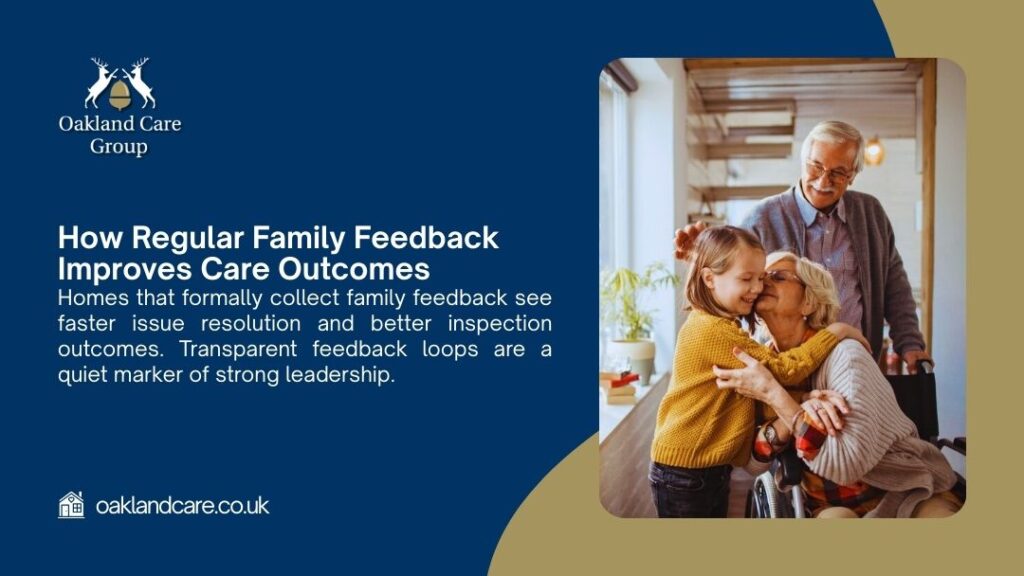
What makes a good care home is not a single feature. It’s a pattern: safe routines, effective care planning, real dignity, responsive daily life, and leadership that doesn’t dodge accountability. If you’re looking in nearby areas, Oakland Care can help you compare options without pressure.
Book a visit, bring your questions, and ask them to show you how care works on a normal day, not the best day. Oakland’s team can walk you through care types, visiting expectations, and fees, so you can make a decision you’ll still feel good about six months from now.
