
Article Summary
| Situation | Council tax outcome |
|---|---|
| England: former home left empty after a permanent move | May qualify for a Class E exemption if the conditions are met |
| One counted adult remains in the home | Usually eligible for a 25% single-person discount |
| Resident meets the severe mental impairment criteria | May be disregarded; the effect on the bill depends on who else lives there |
| Respite or short trial stay | Usually no Class E exemption while the stay remains temporary |
| Property sold, let or occupied by someone else | Eligibility may end; tell the council and check who is liable |
The main guidance below covers England.
A permanent move into a care home may reduce Council Tax on the former home, but relief is not automatic: contact the council responsible for that property and ask it to assess eligibility and the relevant dates.
What Happens to the Former Home’s Council Tax?
In England, a permanent move into a care home may qualify an empty former home for a Class E exemption if the eligibility conditions are met. The bill for the former home and the bill for anyone who remains there are separate questions.
Care-home residents are generally not individually billed Council Tax for their room. Liability for the care-home property is assessed under the rules for that setting. Council tax on a former home is separate from care home fees and from a local authority financial assessment; a council-tax claim does not itself decide how care is funded.
Class E Exemption on the Former Home
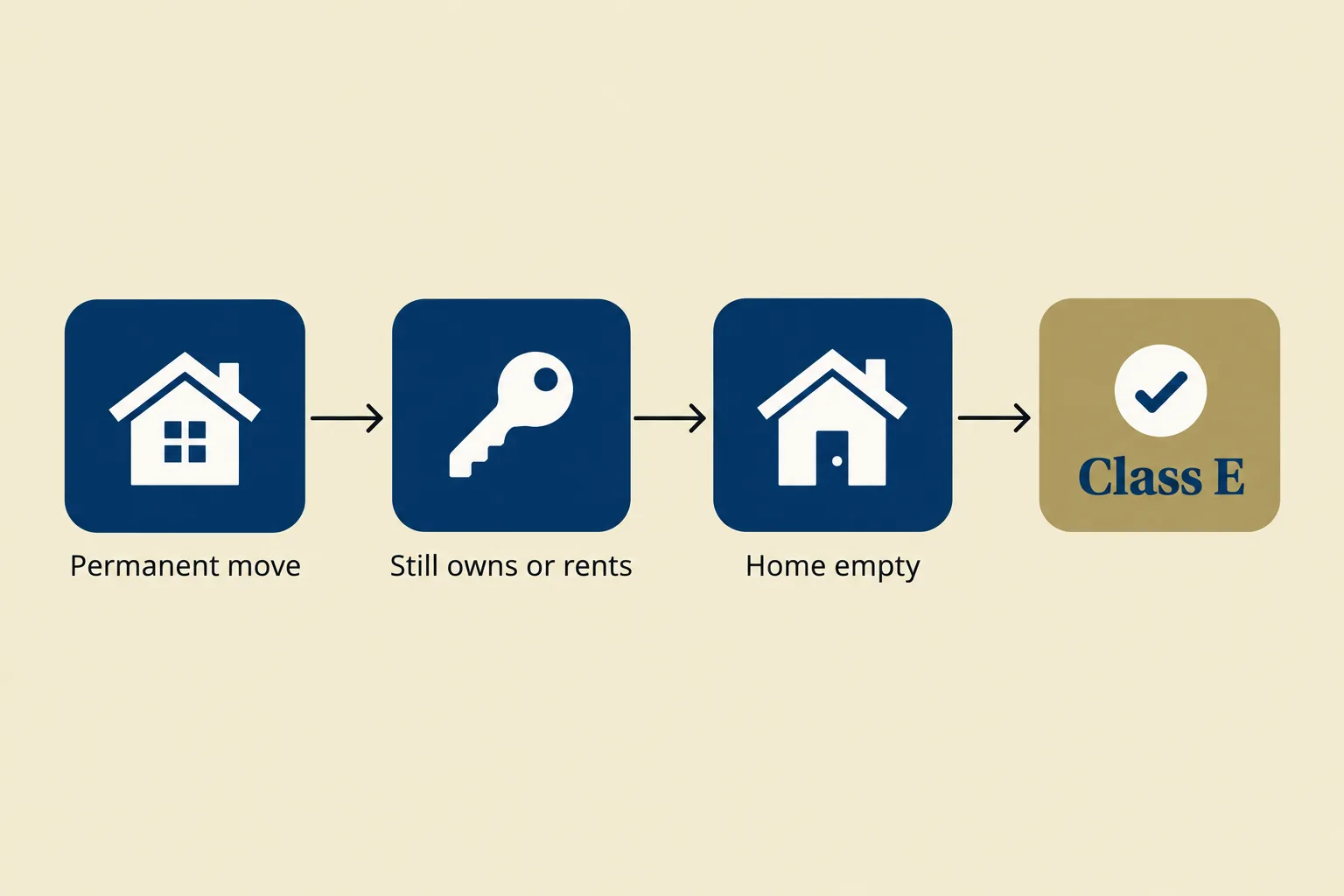
In England, Class E may apply when a home is left unoccupied because the person who lived there has moved permanently into a care home or hospital to receive care, and that setting becomes their main residence. The person must have lived in the care setting since leaving the former home. The exemption can continue while the qualifying conditions remain in place; there is no fixed time limit. Read the GOV.UK guide to Council Tax exemptions and discounts for the England-wide rules.
The person generally needs to retain a legal interest in the former property, such as ownership or a tenancy, and the property must remain unoccupied. The council can confirm how joint ownership or a tenancy affects a particular claim. If your relative has moved in with family to receive personal care, a different exemption may apply. Practical steps for the move itself are covered in our guide to moving into a care home.
If They Move in With Family to Receive Care
If someone leaves their home to live with another person to receive personal care because of old age, disability, illness, alcohol or drug dependence, or a mental disorder, a different exemption may apply to the empty former home. In England, this is generally considered under Class I. The person must not have moved elsewhere between leaving the former home and moving in to receive care. Ask the council responsible for the former home to confirm eligibility.
The 25% Single-Person Discount for Someone Who Stays
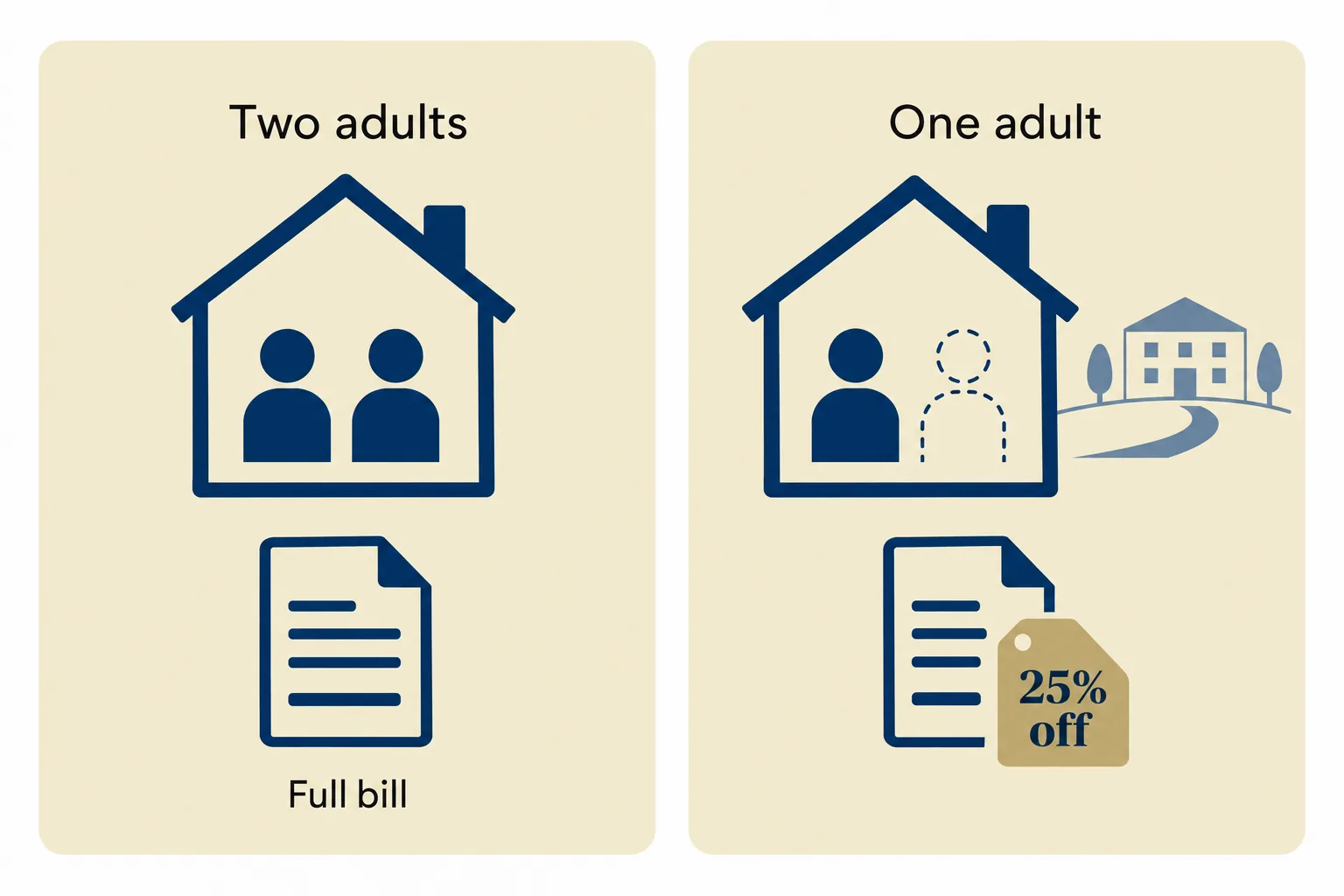
In England, a full Council Tax bill is based on at least two adults. If a partner moves permanently into a care home and only one counted adult remains at the former home, the person who stays may qualify for a 25% single-person discount. The council can confirm the household’s eligibility.
The relevant date depends on when the discount conditions were met. Ask the council whether it can apply the discount from an earlier date and what evidence it needs. Some adults, including carers who meet the rules, may not be counted. Our guide to moving a parent into a care home covers practical steps for families.
Related readingHow To Avoid Care Home Fees?Read the guide →Permanent Move Versus Short Respite Stay
Class E depends on the move being permanent and the care home becoming the person’s main residence. The length of a stay alone does not settle the question; the council may consider the circumstances and supporting evidence.
| Type of stay | Main residence | Council tax position |
|---|---|---|
| Respite or short break | Unchanged | Bill continues as normal |
| Trial period, outcome undecided | Usually unchanged | Bill continues, review later |
| Confirmed permanent move | Moves to the care home | Exemption or 25% discount applies |
If a trial or respite stay later becomes permanent, ask the council what date it considers the move permanent and what evidence it needs. If you are still weighing the options, our comparison of a care home and home care may help.
Dementia, Severe Mental Impairment and Council Tax
A dementia diagnosis alone does not automatically change a Council Tax bill. In England, a person may qualify for the severe mental impairment (SMI) disregard if a doctor certifies the impairment and they meet the qualifying-benefit rules. Ask the council to confirm eligibility and the effect on the household’s bill.
If no adult in a home is counted, a 50% discount will usually apply in England. A full exemption may apply in specific circumstances, including a home occupied only by people who qualify as severely mentally impaired. If you think the SMI rules applied earlier, ask the council to review the relevant dates; a refund is not automatic.
Other People Who Are Not Counted
| Disregarded person | Note |
|---|---|
| Full-time students and student nurses | Not counted towards the adult total |
| Under-18s; some 18- and 19-year-olds who meet the rules | Usually disregarded |
| Live-in carers who meet the conditions | Usually disregarded |
| People whose main home is a hospital | May be disregarded; temporary stays can be different |
An exemption removes the Council Tax charge on a qualifying property. A disregard means a person is not counted when the council works out the household discount; it does not, by itself, make the property exempt.
How to Claim and Reclaim Overpaid Council Tax
Apply to the council responsible for the former property, not the council where the care home is located. Ask that council which form and evidence it requires. It may ask for the move date, confirmation of the care arrangement and details showing your authority to act for the account holder.
If the council confirms that an exemption or discount applied for an earlier period, ask it to explain whether the account will be adjusted or a refund issued. If it refuses a claim, request the reasons and follow the council’s review or appeal process; ask what independent appeal route and deadline apply if you still disagree.
If the Property Is Sold, Let or Left Empty
Tell the council if the property is sold, the tenancy ends, or another person moves in, because any of these changes may affect eligibility or who is liable. If the exemption ends while the home remains empty, local empty-home or second-home rules may apply. In England, the empty-home premium period may run from when the property first became empty, so ask the council how it applies in your case.
Council tax relief and a local authority’s financial assessment for care are separate issues. Property decisions can have wider consequences, including possible deprivation-of-assets questions; read Oakland Care’s guide to deprivation of assets and seek qualified financial or legal advice before acting.
Scotland, Wales and Northern Ireland
| Nation | Position |
|---|---|
| England | Class E exemption on the empty former home |
| Wales | Class E exemption may apply; local empty-home and second-home rules also matter (GOV.WALES) |
| Scotland | Separate rules; check local exemptions and premiums (Scottish Government guidance) |
| Northern Ireland | Domestic rates apply instead of Council Tax; separate empty-home relief rules apply (nidirect rates guidance) |
The rules differ across the UK, and local decisions can affect empty-home charges. The table gives a brief signpost only; contact the council or rates authority responsible for the former property to confirm the current rules.
Key Takeaways
| Point | Detail |
|---|---|
| The exemption | An empty former home may qualify for Class E while the conditions are met |
| The discount | One remaining counted adult may qualify for the 25% discount |
| Permanence | A temporary stay generally does not establish a permanent move for Class E |
| The claim | Contact the council for the former home and ask what evidence it needs |
| Earlier periods | Ask the council to assess when eligibility began; refunds are not automatic |
| Changes to report | A sale, tenancy change or new occupant may affect eligibility or liability |
Council tax after a move into care depends on whether the move is permanent, who remains in the former home and whether the property meets the exemption rules. The billing council can confirm the outcome for your circumstances.
Frequently asked questions
Is a council-tax exemption automatic when someone moves into a care home?
Can an SMI-related discount or exemption be backdated?
Does someone in a care home pay Council Tax on their room?
What if someone else moves into the former home?
Does the 25% discount apply if an adult child stays in the property?
Talk to Our Team About the Next Step
If you are also looking for residential care in West Sussex, Oakland Care has two homes: Oakland Grange in Littlehampton and Oakland Court in Felpham. You can learn about each home and contact its team to ask about a visit.