
A good care home should feel safe, clean, calm, respectful and well run. To judge one properly, check the CQC report, visit more than once, watch how staff treat residents, ask about care plans, understand the fees, and trust what you see during an ordinary day, not just a planned tour.
That is the question families carry into every visit. Not always out loud, but it is there. Will my parents be safe? Will anyone notice if something is wrong? Will they still feel like themselves? Will they eat properly? Will there be someone kind on a Tuesday evening when we cannot be there?
This guide works through every layer of that question. It covers CQC reports, staff culture, care plans, daily life, fees, visits, dementia care and the signs that separate a genuinely good care home from one that only looks the part. For families considering care homes in West Sussex, including Oakland Court in Felpham and Oakland Grange in Littlehampton, there is specific local guidance throughout.
How do I know if a care home is good?
If you are asking how do I know if a care home is good, begin with the ordinary signs. A good care home should not feel staged. It should feel lived in, steady and respectful. Residents should look clean, comfortable and noticed. Staff should speak to people by name. Call bells should not ring endlessly. Meals should not feel rushed. The manager should be able to answer practical questions without becoming vague or defensive.
In England, the first formal check is the CQC rating. The Care Quality Commission inspects and regulates care homes, nursing homes and other adult social care services. It looks at whether a service is safe, effective, caring, responsive and well-led.
But here’s the thing. A CQC rating is a starting point, not the full picture. A home may have a Good rating, yet the report may still mention issues that matter to your family, such as staffing, medicine records, care plan updates or leadership changes. Equally, a home may have improved since its last inspection. That is why the best approach is to read the report, visit the home, ask questions and compare what you read with what you see.
The Care Quality Commission says, In a good care home, you can expect to be safe, because there are enough staff with the right skills and experience to support you. That sentence matters because safety is the basis of everything else. A beautiful lounge means little if residents wait too long for help. A friendly tour means little if staff are rushed, tired or unclear about care needs.
When families search how do I know if a care home is good, they are usually asking something more personal. Will Mum be safe? Will Dad be treated kindly? Will someone notice if his appetite changes? Will she still have a choice? Will staff understand dementia? Will the home call if something is wrong? Those are the right questions.
What is a care home and who is it right for?
A care home supports people who need help with daily life. That may include washing, dressing, meals, medication support, mobility, continence care, companionship, safety and routine. In many cases, people move into a residential care home when living alone has become too risky or when family carers can no longer manage safely.
A care home is not always the same as a nursing care home. A nursing home provides registered nursing support for people with more complex medical needs. Some families search for nursing home care near me when what they actually need is residential care. Others look for a residential care home when their loved one may need nursing care. Getting this right at the start can prevent stress later. The differences between care home vs nursing homes are clearly presented, especially for situations where a loved one’s health needs may change.
A good care provider should never push a family into the wrong type of care. It should ask about health, mobility, memory, medication, personal care, behaviour, food, sleep, family involvement and future risks. If your loved one needs dementia care, respite care, end-of-life support or help after a hospital stay, the home should be honest about what it can safely provide.
The CQC Rating: A Starting Point, Not a Final Answer
In England, the Care Quality Commission rates care homes as Outstanding, Good, Requires Improvement or Inadequate across five areas: safe, effective, caring, responsive and well-led. A Good rating means the home is performing well and meeting expectations.
Read the full inspection report, not just the headline score. Check when it was written, a report from several years ago may not reflect the current manager, the staffing levels or the culture of the home today. Look at comments on medicine management, dignity, safeguarding, care planning and leadership. Note whether any areas were weaker, and ask the manager directly what has changed.
A good manager answers those questions calmly and specifically. Defensiveness, vagueness or subject-changing is itself a piece of information.
Both Oakland Court and Oakland Grange hold a CQC rating of Good. Both homes are also registered with West Sussex Partners in Care and hold ISO 9001 certification for quality management, an additional layer of external assurance that goes beyond the CQC rating alone.
The At-a-Glance Signs: Good Care vs Warning Signs
Use this table during and after every visit. What you observe in the first twenty minutes often tells you more than an hour of a guided tour.
| What to Check | A Good Sign | A Warning Sign |
| CQC rating & report | Good or Outstanding, recent inspection, the manager can explain what changed | Old report, Requires Improvement, or vague/defensive answers |
| Safety | Clean spaces, working equipment, clear medicines process | Unanswered call bells, clutter, and rushed personal care |
| Leadership | Manager visible, informed and calm under questions | Manager unavailable or unable to explain daily care |
| Staff conduct | Warm tone, residents addressed by name, no one left waiting | High turnover, cold atmosphere, residents talked over |
| Care plans | Personal, current, reviewed with family | Generic notes, little personal detail, not recently updated |
| Atmosphere | Calm, lived-in, respectful residents look at ease | Tense, silent, chaotic or unnaturally staged |
This is where a lot of families get caught out. They see a rating and stop there. But if you still wonder how do I know if a care home is good, the stronger answer lies in the match between the CQC report, the visit and your own instinct.
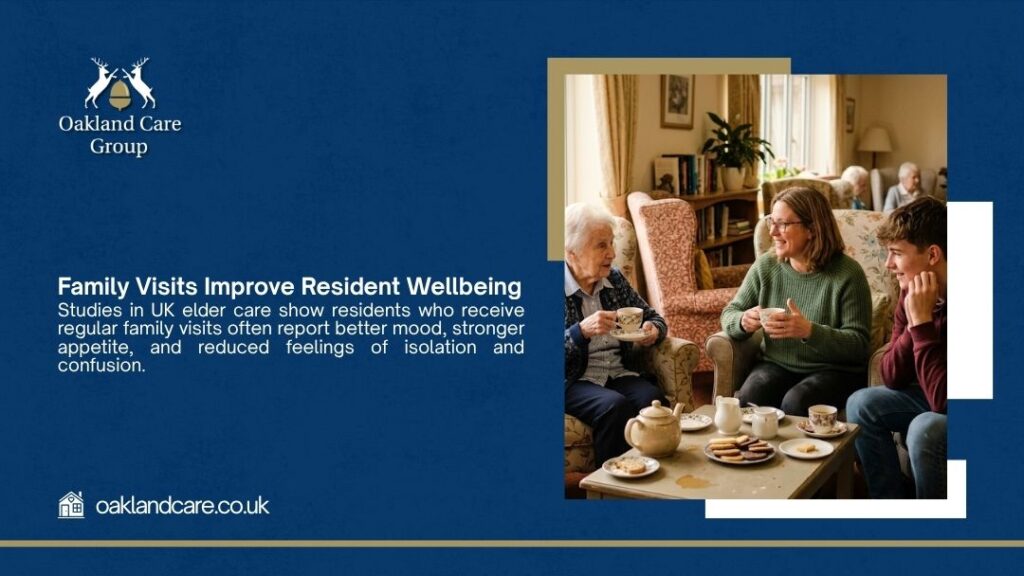
Visit More Than Once, And Know What to Look For
A first visit shows the home at its most prepared. That is useful, but it is not the whole picture. The dining room at 5 pm, the corridor at 3 pm, the lounge on a quiet Wednesday, these moments reveal the real rhythm of the place.
| Visit | When to Go | What to Focus On |
| Visit One | Mid-morning, arranged | First impressions. How does the home feel? How do staff speak to residents? Does it smell clean without feeling clinical? |
| Visit Two | Late afternoon, unannounced if possible | Observe the dining room and corridors. Are residents occupied or left alone? Ask to see the care plan process. Ask about night staffing. |
| Visit Three | Bring your loved one if possible | Let them form their own impression. Their comfort in that space is the most important measure of all. |
During any visit, look beyond the décor. Are residents dressed in clean clothes? Are glasses, hearing aids and walking frames within reach? Do staff knock before entering bedrooms? Are people helped to eat with patience? Does anyone look distressed without support nearby?
Guidance on questions to ask when visiting a care home is useful here because it helps families walk into a visit prepared rather than flustered. A good care home does not just tolerate these questions; it expects them.
What Families Often Miss, and Questions Weak Homes Struggle to Answer
One thing families often miss is the difference between a pleasant tour and a good daily routine. A home can look impressive during a visit, yet still fall short if residents have little choice, meals feel rushed, or staff do not know people well.
Most families ask about fees, rooms and activities. These matter. But the questions that reveal the most about a home’s quality are the ones that are slightly harder to ask, and harder to bluff.
| Question to Ask | What the Answer Reveals |
| How many staff are on duty overnight, and what is the ratio to residents? | Weak homes give vague answers or deflect. Good homes give a specific number and explain how it covers the home. |
| How do you build a care plan for a new resident? | Weak homes describe paperwork. Good homes describe conversations with the resident, the family and existing health teams. |
| What happens when a resident refuses personal care? | Weak homes say they manage it. Good homes explain how they approach refusal with patience, distraction and dignity. |
| How do you support a resident whose dementia is progressing? | Weak homes offer reassurance. Good homes describe specific approaches: routine, life history, communication methods, and family liaison. |
| Can you show me the last complaints log and what changed because of it? | Weak homes hesitate or say they have had no complaints. Good homes explain what was raised and what improved. |
If a home gives specific, confident answers to all five, that tells you something. If the answers are vague, defensive or redirect to the brochure, that tells you something, too.
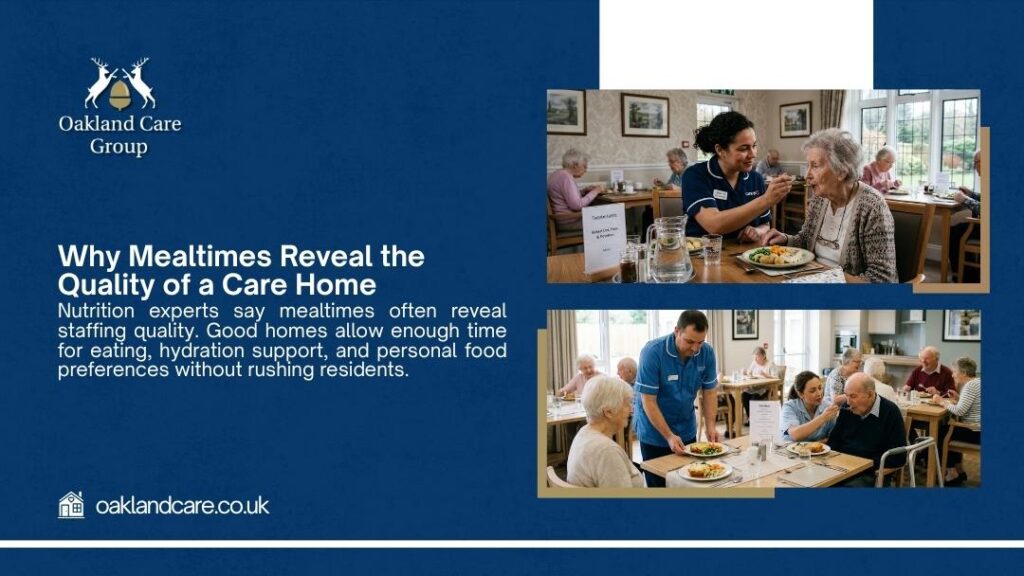
Staff behaviour tells you more than the brochure
If you want to know whether a care home is good, watch the staff before you study the furniture. Good staff have a certain steadiness. They notice when someone looks uncomfortable. They speak with warmth. They do not shout across the room. They explain what they are about to do. They give people time to answer. They protect dignity during personal care. They do not make residents feel like tasks on a shift list.
Dignity in care is not just a policy. It is whether someone is helped to wash without embarrassment. It is whether a resident can choose what to wear. It is whether staff remember how a person likes their tea. It is whether a confused resident is reassured rather than corrected sharply.
Ask about training. Ask how new staff are supported. Ask how many staff are on duty during the day and night. Ask how the home responds when a resident refuses care, becomes anxious, has a fall, loses weight or stops joining activities. Specific answers are a good sign. Vague answers are not.
For families comparing care homes, staff culture matters because regular family visits are often part of the care picture. Homes such as Oakland Court in Felpham and Oakland Grange in Littlehampton are rooted in local communities, which can make them feel more personal than a distant, unfamiliar setting.
Care plans should sound like the person, not the system
A care plan should tell staff who the person is, not just what condition they have. A strong care plan covers personal care, medication, mobility, food, sleep, continence, skin care, falls risk, family contact, hobbies, faith, communication, emotional well-being, and daily routine. For someone with dementia, it should include life history, known triggers, calming methods, preferred phrases and family details.
A weak care plan sounds generic. A better care plan might say that Mrs Harris likes breakfast after washing, feels anxious if she is rushed, prefers cardigans to jumpers, enjoys old musicals, needs her hearing aids checked each morning, and responds well when staff talk about her garden. That level of detail is not a luxury. It is what makes care personal.
Care plans in care homes should also change when the resident changes. A fall, hospital visit, new medicine, change in appetite, low mood, poor sleep or new confusion should lead to a review. Families should know how often reviews happen and how they can contribute.
If your family is preparing to move into a care home, write down the details that only you know. The favourite mug. The dislike of loud rooms. The song that calms them. The phrase they use when they are in pain. Those details help staff care for the person behind the paperwork.
Dementia care should be patient, not panicked
Dementia care is one of the clearest tests of a care home’s quality. A person with dementia may repeat questions, walk with purpose, resist personal care, become distressed at dusk or talk about things that are not happening now. The right response is not irritation. It is calm, skill and reassurance.
Good dementia care does not argue over every detail. It looks for the need behind the behaviour. Is the person in pain? Hungry? Frightened? Too hot? Too cold? Overwhelmed by noise? Missing someone? Unable to explain what feels wrong?
Ask what dementia training staff receive. Ask how the home supports residents who become distressed. Ask how it handles personal care refusal, night-time waking, falls risk, nutrition and family communication.
For someone with frontotemporal dementia, Parkinson’s, swallowing problems, communication changes or complex behaviour, the home should be clear about whether it has the right skills. A good provider will be honest if another setting may be safer.
Food, rooms and ordinary routines are part of good care
Families sometimes feel awkward asking about bedrooms, meals or activities, as if those things are extras. They are not. They shape daily life.
A good care home should provide meals that are fresh, suitable and adapted to personal needs. Staff should notice if someone is not eating well. People should not be rushed through meals. If a resident needs a soft diet, diabetic support, finger foods, smaller portions or help to drink enough, the plan should be clear.
Bedrooms matter too. A care home room should feel safe, clean and personal. Ask whether residents can bring photographs, bedding, ornaments, a favourite chair or other familiar items. These touches can soften the move and help a new room feel less strange.
Activities should feel meaningful, not token. Some residents enjoy group events. Others prefer gardening, newspapers, radio, prayer, music, a quiet chat, crafts or fresh air. A good home respects both.
Information on care home activities in the UK gives families a useful way to think about daily life beyond basic care.
| Part of Daily Life | What Good Looks Like | Why It Matters |
| Meals | Choice, support and no rush | Food affects health, comfort and dignity |
| Bedrooms | Clean, safe and personal | Familiar items help people settle |
| Activities | Varied, realistic and optional | Residents keep their identity and routine |
| Gardens | Safe access to fresh air | Outdoor time supports mood |
| Visitors | Welcome and flexible | Family contact helps wellbeing |
| Quiet areas | Calm space away from noise | Vital for dementia, fatigue and anxiety |
Care home costs should never feel hidden
A good care home explains fees clearly. Families should know what the weekly fee includes, what costs extra, how often fees may rise, what happens if care needs increase and whether local authority funding is accepted.
Care home costs can vary depending on location, room type, care needs and funding status. If your loved one owns property, has savings, receives a UK pension or may need support from the local council, get proper advice early. Rules around care home fees, top-up payments, funded nursing care, and deprivation of assets can be difficult to untangle at speed.
Ask for written information before you make a decision. Do not rely only on a friendly conversation. Practical information on care home fees, paying for care home fees, and what happens when money runs out for care home fees can be helpful when planning ahead as a family before a crisis.
| Fee Question | Why It Matters |
| What is included in the weekly fee? | Prevents confusion over extras |
| How often can fees rise? | Helps with long-term planning |
| What happens if care needs increase? | Shows whether the home can still support the person |
| Do you accept local authority funding? | Important if savings reduce |
| Is a top-up fee required? | Can affect relatives financially |
| What notice period applies? | Protects families from rushed pressure |
Why Location Matters More Than Families Often Expect
A care home that is too far away makes regular visits harder. For many residents, particularly those with dementia, familiar voices, local references and a short journey from family can bring genuine comfort.
Oakland Care Group’s two homes are in coastal West Sussex, drawing residents from across the region including Chichester, Arundel, Worthing, Shoreham-by-Sea, Angmering, Storrington and Pulborough. For families searching for a care home in Bognor Regis, Felpham, Littlehampton or the wider West Sussex area, both homes are worth visiting early in the comparison.
If your parent has lived in the same area for decades, familiarity carries more weight than many families realise until after the move. The sound of a familiar place name. A relative who can visit midweek. The ability to bring someone to a Sunday lunch. These small things help a new home feel less like an ending.
Oakland Care Group: What Good Care Means to Us
For Oakland Care Group, good care is not just about meeting basic needs. It is about creating a place where residents feel known, comfortable and respected. The group’s family-owned character gives the brand a warmer, more personal voice, and that matters to families who want a care home that feels less institutional.
At Oakland Court and Oakland Grange, should feel like home. That means care should be personal, rooms should feel comfortable, staff should build trust, and families should feel welcome rather than kept at arm’s length.
This brand bridge matters because many families are not only comparing care services. They are comparing feelings. They want to know whether their loved one will be safe, but also whether they will be seen, heard and treated with patience. You can read more about the group’s approach and its care values.
Red flags you should not ignore
Some concerns have a fair explanation. Several concerns together should make you stop and think. Strong odours, dirty bathrooms, unanswered call bells, poor food, residents left without drinks, staff who seem irritated, unexplained bruises, no visible manager, little activity, vague answers or defensive behaviour all need careful thought.
Be cautious if the home talks mostly about rooms and prices, but not people. Be cautious if staff cannot explain how they support dementia, falls, nutrition, medicines or personal care. Be cautious if residents appear unwashed, ignored or frightened. A good care home should be able to show its care in daily life. It should not need to rely on promises.
FAQs About How do I know if a care home is good
How do I know if a care home is good before moving someone in?
You can know if a care home is good by checking the CQC report, visiting more than once, watching staff behaviour, asking about care plans and fees, and noticing whether residents seem clean, calm, respected and well supported. The best evidence comes from matching the inspection report with what you see in person.
Is a Good CQC rating enough?
A Good CQC rating is reassuring, but it is not enough on its own. Read the full inspection report, check the date, and ask the manager about anything mentioned in the report. A good home should be open about strengths and areas for improvement.
What are the signs of a poor care home?
Signs of a poor care home can include strong odours, unanswered call bells, rushed staff, poor hygiene, vague care plans, residents left alone for long periods, defensive answers, unclear fees and weak communication with families.
How many times should I visit a care home before deciding?
Two visits are better than one, where possible. A first visit helps you understand the home. A second visit at another time of day shows whether the atmosphere and care still feel right during normal routines.
What should I ask about dementia care?
Ask what dementia training staff receive, how they respond to distress, how they support personal care, how they manage fall risk, and how they involve families. A good dementia care home should be patient, calm and specific in its answers.
Should I choose the nearest care home?
Not always. The nearest care home is not automatically the best one. Still, location matters because regular visits help families stay involved. Choose a home that meets care needs first, then consider how easy it will be for loved ones to visit.
How do I compare two good care homes?
Compare the CQC reports, staff attitude, manager openness, care plans, food, fees, visiting rules, dementia support and overall atmosphere. If both seem good, choose the one that feels like a better fit for your loved one’s personality and needs.

So, how do I know if a care home is good?
You know a care home is good when the formal evidence and the human evidence line up. The CQC report should be reassuring. The manager should be open. Staff should be kind and capable. Residents should look cared for. Care plans should feel personal. Fees should be clear. Food should be suitable. Families should be welcome. The home should feel safe on an ordinary day, not just during a planned tour.
If you are still asking how do I know if a care home is good, ask yourself this: would I feel comfortable if someone I loved spent a normal Tuesday afternoon here? That question cuts through a lot.
Ready to See a Good Care Home for Yourself? Families are always welcome to visit Oakland Court (Felpham, near Bognor Regis) and Oakland Grange (Littlehampton) at a time that suits them. You can book a visit online, request a brochure, or simply call and speak with the team. No obligation. No pressure. Just a genuine conversation about your loved one’s needs.
