
Care and nursing homes provide different degrees of care, so their costs vary, and they host distinct types of residents.
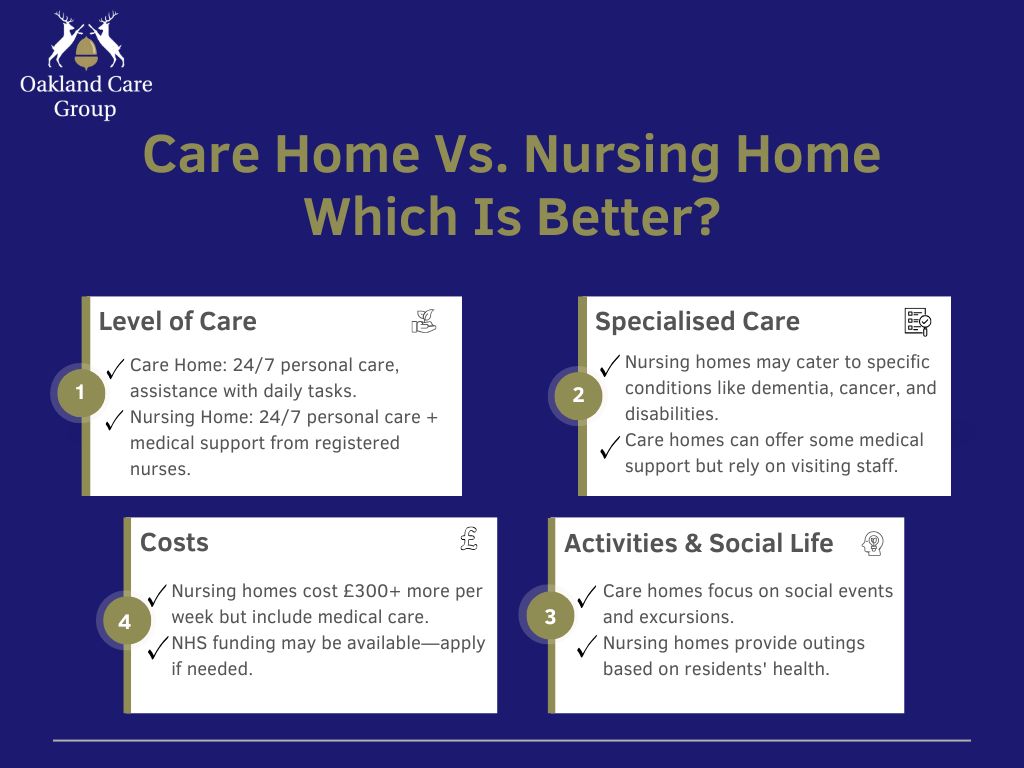
Residential care homes assist with daily activities such as bathing, dressing, meal preparations, and general supervision while nursing homes offer the same support as a care home with comprehensive medical care.
This article will explain their similarities and differences in detail so you can weigh your options and close the “care home vs nursing home” debate.
Care Home Vs Nursing Home: Which Is Better?
Choosing between a care home and a nursing home may not be as simple as deciding which dress to wear on a night out. Many things come into play that may make the choice difficult.
If you have a loved one needing care, you must understand their requirement. Here are a few aspects to consider:
The Level Of Care Needed
Both care homes and nursing homes provide efficient care 24/7 on a short or long-term basis to help the elderly get through each day comfortably.
However, nursing homes also provide medical care and assistance. They’re ideal for patients with medical conditions requiring registered nurses for treatment. Professionals at nursing homes are trained and equipped to monitor health and symptoms.
Nursing Homes Can Vary
While some nursing homes may cover comprehensive care for illnesses and rehabilitation, others may focus on a particular disease. For instance, you may find different nursing homes for dementia, cancer, physical and learning disabilities, or mental illness.
Dementia patients can get the required assistance in a residential care home, but support received at nursing homes is incomparable because of the specialist treatment, especially in the later stages.
That isn’t to say that care homes can’t provide nursing care.
Some offer special care facilities with visiting staff to accommodate older residents who need more assistance for hygiene and medication because of a lack of mobility.
Old residents with a less severe disability or illness but who need regular medication may not require frequent treatment or attention and generally have a perfect stay at care homes.
As long as staff know what medicine is needed at what time, they can follow schedules and ensure their residents are receiving adequate care.

Fun Activities For Inhabitants
Both care and nursing homes may organise excursions, parties, and events to engage their companions in pleasurable social and physical activities.
However, entertainment and recreation at nursing homes may be limited or non-existent, depending on the severity of illnesses.
Nursing home residents often have higher medical needs so excursions are carefully planned with transportation, medical support, and accessibility in mind.
Outings might include:
- Visits to local parks or gardens
- Trips to museums, theaters, or cultural events
- Shopping or dining out
- Religious services
- Special seasonal events such as Christmas markets or summer fairs
- Themed parties at the care home, giving residents a chance to host and dress up
- Game nights
If your relative likes going out or fun interactions, they may want to pick a facility where events are regularly planned.
Costs
Nursing homes are more expensive than residential care homes because they offer more benefits and elaborate health care services. On average, nursing homes cost around £300 more than residential ones per week.
However, NHS pays for nursing care. Apply for funding if you need the facility.
Two Other Types Of Assistance
Assistance isn’t limited to care and nursing homes. Other types such as dual-registered homes and independent living options assist those with distinct needs.
Dual-registered Homes
Dual-registered homes combine the benefits of residential care and nursing homes, allowing residents to stay in the same place even if their health deteriorates. They’re also suitable for couples with different care needs.
Independent Living Options
Independent living options allow older adults or individuals with disabilities to continue living independently but with access to a convenient, social, or secure living environment. They maintain the individual’s autonomy while providing necessary support.

How To Choose The Best Facility
To have a more efficient decision-making process, you must consider talking to your local authority or visiting care and nursing homes to know how each functions. This will help you experience the ambiance, meet staff, and observe what’s happening.
Prepare questions to have a more efficient dialogue with the relevant authorities and collect authentic information to compare different centres. Bring relatives with you so they can offer their advice. Here’s what you should look for in a care or nursing home:
Accessibility
If you love being around your loved one who may start living in a care facility soon, you may want to pick one close to you so you can visit often. Your elderly relative will appreciate you staying in touch.
Accessibility is also essential for staying in touch with staff for daily updates. Notice if they’re welcoming and engaging. It’s a red flag if they give you a cold shoulder.
Choice
The best facilities let residents choose the activities they want to indulge in. Extroverts, for instance, may be more inclined to gatherings and social occasions such as trips and get-togethers.
If there’s an event and an occupant isn’t inclined to participate, they shouldn’t be forced. Additionally, amenities and events that match their interests and needs must be available so they can live comfortably.
Respect
Staff should be respectful, respond promptly, and know everyone’s names, personalities, and requirements. If they aren’t considerate, you may want to look elsewhere.
Care
The centre needs to respond appropriately to demands. If your loved one has a severe medical condition that requires close attention and regular treatment, a care home will not be sufficient.
Nursing homes provide trained nurses and medical practitioners who can provide better care.
Environment
Cleanliness is crucial for hygiene and health. The facility must be well maintained with proper protocols to eliminate dirt, bacteria, and odours. Broken furniture should be replaced immediately.
Additionally, a chaotic and disruptive environment is highly problematic and must be avoided. If your care home is close to a park or other amenities, your loved one will spend a better time there.
Analyse your elderly relative’s needs and search for the best care facility that matches these requirements. If you want our help, feel free to reach out.
Since we’re in this business, our professionals will have the best advice!
