
Older people don’t thrive on autopilot. They thrive when their days feel purposeful, when there’s a reason to get out of bed that goes beyond routine checks and medication rounds. Alongside group activities, we use technology to support memory and engagement — read about introducing Ayla for cognitive wellbeing at Oakland Care Group. In the UK, care home activities are more than a few games scattered across a calendar. For a closer look at what actually holds attention, our guide to games for elderly residents covers group, solo, memory and online ideas. They shape daily life, help residents keep their identity, and give families peace of mind that a loved one will enjoy a real connection rather than simply “being looked after.”
This guide brings together experience, evidence, and what actually works inside residential and nursing settings where activity programmes set the tone of the home.
Why meaningful care home activities matter
A typical inspection report from the Care Quality Commission pays close attention to how homes support emotional well-being, social connectedness, and mental stimulation. Activities sit in the middle of that. The benefits stretch further than a single pastime.
Regular, age-appropriate movement improves strength and balance, while cognitive tasks anchor focus and memory. The UK Chief Medical Officers encourage older adults to aim for steady, manageable physical activity each week, whether walking with support, joining gentle sessions in a lounge, or following chair-based routines. These patterns reduce the risk of falls and help residents maintain independence for longer.
Loneliness plays an outsized role in late-life health. The right activity programme builds a sense of community that can’t be faked. Shared moments, whether kneading dough together or debating the outcome of a quiz question, do more than fill time.
They soften anxiety, encourage friendships, and restore confidence for people who might have struggled with isolation before they moved in. The strongest programmes avoid a one-size-fits-all formula and instead match activities to interests, personal history, culture, mobility, and cognitive needs.
How activities support wellbeing in care homes
| Focus Area | Examples of Activities | Benefit for Older Adults | UK Evidence |
| Physical wellbeing | Chair-based exercise, tai chi-style movements, steady walking, light stretching | Better balance, reduced risk of falls, preserved mobility | UK Chief Medical Officers’ Activity Guidelines |
| Cognitive stimulation | Quizzes, reading groups, memory tasks, puzzles, reminiscence sessions | Stronger focus, reduced cognitive decline, and confidence-building | NHS advice on mental wellbeing |
| Social connection | Afternoon teas, music gatherings, communal gardening, group games | Lower loneliness, stronger sense of community | Public Health England studies on social isolation |
| Emotional support | Sensory activities, music, shared storytelling, and art | Lower stress, calmer mood, emotional expression | NHS Mental Health & Ageing data |
What counts as meaningful activity?
Not every pastime qualifies. A meaningful activity meets a resident where they are and gives them a sense of purpose. Setting tables before lunch might matter more to someone than completing a complex craft project.
Others feel energised through painting, sewing, or joining a small reading circle because it reflects who they’ve always been. There’s an art to recognising whether someone prefers quiet one-to-one time or buzzier group sessions. Homes that understand this tend to build healthier environments where the day feels lived, not scheduled.
Age itself doesn’t dictate interest. A man in his seventies might enjoy woodworking, while a woman in her nineties may still have a sharp eye for crossword clues. What matters is matching the activity to the individual rather than letting stereotypes drive planning.
How care homes build balanced activity programmes
A thriving calendar starts with the activities coordinator. Their job is part detective, part organiser, and part cheerleader. They get to know residents through informal chats, life-story work, and regular observations. That insight shapes everything, what appears on the weekly plan, how group activities are set up, and how one-to-one sessions are woven around personal care or medical appointments.
Assessments usually capture mobility fluctuations, hearing or vision needs, cultural background, dementia diagnosis (if present), favourite music, past hobbies, and personal values. From there, the coordinator keeps the week balanced so that residents experience physical activity alongside gentle cognitive tasks, social opportunities, and restorative downtime.
Safety practices never overshadow participation. A resident who once loved baking may still take part in mixing ingredients or decorating biscuits with sensitive support rather than being sidelined.
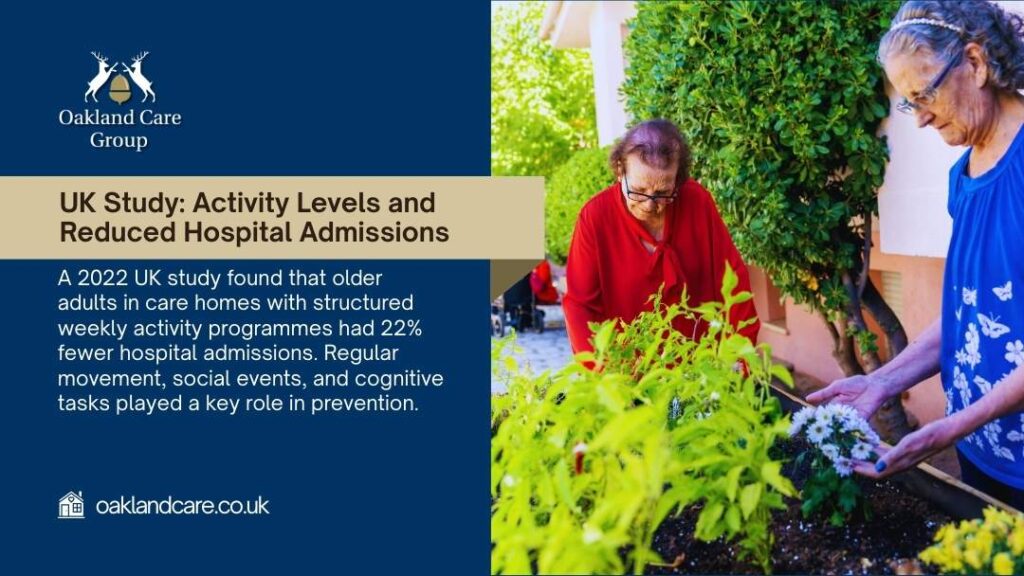
Example of a balanced weekly timetable
| Day | Morning | Afternoon | Evening |
| Monday | Gentle exercise in the lounge | Arts and crafts for elderly residents | Music hour with familiar songs |
| Tuesday | Gardening or a fresh-air walk | Baking group | Documentary film with discussion |
| Wednesday | Chair-based tai chi | Reminiscence session | Family visiting time |
| Thursday | Reading group | Social tea event | Quiet puzzle tables |
| Friday | Light mobility class | Group quiz | Board games for all abilities |
| Saturday | Craft studio time | Outings for the elderly (local park or café) | Radio and conversation |
| Sunday | Faith or reflection hour | Lounge games | Relaxed storytelling |
Types of care home activities that work
| Activity Type | Example Activities | What It Helps With | Why It Works |
| Gentle Movement & Physical Activity | Chair-based routines, tai chi–style movements, steady walking groups | Circulation, confidence, balance, light cardio, gentle mobility | Low-impact movement reintroduces motion safely, strengthens stabilising muscles, and restores a sense of body control while keeping exercise enjoyable and achievable. |
| Arts & Painting | Watercolour sessions, seasonal painting themes | Motor skills, self-expression, and mood regulation | Creative expression unlocks emotions, reduces stress, and helps residents reconnect with personal identity. |
| Textile Crafts | Sewing, simple stitching, tactile fabric projects | Focus, calmness, sensory engagement | Repetitive hand movements can soothe anxiety while offering a familiar routine for residents who once enjoyed textile work. |
| Paper Crafts | Scrapbooking, handmade cards, and collaging with photos | Memory cues, creativity, and fine-motor coordination | Photo-based crafts encourage storytelling, support reminiscence, and help residents produce keepsakes that anchor personal history. |
| Hands-On Creative Work | Clay modelling, small sculpting activities | Hand strength, coordination, and sensory stimulation | The texture of clay and shaping movements stimulate multiple senses and create a rewarding finished piece. |
| Cognitive Activities | Reading groups, crosswords, puzzles, storytelling | Mental stimulation, recall, problem-solving | These tasks challenge the mind, strengthen focus, and keep neural pathways active without pressure or performance expectations. |
| Reminiscence Sessions | Sharing old photos, vinyl records, and memory objects | Identity, grounding, emotional security | Familiar items often unlock memories, reduce agitation, and support residents living with dementia. |
| Social Events & Gatherings | Afternoon teas, themed evenings, visiting entertainers, birthday celebrations | Emotional well-being, friendship, belonging | Shared experiences break isolation, spark conversation, and strengthen the sense of community within the home. |
| Everyday Purposeful Tasks | Folding napkins, organising craft supplies, watering plants, table-setting | Confidence, responsibility, independence | Small contributions restore a sense of usefulness and dignity, especially for residents who feel they’ve lost control in other areas of life. |
| Outdoor & Nature-Based Activities | Gardening, short walks, bird watching, time in green spaces | Stress reduction, mental clarity, sensory calm | Nature eases anxiety and gently stimulates the senses, especially for residents living with dementia. |
| Technology & Modern Leisure | Video calls, easy-use tablets, playlists tailored to resident eras, virtual museum tours | Connection, cognitive engagement, and entertainment | Digital tools bridge gaps with family, bring stimulating content into the home, and keep residents engaged when outings aren’t possible. |
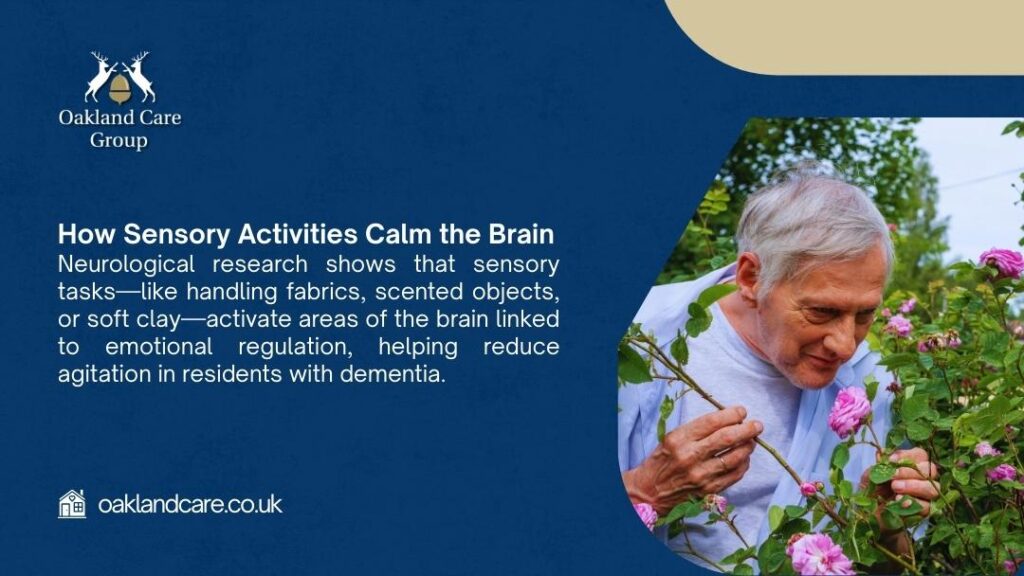
Activities for residents living with dementia
People living with dementia don’t fit into a rigid template, and good homes don’t try to force one. Instead, they use short, structured tasks with familiar themes. Music frequently unlocks memories and encourages participation even when language fades.
Sensory boxes, hand massages, rummage baskets, simple cooking preparation, leaf sorting, and gentle gardening all work well when attention span or anxiety make complex group sessions overwhelming.
One-to-one time tends to play a bigger role for residents with advanced dementia. A calm conversation, folding soft fabrics together, or sharing a photo album can be far more meaningful than a large group event. Activity programmes that understand this distinction tend to deliver stronger outcomes for comfort, stability, and emotional well-being.
Outings and community engagement
Even short trips help residents stay connected to real life outside the building. Some homes arrange regular visits to cafés, garden centres, and parks. Others maintain links with community groups, school choirs, or local volunteers.
These outings lift mood, offer sensory stimulation, and renew confidence. They matter because they keep residents part of the world, not watching it from a window.
Activities families can share with a loved one
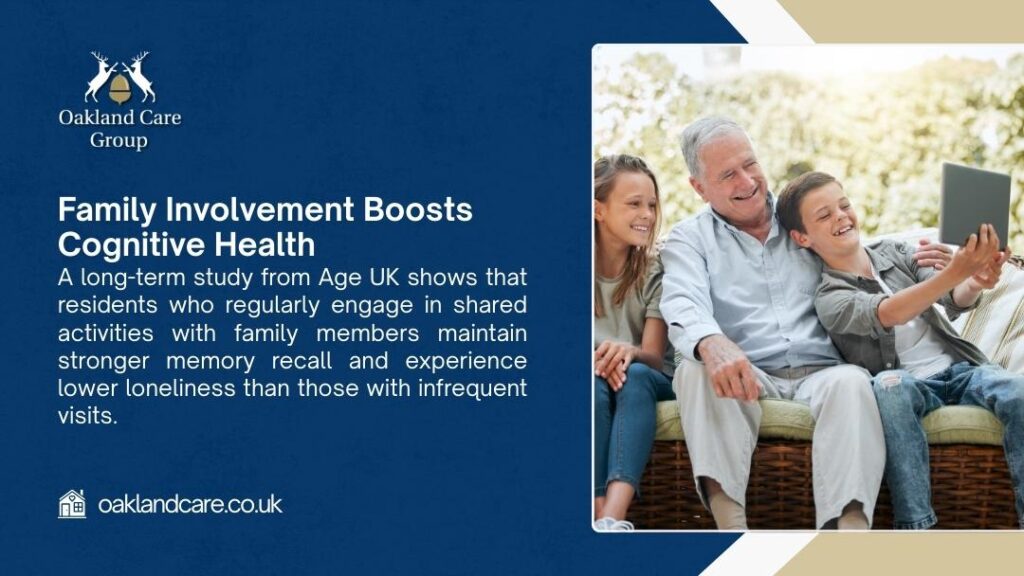
Family involvement adds depth to any timetable. During visits, simple routines, walking through the garden, reading together, and listening to favourite music can make the day feel complete. Bringing old photos or memory books can help older adults open up about stories they haven’t told in years. Some relatives choose to join group sessions, particularly arts or music, where they can experience the rhythm of the home firsthand. Shared activities like these are often what help residents settle into a new care home, and they tend to matter most during the early adjustment period.
During time spent at home before a move into care, families often search for reliable guidance. If you’re preparing for that step, it can help to explore practical advice, such as understanding the transition through guides on moving into a care home available from trusted providers.
If you’re visiting locations along the South Coast and want to understand how lifestyle programmes operate in different settings. In that case, it’s useful to look at care homes with detailed transparency about their daily structure. This approach allows families to compare settings not only by facilities or fees but by the lived experiences of their residents.
Bringing it all together for families and care teams
Care homes that invest time, thought, and genuine curiosity into their activity programmes tend to deliver richer, more dignified lives for the people who live there. Care home activities aren’t background noise; they shape identity, offer independence, and maintain social connection.
Whether a resident prefers quiet mornings with a book, lively group quizzes, outdoor time, or creative projects, the right programme makes life feel meaningful. For families considering next steps, the best way to understand a home’s culture is to visit, meet the activities coordinator, and see how residents spend their time.
If you’re looking into care options in West Sussex, the overview of life in Selsey’s care home community gives you a good feel for how things work day-to-day and what to expect before you even book a visit.
A great activity programme doesn’t simply keep older adults busy. It restores dignity, rebuilds confidence, and keeps people connected to the world, values that matter at any age.
