
“How on earth are we supposed to afford this?” This is on many peoples minds after they get the first receipt from care homes. Few families are prepared for the reality of paying for care home fees. It’s a bit like being thrown into the deep end without swimming lessons.
If you’re reading this, chances are you’re feeling that same knot in your stomach.
The costs can be eye-watering, to put it mildly. Weekly fees typically range from about £600 to well over a grand depending on where you live and the level of care needed. That’s anywhere from £31,000 to £52,000 a year! And with many people spending several years in care, paying for care home fees becomes one of the biggest financial commitments many families will ever face – second only to buying a house for most of us.
Understanding Care Home Fee Structures
This is how the fee structure looks like.
What’s Included in Paying for Care Home Fees?
“So what exactly am I paying for?”
Your typical care home fees cover the basics:
- A room (usually en-suite these days, thank goodness)
- Staff available round the clock for personal care
- Three meals a day plus snacks (quality varies wildly, I’ve found)
- Heating, lighting, laundry – the household essentials
- Some basic activities to keep residents from climbing the walls with boredom
And remember, nursing care (where trained nurses are on staff) will set you back more than residential care. We’re talking roughly £200-300 extra per week, depending on where you live.
Regional Variations in Care Home Costs
Where you live makes a massive difference to how much you’ll shell out.
Here’s roughly what you can expect to pay in different parts of the UK:
| Region | Residential Care (£/week) | Nursing Care (£/week) |
| London | 800-1,300 | 1,100-1,600 |
| South East | 750-1,100 | 950-1,400 |
| Midlands | 600-900 | 800-1,200 |
| North | 550-850 | 750-1,100 |
| Scotland | 600-900 | 800-1,200 |
| Wales | 550-850 | 750-1,050 |
| Northern Ireland | 500-800 | 700-1,000 |
These numbers keep creeping up year on year, too. For updated figures and what they mean for your family, see our guide to how much a care home costs in the UK in 2026. If you’re thinking “I’ll just move mum to a cheaper area,” think again. I explored this route, and most local authorities won’t fund care in a different region unless there’s a compelling reason, like being closer to family.
And if you’re self-funding, consider whether uprooting someone with dementia from familiar surroundings is really worth saving some cash.
Financial Assessment and Eligibility for Support
You might need to do a financial assessment test and see if you’re eligible for support.
The Means Test Explained
Here’s where things get properly frustrating. When it comes to paying for care home fees, the government isn’t exactly falling over itself to help. Before they’ll contribute a penny, they’ll put you through the dreaded “means test.”
This is basically the council going through your finances with a fine-tooth comb. They’ll want to know about:
- Your income (pensions, benefits, investments)
- Your savings and investments
- Any property you own
- Any other assets you might have
The biggest shock for most families is that your home usually counts as capital. Some people will even have to sell their house. It felt like losing part of our family history, but there was no other way to keep paying for care home fees.
NHS Continuing Healthcare Funding
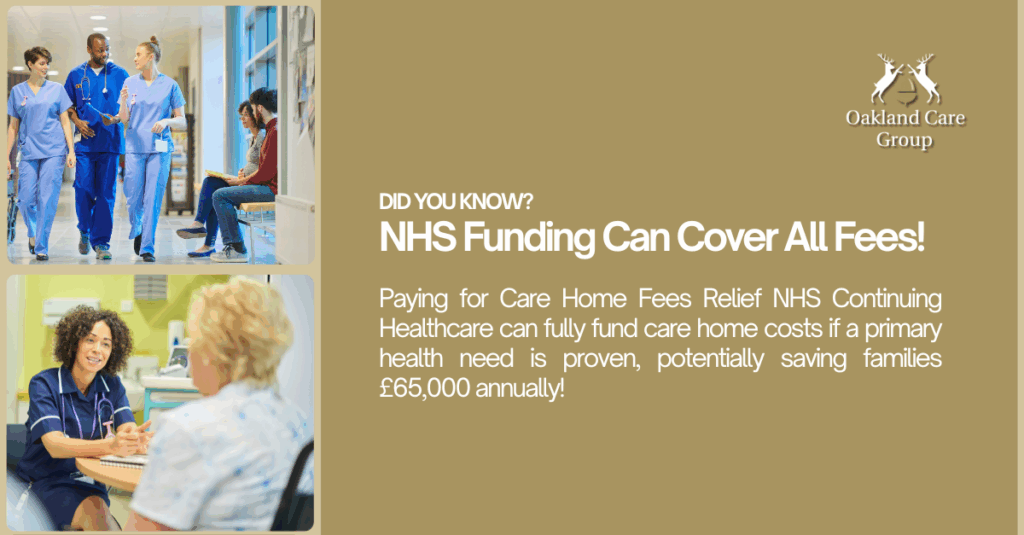
Before you resign yourself to remortgaging the house, there’s one potential lifeline worth exploring: NHS Continuing Healthcare funding, or CHC as those in the know call it.
If you qualify, the NHS picks up the entire tab for your care. Yes, the whole thing, including the accommodation costs. But there’s a catch: it’s incredibly difficult to get.
CHC isn’t about what condition you have; it’s about having what they call a “primary health need.” This means your care needs are primarily about health, not social care.
After mountains of paperwork, numerous assessments, and one appeal, you can maybe get qualified. And if you do, you will save around £65,000 a year.
Is There a Cap on Care Home Fees UK?
Currently, there is NO cap on paying for care home fees in the UK. None. If you need care for 15 years and have the assets to pay for it, you’ll be paying for 15 years.
The government has flirted with the idea of introducing a lifetime cap on personal care costs several times over the years. They’ve announced plans, set dates, then kicked the can down the road. It’s become a bit of a political football, with successive governments making promises that haven’t materialized.
This absence of a cap makes planning ahead incredibly difficult. When Dad went into care, we had no idea if we were looking at one year or ten years of fees. How do you budget for something with no upper limit?
Local authorities do have standard rates they’re willing to pay for care (often called their “usual” rates). But if you’re self-funding in a nice care home and run out of money, you might find the council won’t cover the full cost of your current place. This can mean either finding a third party to pay the difference or facing the prospect of moving to a less expensive home.

Property and Paying for Care Home Fees
When Your Home is Included in Financial Assessment
For many people, their home is their most valuable asset, making it a crucial consideration when it comes to paying for care home fees. As a general rule, the value of your home will be included in the financial assessment unless:
- Your spouse or partner still lives there
- A relative aged 60 or over lives there
- A disabled relative lives there
- A child under 18 who you’re responsible for lives there
If none of these exemptions apply, the value of your property will likely be counted among your assets when determining how you’ll be paying for care home fees.
12-Week Property Disregard and Deferred Payment Agreements
If your home is included in the financial assessment but your other capital is below the upper threshold, you may benefit from:
- 12-Week Property Disregard: During the first 12 weeks of permanent care, the value of your home is temporarily disregarded, giving you time to decide what to do with it.
- Deferred Payment Agreement (DPA): This allows you to delay paying for care home fees without having to sell your home immediately. The local authority essentially loans you the money for care, which is paid back when your house is eventually sold or from your estate after death.
These options provide breathing space while deciding the best approach to paying for care home fees without rushing into selling your property.
Can I Put My House in Trust to Avoid Care Home Fees?
One question that frequently arises is whether putting property into a trust can protect it from being used for paying for care home fees. While it’s technically possible to place a house in certain types of trusts, timing is crucial:
If the local authority determines that avoiding paying for care home fees was a significant motivation for the transfer (known as ‘deliberate deprivation of assets’), they can assess you as if you still owned the property. There’s no set timeframe for this, though transfers made closer to needing care are more likely to be scrutinized.
Placing your home in trust many years before needing care, for legitimate estate planning purposes, may be viewed differently. However, this is a complex area that requires specialist legal advice, as the rules around deprivation of assets are strictly enforced.
Tenants in Common to Avoid Care Home Fees
Another approach some couples consider is changing how they jointly own their property. When a property is owned as ‘joint tenants,’ both parties own the entire property together. However, owning as ‘tenants in common‘ means each person owns a defined share, which can be left to someone other than the co-owner in a will.
Some people explore this option with the hope of protecting half the property’s value from being used for paying for care home fees if one partner needs care. However, the effectiveness of this strategy depends on many factors, including timing and individual circumstances.
As with trusts, if the local authority believes the arrangement was made specifically to avoid paying for care home fees, they may still include the full property value in their assessment. Professional legal advice is essential before making such arrangements.
Long-term Financial Planning for Care
You need to have a long term plan.
Self-funding: Managing Your Resources
If you’re self-funding (paying for care home fees without local authority support), careful financial management becomes essential. Consider these strategies:
- Immediate Needs Annuities: These are insurance policies specifically designed for people entering care. You pay a one-time lump sum, and in return, the policy provides a guaranteed income for life to cover care costs.
- Investment Options: Certain investment vehicles might provide income to help with paying for care home fees while preserving some capital.
- Rental Income: If your property is exempt from the financial assessment, renting it out could generate income to contribute toward care costs.
When self-funding, it’s also worth negotiating with care homes, as many offer better rates to private payers who commit to longer stays or who pay promptly.
What Happens When the Money Runs Out for Care Home Fees?
A common concern for self-funders is what happens when their money runs out. If your capital drops below the upper threshold (currently £23,250 in England):
- Contact your local authority for a reassessment
- They will determine what they’re willing to pay toward your care
- If this is less than your current care home charges, you may need to:
- Find a third party to pay the difference as a ‘top-up’
- Move to a less expensive care home that accepts local authority rates
It’s important to plan for this possibility in advance rather than waiting until funds are nearly depleted. Having this conversation early with both the care home and local authority can make any transition smoother.
What Benefits Can You Claim If You Are in a Care Home and Self-funding?
Even when self-funding and paying for care home fees, you may still be entitled to certain benefits:
- Attendance Allowance: This non-means-tested benefit is available for those over state pension age who need help with personal care.
- NHS-funded Nursing Care Contribution: If you’re in a nursing home, the NHS pays a flat rate directly to the home toward the nursing component of your care.
- Pension Credit: Depending on your income, you might qualify for this means-tested benefit.
These benefits won’t cover the full cost of paying for care home fees, but they can help reduce the financial burden significantly. It’s always worth checking eligibility, as many self-funders miss out on support they’re entitled to receive.
Legal Considerations
You need to keep these considerations in mind when deciding how to pay for the fees.
What is the 7 Year Rule for Care Home Fees?
There’s often confusion about whether there’s a ‘7-year rule’ that protects assets from being considered for paying for care home fees. This misconception likely stems from inheritance tax rules, where gifts made more than 7 years before death are exempt from inheritance tax.
However, when it comes to paying for care home fees, there is no set timeframe after which gifts or asset transfers are automatically protected. Local authorities can look back as far as they deem necessary if they suspect deliberate deprivation of assets.
That said, the longer the period between transferring assets and needing care, the harder it may be for authorities to prove that avoiding paying for care home fees was a significant motivation, especially if there were other legitimate reasons for the transfer.

Power of Attorney and Advance Planning
Setting up a Lasting Power of Attorney (LPA) is crucial for ensuring someone trusted can make decisions about paying for care home fees if you become unable to do so yourself. There are two types:
- Health and Welfare LPA: Covers decisions about care and medical treatment
- Property and Financial Affairs LPA: Covers decisions about money and property
Having these in place before they’re needed gives you control over who makes decisions on your behalf and can make the process of arranging and paying for care home fees much smoother during what is already a stressful time.
Making the Right Choice for Your Situation
So, which choice should I make?
Care Home vs Nursing Home
When considering options for care, it’s important to understand the distinction between care homes and nursing homes, as this affects both the level of care provided and the costs involved in paying for care home fees:
- Residential care homes provide accommodation, meals, and help with personal care (washing, dressing, taking medication)
- Nursing homes offer everything residential homes do, plus 24-hour medical care from qualified nurses
Nursing homes are typically more expensive due to the additional skilled care provided. Choosing the right type of home is essential for ensuring appropriate care while managing costs effectively.
Care Home vs Home Care
Before committing to paying for care home fees, it’s worth exploring whether home care might be a viable alternative. Home care involves carers visiting your home to provide support, from a few hours a week to round-the-clock care.
Financially, the comparison between care home and home care isn’t straightforward:
- For lower levels of care (a few hours daily), home care may be less expensive than a care home
- For intensive care needs (multiple daily visits or live-in care), home care can actually exceed care home costs
- Home care doesn’t include accommodation costs, but you’ll still have household bills to pay
The decision should balance care needs, personal preferences, and financial considerations, recognizing that the right choice varies for each individual.
Taking the Next Step
We know that this whole journey can feel overwhelming. The sleepless nights wondering how to make the money stretch, the guilt about making decisions for loved ones, the mountain of paperwork… it’s a lot to handle when you’re also dealing with the emotional side of seeing someone you love need care.
We’ll make sure to explain our fee structure clearly and connect you with a financial adviser who specialized in care funding. If you’re feeling overwhelmed by the prospect of paying for care home fees, sent us an email at enquiries@oaklandcare.co.uk.
You can also visit our Advice page to learn more about our approach to fees and funding.
Remember, finding the right care home isn’t just about the finances, it’s about finding a place where your loved one will be happy, comfortable, and treated with dignity.
