
Understanding what is a CQC rating can make a real difference when choosing the right care home. This guide explains how ratings work, what they mean in practice, and how families can use them to make confident, informed care decisions.
What Is a CQC Rating and Why Does It Matter?
Many people ask, what is a CQC rating, and why does it carry so much weight across the UK care sector?
A CQC rating is an official assessment given by the Care Quality Commission (CQC), the independent regulator responsible for monitoring health and social care services in England. These ratings reflect the quality of care, safety standards, leadership, and overall experience within a care setting.
When families begin searching for support, especially for older relatives, they often feel overwhelmed. That’s where understanding what is a CQC rating becomes essential. It offers a clear, government-backed indicator of whether a service delivers high-quality care or falls short of expected standards.
According to the UK government, the CQC regulates services, including care homes, hospitals, and GP practices. Their findings are publicly available, making transparency a core part of the system.
And that’s why it matters. A rating is not just a label. It reflects real experiences, real inspections, and real outcomes.
What Is the Care Quality Commission (CQC)?
To fully grasp what is a CQC rating, you first need to understand what the CQC itself is.
The Care Quality Commission acts as the official watchdog for health and social care services in England. Its role is to ensure that providers meet strict CQC standards and deliver safe, effective, and compassionate care.
So, what does the CQC do in practical terms?
It inspects services, speaks with residents and staff, reviews records, and publishes detailed inspection reports. These reports highlight both strengths and areas where improvements are required.
The organisation focuses on one clear goal: to protect people who use care services and ensure they receive person centred care that respects dignity and promotes wellbeing.
Without the CQC, there would be no consistent national benchmark for care quality. And that would leave families making decisions in the dark.
How CQC Ratings Work in the UK
Understanding how a CQC rating is actually decided helps remove a lot of confusion.
An inspection isn’t a quick walkthrough. It’s a detailed process that often starts before inspectors even arrive. The CQC gathers background data, reviews past performance, and looks at any complaints or safeguarding concerns. Only then do inspectors step in to see how things operate day to day.
Once on-site, they observe routines, speak with residents, talk to staff, and review care records. What matters most is not what’s written in policies, but what’s happening in real life. That distinction is often where strong services stand out.
After the visit, everything is compiled into a formal inspection report. If concerns are identified, providers must respond with a clear action plan showing how they will improve. To make things easier to follow, here’s how the process usually unfolds:
| Stage | What Happens |
| Pre-inspection review | Previous reports, complaints, and performance data are analysed |
| On-site visit | Inspectors observe care, speak with people, and review records |
| Evaluation | Findings are measured against CQC standards and key questions |
| Report writing | A detailed inspection report is created and published |
| Follow-up | If needed, an action plan is required, and progress is monitored |
One thing worth noting is that ratings are not fixed forever. A service can improve, and equally, it can fall short over time. That’s why checking the most recent report always matters.
The 5 Key Questions CQC Uses to Inspect Care Homes
Every CQC inspection is built around five core questions. These determine how services are evaluated and ultimately rated.
| Key Question | What It Means in Practice |
| Safe | Are residents protected from harm and abuse? |
| Effective | Does care achieve good health outcomes? |
| Caring | Are staff kind, respectful, and supportive? |
| Responsive | Are individual needs understood and met? |
| Well-led | Is leadership strong, accountable, and transparent? |
These questions form the backbone of every care quality commission cqc inspection. Each one contributes to the final overall ratings.
CQC Rating Levels Explained
Once inspections are complete, services receive one of four ratings.
| Rating | Meaning for Residents |
| Outstanding | Exceptional care with consistently high standards |
| Good | Safe, reliable, and effective care |
| Requires Improvement | Some standards were not fully met |
| Inadequate | Serious concerns requiring urgent action |
Understanding these levels is key when learning what is a CQC rating. They provide a quick but meaningful snapshot of performance.
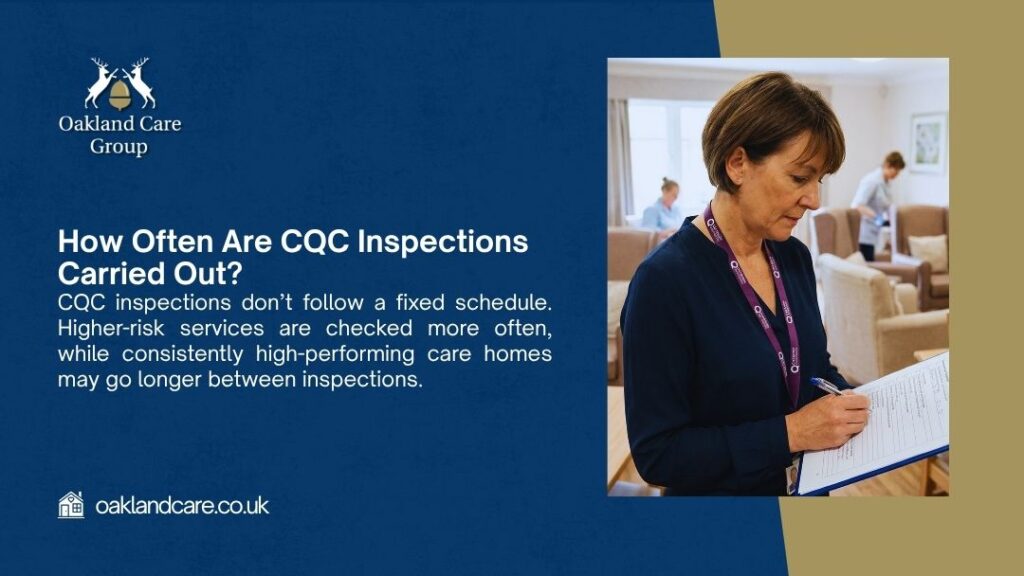
Why CQC Ratings Are Important When Choosing a Care Home
When families begin looking into care, the process rarely feels straightforward. There’s emotion involved, uncertainty, and often a sense of urgency. In that situation, knowing what is a CQC rating can bring some structure to the decision.
A rating gives you a starting point, but more importantly, it reassures you. It tells you that an independent regulator has already assessed the service against national standards.
That reassurance becomes even more valuable when comparing different options. For example, if you’re considering a trusted care home in Bognor Regis or exploring nearby areas, ratings allow you to narrow choices without guessing.
But here’s where it goes deeper.
CQC ratings also reflect consistency. A service rated as good or outstanding is not just performing well occasionally. It is meeting expectations across multiple areas, from safety to leadership.
They also highlight risk. If a service has been marked as requiring improvement or inadequate, it signals that something isn’t quite right. That doesn’t automatically rule it out, but it does mean you need to ask more questions.
For families who are already navigating decisions like how to choose a care home, this level of clarity can make the process far less overwhelming. In simple terms, ratings don’t decide for you. But they do help you avoid making the wrong one.
How to Check a Care Home’s CQC Rating
Looking up a CQC rating is easy, but knowing how to interpret what you find takes a bit more care. Most people start by searching the care home name on the official CQC website. Within seconds, you’ll see the latest rating and a link to the full report. That part is straightforward.
What often gets missed is the detail behind the headline.
Each listing includes a breakdown of how the service performed across the five key questions. This is where you start to see patterns. A home might be rated good overall but have weaker areas in leadership or responsiveness.
Another important detail is timing. Always check when the report was published. A rating from several years ago may not reflect current standards. Services change, teams evolve, and improvements happen.
If you’re exploring options such as a well-located care home in Littlehampton, it’s worth reading through at least part of the inspection report rather than relying on the rating alone.
Pay attention to comments about staff interactions, resident feedback, and how concerns are handled. These small details often tell you more than the rating itself.
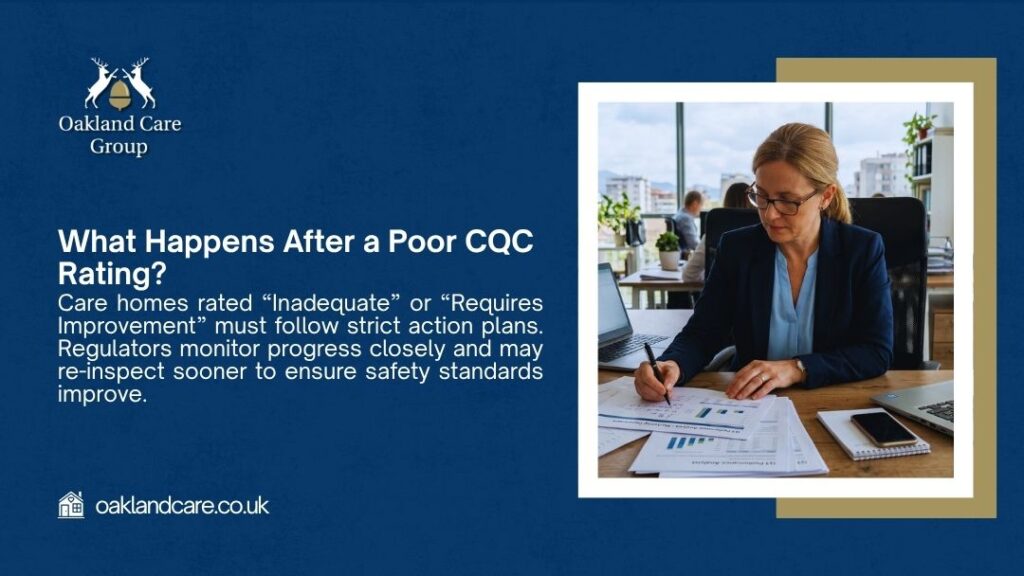
CQC Ratings vs Real-Life Experience
Here’s where things become more nuanced. A CQC rating provides structure and oversight, but it doesn’t replace human experience. Visiting a care home often reveals things that no report can fully capture.
Before the table below, it’s worth keeping one simple idea in mind. Ratings show compliance. Real-life experience shows culture.
| Aspect | What CQC Rating Shows | What You Experience in Person |
| Safety | Policies, procedures, risk management | Cleanliness, atmosphere, attentiveness |
| Caring | Evidence of respectful care | Tone of voice, warmth, relationships |
| Responsiveness | Care plans and adaptability | How quickly staff respond to needs |
| Leadership | Management systems and structure | Staff morale and confidence |
| Overall feel | Compliance with standards | Whether it feels like home |
After looking at both sides, most families realise something important. The best decision comes from combining both perspectives.
That’s why visiting, observing, and asking questions still matter. Helpful questions to ask when visiting a care home can make those visits more meaningful.
Local Care Homes and CQC Ratings
Choosing a care home close to familiar surroundings helps maintain routines, encourages regular visits, and keeps residents connected to their community. That sense of continuity can make a real difference during what is often a major life transition.
When searching for a care home in Chichester or nearby towns, CQC ratings help filter options. But local knowledge adds another layer. Coastal areas such as Bognor Regis and Littlehampton often attract families looking for a calm, accessible environment. The pace is different, and for many older adults, that quieter setting feels more comfortable.
In these areas, smaller, family-run providers tend to stand out. They often combine strong ratings with a more personal approach to care, something that can be harder to find in larger, more corporate settings. So while ratings guide your search, local context shapes your final choice.
Common Misunderstandings About CQC Ratings
There’s a lot of confusion around what is a CQC rating, and some assumptions can lead people in the wrong direction. Before the table below, it helps to recognise that a rating is only one part of a much bigger picture.
| Misunderstanding | What’s Actually True |
| Ratings never change | They are updated after inspections and can improve or decline |
| One rating tells the whole story | Inspection reports provide far more detail |
| Good is not enough | A good rating meets all required standards |
| Older reports are still reliable | Outdated reports may not reflect current care |
| All homes are inspected equally often | Inspection frequency varies based on risk |
After reviewing these points, it becomes clear that interpreting ratings requires context. Without that context, it’s easy to misjudge a service.
How Care Homes Improve Their CQC Rating
Care homes are not static environments. They change, adapt, and, in many cases, improve significantly over time.
When a service receives a lower rating, the response is not simply to accept it. The provider must address concerns directly. This usually begins with a structured action plan, outlining exactly what needs to change.
Improvements often focus on staff development. Better training, clearer communication, and stronger leadership can have a noticeable impact on day-to-day care. In some cases, providers also review systems such as medication management or care planning to ensure they meet updated CQC standards.
Another important factor is feedback. Listening to residents and families plays a key role in identifying areas that need attention. Over time, these adjustments contribute to better outcomes and, eventually, improved ratings.
This ongoing process reflects a broader principle within the care quality commission cqc system. Care should not stand still. It should evolve.
Choosing the Right Care Home with Confidence
Deciding on care is rarely easy. It involves practical concerns, emotional weight, and often a sense of responsibility that can feel overwhelming.
Understanding what is a CQC rating gives you a reliable framework. It allows you to compare options, identify risks, and focus your attention on services that meet recognised standards. But confidence comes from more than just data.
Visiting a care home, speaking with staff, and observing daily life provide insights that no report can fully capture. Looking into details such as routines, activities, and communication style helps build a clearer picture.
Families who take the time to combine these elements tend to feel more assured in their choice. They are not relying on one source of information, but drawing from several. And that balanced approach often leads to better outcomes, both for residents and for those supporting them.
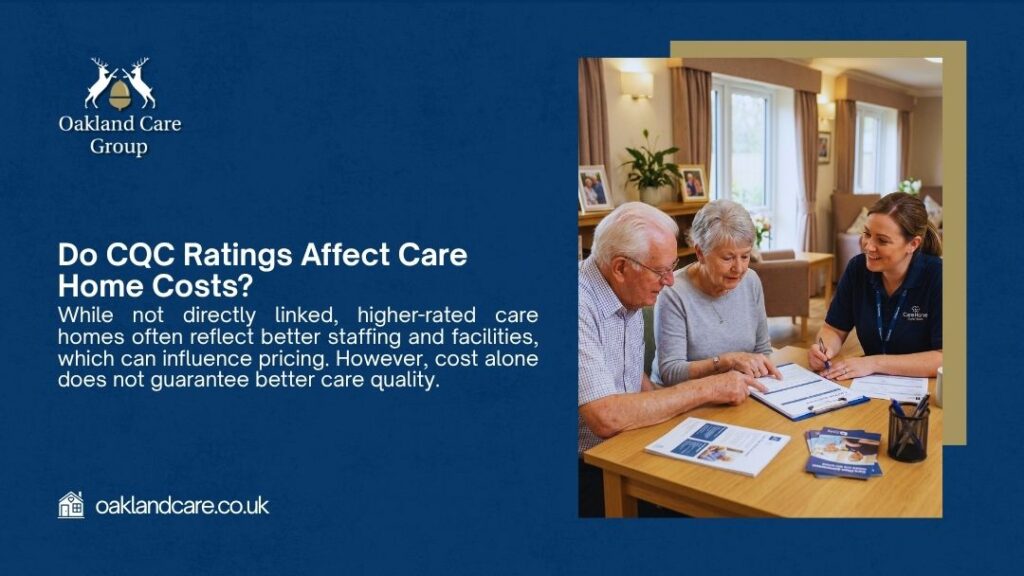
A Thought to Take Forward
Understanding what is a CQC rating is a valuable step, but it is only part of the journey. What matters most is finding a place that feels right. A place where care is not just delivered, but genuinely lived.
If you are exploring options in West Sussex and want a setting that combines trusted standards with a warm, family-led approach, Oakland Care offers that balance.
Take the next step. Arrange a visit, see the environment for yourself, and experience what thoughtful, person-centred care really looks like.
