
Choosing a care home is one of those decisions families rarely feel fully ready for. It may come after a fall, a hospital stay, a dementia diagnosis, or months of quiet worry at home. This guide explains how to compare care homes in a practical, steady way, so you can look beyond polished brochures and focus on care, safety, staff, fees, daily life and long-term comfort. For families in West Sussex, it also shows how local access, familiar surroundings and regular family visits can make a real difference.
How to Compare Care Homes
The best way to understand how to compare care homes is to start with the person, not the building. A beautiful lounge matters. So does a bright room, a tidy garden and a warm welcome at reception. But those things only tell part of the story. The right care home is the one that can support your loved one safely, kindly and consistently, not only on the day you visit but on an ordinary Tuesday afternoon when nobody is trying to impress.
A fair comparison should look at care type, CQC rating, inspection report, staff culture, care plans, food, activities, visiting arrangements, fees, location and family communication. Should it also ask a more personal question: would your loved one feel known here?
That question carries weight. Good care is not only about helping with washing, dressing or medication. It is also about whether staff remember how someone likes their tea, whether a resident with dementia is reassured rather than rushed, and whether families feel listened to when they raise a concern.
At Oakland Care Group in West Sussex are built around the belief that a care home should feel like home, not simply a place where care tasks are carried out. That matters for families comparing Oakland Court in Bognor Regis, Oakland Grange in Littlehampton and other care homes in the area. A good decision should feel practical, but it should also feel human.
Age UK advises families to speak with the local council, search online, ask friends and relatives, and use trusted care home information sources when looking for care homes in your area. A care needs assessment through adult social care can also help clarify what support is needed before families start shortlisting homes.
If you are comparing local options, you may want to look at Oakland Court in Bognor Regis or Oakland Grange in Littlehampton alongside other care homes in West Sussex. Using the same criteria for each home keeps the process fair and makes family discussions easier.
Start With the Level of Care Your Loved One Needs
Before you compare room sizes, gardens or weekly fees, be clear about the level of care required. This is where families can easily take a wrong turn.
A person may need a residential care home if they want support with daily life, meals, personal care, medication prompts and companionship. Someone with more complex medical needs may need nursing care. A person living with dementia may need a calmer setting, trained staff and a clear dementia care plan. Another person may only need respite care after an illness or while a family carer has a break.
The point is simple: the home must match the person’s needs now and be honest about what happens if those needs change.
Understanding the Different Types of Care
The type of care a home provides should be the first filter you apply. Not every home offers every type of care, and a home may be excellent at residential care but less equipped for complex dementia support.
| Care type | Who it may suit | What to compare |
| Residential care | Older adults who need daily support, meals, personal care and a safe routine | Staff approach, room comfort, activities, dignity, family contact and daily reassurance |
| Dementia care | People with memory loss, confusion or changes in behaviour | Staff training, routine, calm spaces, family updates and how distress is handled |
| Respite care | Short-term stays after illness, carer breaks, or trial stays | Flexibility, handover, minimum stay, activities, comfort and fee clarity |
| Convalescent care | Recovery after surgery, illness, a fall or hospital discharge | Nutrition, rest, mobility support, confidence-building and links with healthcare professionals |
| Nursing care | People who need registered nursing support | Nurse availability, medication support, clinical oversight and funding questions |
| Palliative or end-of-life care | People who need comfort, privacy and dignity near the end of life | Family access, pain support, communication, privacy and compassionate care planning |
If you are unsure what type of care is needed, ask for a care needs assessment through your local council. The NHS recommends speaking with your GP, a district nurse, adult social care services, or a palliative care team to understand what care is appropriate. A care needs assessment through adult social services can also help clarify requirements before you begin comparing specific homes. This can help families understand the difference between residential care, nursing care, dementia care, respite care and other care services before they make a decision.
A comparison of care home vs nursing home can also help families understand the difference between everyday residential support and more clinical nursing care.
Compare CQC Ratings, But Read the Inspection Report Too
A CQC rating is one of the first things families check, and rightly so. The Care Quality Commission CQC regulates adult social care services in England, including care homes. Its inspection reports look at whether a service is safe, effective, caring, responsive and well-led.
Still, a rating is only the start. Two care homes can have the same CQC rating and feel very different when you visit. One may feel warm, organised and personal. Another may meet standards but feel less settled or less suited to your loved one.
Read the inspection report, not just the headline rating. Look for comments about staffing, medicines, dignity, safeguarding, leadership and how the home responds to residents’ preferences. Check the inspection date too. An older report can still be useful, but it should sit alongside recent reviews, your visit and direct questions to the manager.
The Care Quality Commission gives a simple but powerful sign of good care: “There are always enough staff on duty with the skills needed to make sure you are safe.” That line is worth remembering during every visit, because staffing affects almost everything else: response times, meals, personal care, activities, reassurance and dignity.
Oakland Care Group states that its homes are registered with the Care Quality Commission. Its values focus on dignity, respect, quality care and support, teamwork and reflection. Before you visit, it is worth reading about Oakland Care Group’s values, then asking how those values show up in everyday life.
Look Beyond the Brochure: Staff, Safety and Daily Life
When families search for how to compare care homes, they often expect a neat checklist. A checklist helps, of course. But the real test is daily life.
Watch how staff speak to residents. Do they use names? Do they bend down to talk to someone seated? Do they seem calm, even when the home is busy? Are residents dressed with care? Are glasses, walking frames and call bells within reach? Does the home feel lived in, rather than staged?
These details matter because they show culture. Good care home care is not just policy. It is a habit.
The 6 C’s of care can help families judge the atmosphere in plain language: care, compassion, competence, communication, courage and commitment. You do not need to use those words during your visit. Just ask yourself whether staff seem kind, capable and willing to listen.
A care plan is another important sign. In simple terms, a care plan explains what support a resident needs, how they prefer that support, what risks need attention, and what matters to them as a person. Care plans in care homes should reflect routines, food preferences, mobility, medication, communication, social life, family contact, dementia support and future wishes.
Sensitive topics may also come up. Families may need to talk about mental capacity, lasting power of attorney, medication, falls risk, nutrition, end-of-life care in care homes or a DNAR decision. If your loved one has a ReSPECT form, information on the ReSPECT form may help you understand how future care wishes can be discussed.
Compare Care Home Costs Without Guesswork
Care home costs can feel uncomfortable to discuss, but clear fees protect everyone. Before you choose a care home, ask what the weekly fee includes, what costs extra, when fees may rise, how deposits work, and what happens if care needs increase. A home should be able to explain this calmly and clearly. If the answer is vague, ask again.
Some families pay privately. Others may receive help after a local council financial assessment. A care needs assessment looks at the support someone requires, while a financial assessment looks at what they may be able to contribute. GOV.UK explains that local authorities carry out a financial assessment to determine what a person can afford to contribute.
Costs may also connect with UK pension income, Attendance Allowance, NHS continuing healthcare, funded nursing care, property, savings, family top-ups and legal advice. Families should get proper financial guidance before making major decisions about selling a home, trusts, tenants in common arrangements or deprivation of assets. A care home fees can help families better understand the financial side in more detail.
| Cost question | Why it matters | What a clear answer should include |
| What is the weekly fee? | Families need a realistic figure before they compare care homes | The base fee, payment dates and whether the fee changes by room or care need |
| What is included? | Some homes include more than others | Meals, laundry, activities, personal care, room facilities and standard support |
| What costs extra? | Small extras can add up | Hairdressing, chiropody, newspapers, outings, private therapies or visitor meals |
| What happens if care needs rise? | A resident’s needs may change over time | Review process, fee reassessment, family discussion and notice period |
| Is a deposit required? | Upfront costs affect planning | Amount, refund rules and contract terms |
| Can council funding apply? | Some families need local council support | Needs assessment, financial assessment, top-up rules and choice of accommodation |
| Is nursing funding relevant? | Nursing care may qualify for extra support | Whether NHS-funded nursing care or continuing healthcare may apply |
The lowest fee is not always the best value. The highest fee does not always mean the best match, either. Good value means the care is safe, transparent, personal and suited to your loved one.
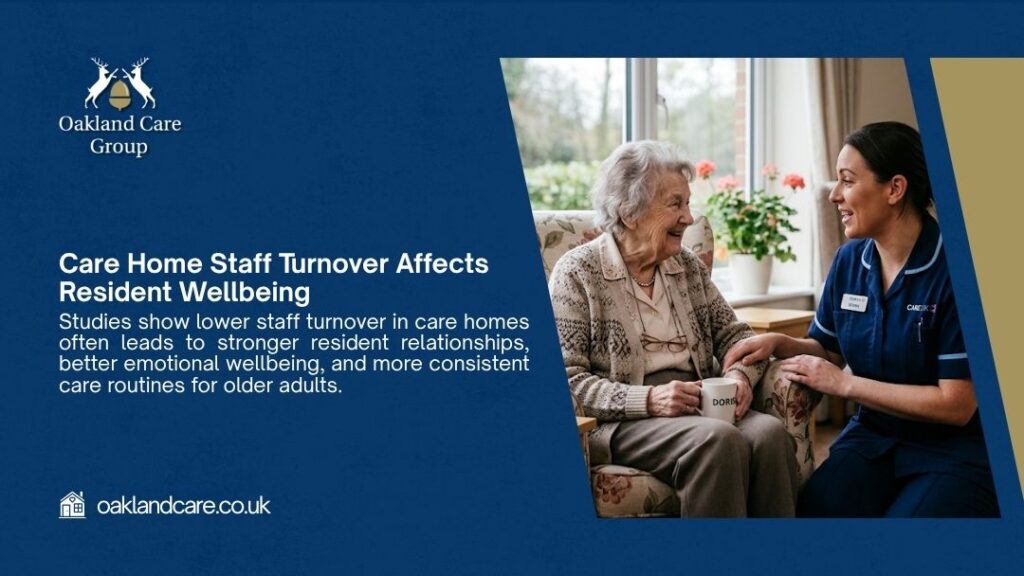
Visit More Than Once Before You Decide
A first visit shows you the front door. A second visit often shows you the home. Try to visit more than once if you can. Go at different times of day. A late morning visit may show activities, care routines and lunch preparations. An afternoon visit may show how staff support residents when energy dips. If the home allows it, arrive a little early and sit quietly for a few minutes. You often learn more from ordinary moments than from a polished tour.
During a visit, look past the decoration. Notice the dining room, lounges, corridors, quiet areas and garden. If residents are taking part in activities, do they seem engaged? If someone is confused, do staff respond with patience? If a family member asks a question, is the answer clear and kind?
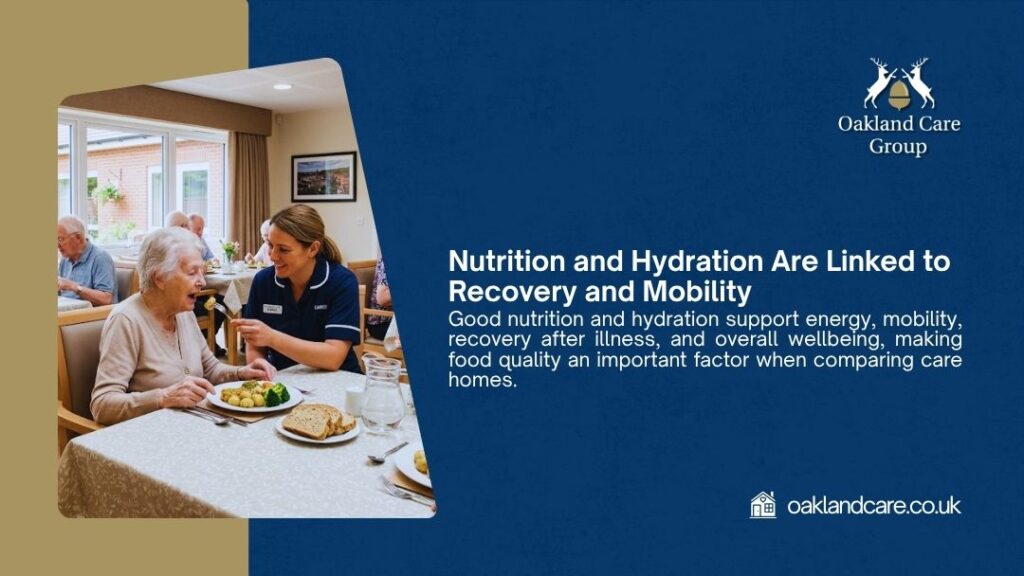
Food deserves proper attention, too. Meals shape health, routine, comfort and social life. Ask about menus, snacks, hydration, dietary needs and whether residents can choose where they eat.
At Oakland Court, the home describes hotel-style dining, freshly prepared meals, seasonal menus and support for dietary needs. That may matter to residents who value choice, routine and the pleasure of a well-prepared meal.
If a home feels like a possible match, book a proper visit rather than relying only on online research. A conversation with the manager, a walk through the lounges, and a look at daily life can tell families far more than a web page alone. Oakland Care Group welcomes families to ask questions, meet the team and see whether the home feels right before any decision is made.
For a more detailed look, explore questions to ask when visiting a care home. If your family is already preparing for the next step, learning how to move into a care home may also help.
Use the Oakland 3-Visit Comparison Method
Most care home guides tell families to visit. Fewer explain how to compare what they see. The 3-Visit Comparison Method gives you a simple way to judge each home fairly.
Visit one is the practical visit. Look at care type, rooms, fees, CQC rating, staffing, food, activities and location. Ask the manager direct questions and take notes before you leave.
Visit two is the atmosphere visit. Pay attention to ordinary life. Watch how staff speak to residents. Notice whether people look relaxed, whether the home feels calm, and whether residents are treated with warmth.
Visit three is the family decision visit. Bring another trusted relative if possible. Compare concerns, ask follow-up questions, and imagine your loved one living there on a normal day, not just during a tour.
This method slows the process down just enough to protect the decision. It also helps families avoid choosing a care home based only on one impressive feature, such as a large room, a sea view or a lower fee.
| Visit | Main aim | What to score out of 5 |
| Visit one | Facts and suitability | Care type, CQC rating, fees, room, location and contract clarity |
| Visit two | Atmosphere and daily life | Staff warmth, resident comfort, cleanliness, food, activities and pace of care |
| Visit three | Confidence before a decision | Family reassurance, manager answers, future care options and overall fit |
A score will not decide for you. It simply gives the family a shared way to talk about it.
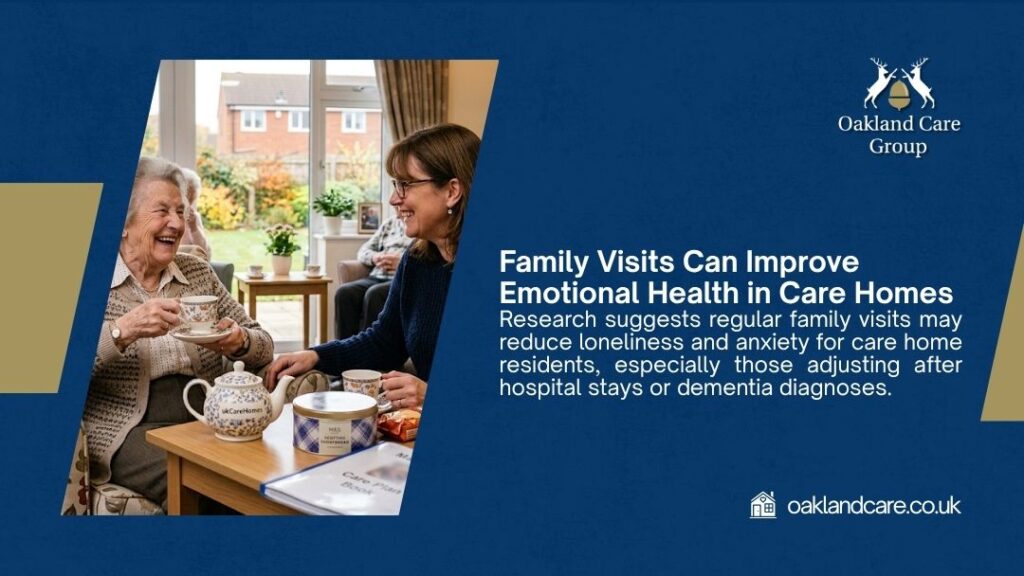
Use a Simple Care Home Scoring Table
When several care homes seem suitable, families can end up comparing memories rather than facts. One person remembers the garden. Another remembers the manager. Someone else focuses on cost.
A scoring table helps bring everyone back to the same evidence. Score each area from one to five. Add short notes while the visit is still fresh. Do not let one impressive feature outweigh serious concerns about staffing, safety, care planning or communication.
| What to compare | Why it matters | Score 1–5 | Notes to add after each visit |
| Care type | The home must match current and future needs | Does it offer the right level of care? | |
| CQC rating and report | The rating gives regulated insight | What did the inspection report say? | |
| Staff | Staff culture affects dignity and safety | Did staff seem kind, calm and present? | |
| Care plan | Support should be personal | How often are plans reviewed with family? | |
| Food | Meals affect health, comfort and routine | Were the choices clear and appetising? | |
| Activities | Social life supports wellbeing | Were activities meaningful and adapted? | |
| Fees | Families need clear costs | What is included and what costs extra? | |
| Location | Regular visits help residents stay connected | Can family visit often without strain? | |
| Complaints | Good homes listen and improve | Was the complaints process explained? | |
| Future needs | Care needs may change | What happens if dementia, mobility or health needs increase? |
Download tip: Print this table and complete it during or immediately after each visit, before impressions fade. Compare tables as a family before the final conversation. This table makes comparing care homes practical. It turns a stressful decision into a clearer family conversation.
Compare Specialist Support for Dementia, Parkinson’s or Recovery
Some residents need more than general personal care. Dementia, Parkinson’s disease, frailty after a fall, stroke recovery, palliative care or complex medication can change the questions families need to ask.
For dementia care, ask how staff support confusion, distress, repeated questions, personal care refusal, changes in appetite and night-time restlessness. Families sometimes worry about behaviour that feels out of character. A good dementia care home should respond with patience and curiosity, not blame. The team should try to understand what the person may be feeling, whether that is fear, pain, tiredness, hunger or a need for reassurance.
For Parkinson’s, ask about medication timing, mobility, falls prevention, nutrition, fatigue, hallucinations and gait changes. A care home may not replace specialist medical advice, but staff should know when to involve GPs, nurses or other healthcare professionals.
For recovery after illness, ask whether the home can support convalescent care, short-term respite, nutrition, rest and confidence after hospital discharge. Families who need daytime support may also consider Oakland’s day care support options.
Families who need daytime support may also want to read about Oakland’s day care support.
This section should stay focused on real family concerns. It does not need to squeeze in every possible medical keyword. The aim is to help readers ask better questions and feel more confident.
Local Matters: Why Distance, Family Visits and Community Count
Location should not be the only factor, but it matters more than families sometimes expect. A care home may look excellent on paper, but if it is difficult for relatives to visit, the resident may lose regular contact with the people who know them best. Familiar places, local accents, known roads, nearby shops and community links can bring comfort too.
Oakland Care Group has two homes in West Sussex: Oakland Court in Felpham, near Bognor Regis, and Oakland Grange in Littlehampton. The group describes itself as family-owned, with over 30 years of experience and a focus on comfortable, homely care.
Oakland Court is close to the coast in Felpham, near Bognor Regis. The home offers private en-suite rooms, cottage-style gardens, lounges, quiet areas and a hair and beauty salon. Oakland Grange is based in Littlehampton, giving families another local option for residential care and support.
For families travelling from Chichester, Bognor Regis, Felpham, Littlehampton, Arundel, Angmering, Worthing, Barnham, Yapton, Climping, Pagham or nearby villages, distance can affect day-to-day family life. A shorter journey may mean more visits, easier involvement in care reviews, and less pressure on relatives who are already carrying a lot emotionally.
That local connection is one reason families may compare care homes in Bognor Regis, care homes in Felpham, care homes in Littlehampton, care homes near Chichester, care homes near Arundel, and care homes near Worthing before they decide.
Questions to Ask Before You Choose
Good questions make the comparison fair. Ask each care home the same things, then compare the answers later. Ask how the home assesses new residents, how care plans are created, how often families receive updates, and what happens if needs change. Ask about night staffing, food choices, medication, falls, dementia support, activities, GP access, visiting hours, emergency procedures and end of life care.
Ask whether couples can stay together if they have different care needs. Ask how the home supports someone who feels anxious, withdrawn or reluctant to move. The answers matter most once the move happens, so it is worth reading how to support someone through the first weeks before you compare homes on paper alone. Ask what personal items can be brought in and whether residents can keep familiar routines.
You may also want to ask about social care links, adult social care referrals, local council assessments, continuing healthcare, funded nursing care and private funding.
If you feel unsure, Oakland’s advice for families choosing care can help you work through the next step. A good care provider should welcome questions, not make you feel uncomfortable for asking them.
FAQs About How to Compare Care Homes
What is the first thing to check when comparing care homes?
Start with the level of care your loved one needs. A care home may look suitable, but it still needs to match the person’s daily support, dementia care, mobility, medication and future needs.
How many care homes should I visit before choosing?
Try to visit at least three if you can. If time is limited because of a hospital discharge or urgent need, use the same comparison questions for every home and ask another family member to help review the answers.
Is a CQC rating enough to choose a care home?
No. A CQC rating is important, but it should be read alongside the inspection report, your visit, family reviews, staff answers, care planning and how the home feels in person.
What should I ask about care home costs?
Ask what the weekly fee includes, what costs extra, when fees may rise, whether a deposit is needed, and what happens if care needs increase. You may also need advice about local council funding, financial assessment, NHS continuing healthcare or funded nursing care.
How do I compare dementia care homes?
Ask about dementia training, daily routine, distress, communication, night support, activities, family updates and how staff handle behaviour changes. A good dementia care home should respond with patience and dignity.
What makes a care home feel right?
A care home often feels right when staff are calm and kind, residents appear comfortable, questions are answered clearly, fees are transparent, and your loved one is treated as a person rather than a room number.
Make the Decision With Confidence
Learning how to compare care homes can help families make a steadier decision at a difficult time. The right care home should meet the person’s needs, make them feel safe, offer clear fees, provide kind and skilled staff, support family contact, and treat the resident as an individual with a history, preferences and dignity.
Do not rush because one room is available. Do not choose only by price. Do not rely only on a CQC rating, a brochure or a single review. Compare care homes by care type, staff, safety, food, activities, inspection report, family communication, location and the feeling you get when you walk through the door.
If you are looking for care homes in West Sussex, Oakland Care Group welcomes families to visit, ask questions and see daily life for themselves. You can explore Oakland Court by the sea in Felpham, near Bognor Regis, or Oakland Grange in Littlehampton, then speak with the team about the care and support your loved one may need. The aim is simple: to help you find not just a care home, but a place that feels safe, familiar and genuinely kind.
