
Moving a parent or partner into residential care is one of the hardest decisions a family makes. If you are reading this, you are probably tired, a little guilty, and worried the person you love will feel abandoned. The right tips for settling into a care home can turn those first anxious days into a steady start, for them and for you.
What this guide covers:
- How long settling really takes, and why early wobbles are normal
- What to sort out before the move to make the first week smoother
- A calm plan for the first day and the first week
- How families can help without taking over
- Extra steps when a loved one has dementia
- Red flags that tell you something is genuinely wrong
- Where cost worries fit in
You did not fail anyone by choosing care. A good home exists to give your loved one safety, company, and dignity you could no longer provide alone.
What “Settling In” Really Means (and How Long It Takes)
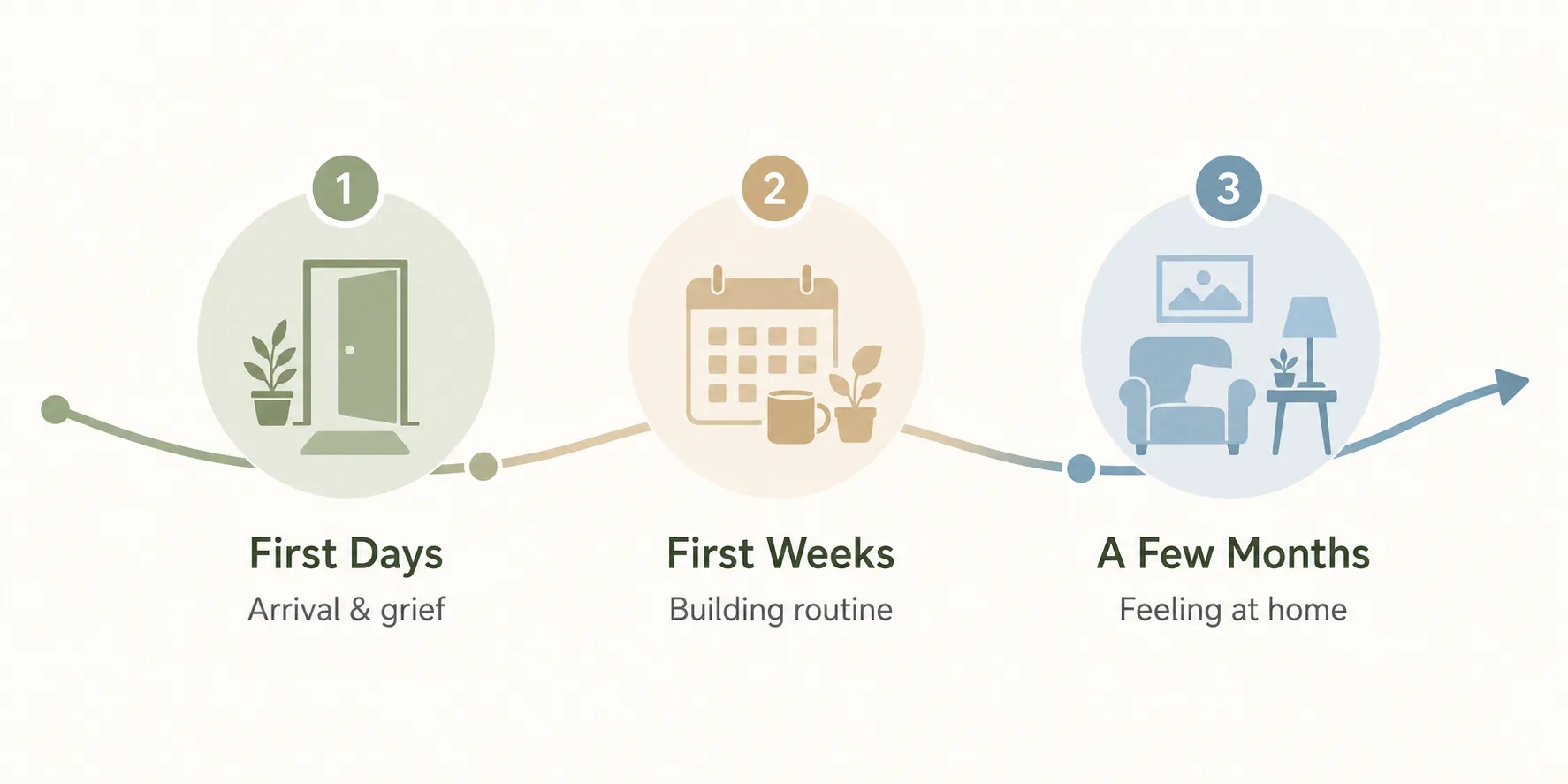
Settling is a process, not a single afternoon. Some residents feel at home within days; others need weeks or a few months to relax into a new routine. A low mood in the first fortnight does not mean the move was a mistake, it means your loved one is grieving a change, which is a normal human response. Research following older adults through this stage found that adjustment unfolds gradually and is deeply emotional rather than immediate, as documented in an exploration of how older adults transition to life in a care home. Expect ups and downs, and give both of you permission to have hard days early on.
Before the Move: Preparation That Makes Settling Easier
Most of the difference is made before the first night. Timing and preparation shape how well someone adapts, a point examined in research asking whether there is an “optimal time” to move to a care home.
Choose the Right Home First
Fit is the foundation of settling. A home that matches your loved one’s needs, personality, and pace makes every later step easier. If you are still deciding, our guide on what to look for when choosing a care home in the UK walks through the questions worth asking, and our overview of what makes a good care home explains the signs of genuine quality, trained staff, calm surroundings, and real family involvement.
Pack Familiar Comforts
A room that smells and looks like home helps someone relax on night one. Keep it simple and personal.
| Category | Examples |
|---|---|
| Comfort items | Favourite blanket, cushion, photos in frames |
| Clothing | A week’s worth, labelled, in their own style |
| Small furniture | A bedside chair or lamp if the home allows |
| Personal care | Toiletries and preferred brands |
| Hobby items | Books, knitting, radio, playing cards |
| Documents | ID, medication list, key contacts |
Who to Inform When Moving In
A few practical updates save stress later. Keep a short checklist and tick them off over the first fortnight.
| Notify | Why |
|---|---|
| GP | Transfer of medical records |
| Pension provider | Address and payment details |
| Local council | Council tax and any support |
| Banks | Address and account access |
| Utilities | Closing or transferring the old home |
The First Day: Making Arrival Calm
Arrive with a plan and plenty of time. Place one or two familiar items in the room straight away so it feels like theirs before you leave. Introduce your loved one to a key member of staff and, if the moment is right, a friendly resident or two. Keep your goodbye warm but not drawn out, a long, tearful farewell often makes the parting harder for everyone. A steady “I’ll see you soon” reassures more than a lingering one.
The First Week: Building Routine and Trust
Small, repeated routines are what create a sense of belonging. Let the staff learn your loved one’s preferences, how they take their tea, when they like to wake, what calms them. This is also when families often ask how much to visit. Quality beats quantity: a few relaxed, predictable visits usually help more than being there every hour. Ask the home what they recommend, as many suggest giving the person a little space to bond with staff early on. Family involvement matters enormously here, something echoed in research on the experiences of moving an older parent into a care home.
How Families Can Help Without Taking Over
Your role shifts from carer to advocate and companion. That change is healthy, trust the team you chose.
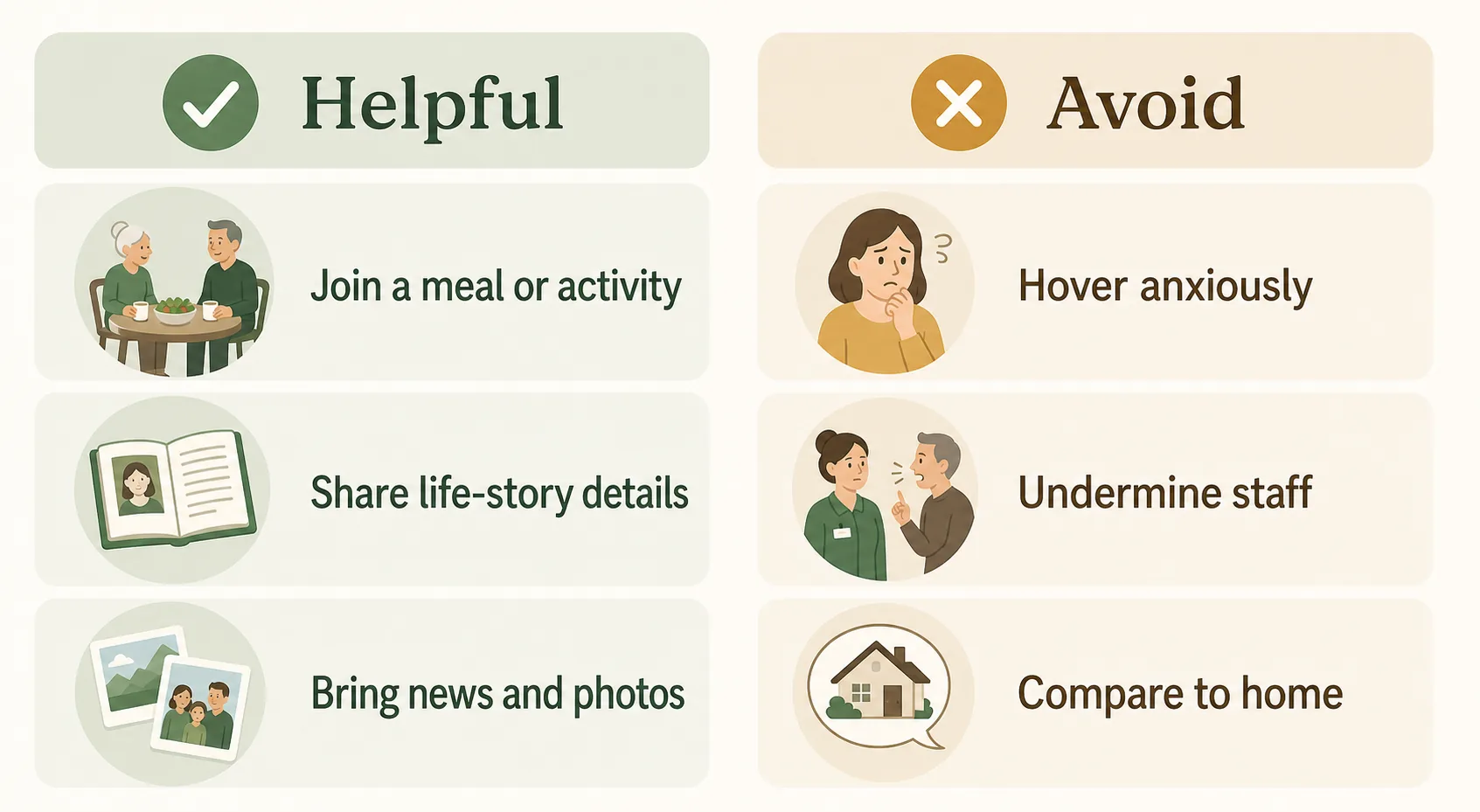
| Helpful to do | Better to avoid |
|---|---|
| Visit with purpose, join a meal or activity | Over-apologising or hovering anxiously |
| Share life-story details with staff | Undermining staff in front of your loved one |
| Bring news, photos, small treats | Constantly comparing the home to “home” |
Manage your own guilt gently. Feeling sad is not evidence you did the wrong thing. If your loved one was reluctant to move, our advice on how to get an elderly person into a care home covers approaching those conversations with patience and empathy.
Settling In With Dementia: Extra Considerations
For someone living with dementia, routine and calm matter even more. A quiet environment, consistent faces, trained staff, and familiar objects reduce confusion and anxiety. Specialist dementia teams are used to easing this transition, so lean on their experience and keep visits gentle and unhurried.
Red Flags: Signs Settling Isn’t Going Well
Normal early adjustment looks like occasional low moods that lift over weeks. Genuine warning signs are different: unexplained withdrawal that deepens, sudden weight loss, a decline in hygiene, unexplained bruising, or staff who dodge your questions. Trust your instinct. A good home welcomes concerns and answers them openly, that openness is itself a sign of quality. Raise anything worrying early rather than waiting.
When Cost Worries Are Part of the Stress
Money anxiety often sits underneath the emotional strain of a move. It is normal to worry about funding while also worrying whether your loved one is happy. You do not have to solve it all at once, start by getting clear answers on fees and funding from the home and your local council.
Frequently asked questions
What are the red flags in a care home?
At what age do most people go into a care home?
How long does it take to settle into a care home?
What can push someone into needing a care home?
A Calmer Start Is Possible
The right environment does most of the settling work for you. When a home offers warmth, skilled staff, and a genuine sense of community, families see their loved ones relax far sooner than they feared. At Oakland Care, our residential, nursing, dementia, and respite care is built around exactly that. Learn more about Oakland Care or arrange a look around one of our homes to see how a gentle, supported move can feel.
