
The article also covers inexpensive gifts for nursing home residents, handmade ideas families can make at home, and unique gifts for care home residents that standard lists miss.
A suitable gift for a care home resident is usually personal, easy to use and practical for the person’s room and routine. Before buying, consider their interests, mobility, sight, hearing and dexterity, then check the home’s guidance on items such as food, electrical gifts and clothing that needs laundering.
What Makes a Good Gift for Care Home Residents
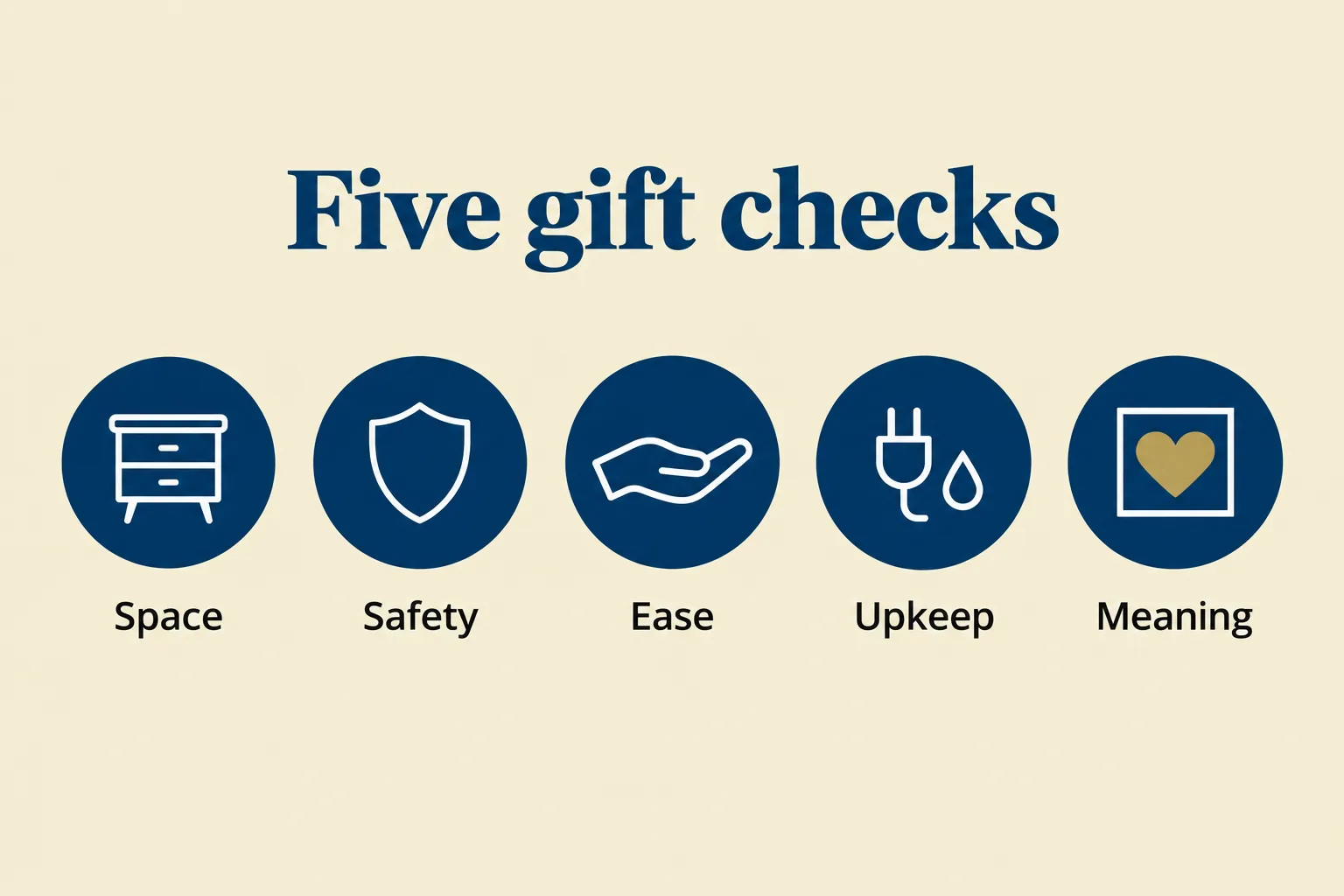
Five quick tests filter almost any idea you are weighing up.
| Gift test | Question to ask | Why it matters in a care home |
|---|---|---|
| Space | Will it sit on a bedside table, on a shelf or in a wardrobe? | Rooms may have limited storage; check available space and keep routes clear |
| Safety | Could it create a fire, trip or small-parts risk for this person or room? | Home policies and individual risk assessments matter; ask staff if unsure |
| Ease | Can it be used with reduced grip, sight or hearing? | Stiff packaging and tiny print turn a present into a frustration |
| Upkeep | Does it need staff to charge it, set it up or refill it? | A gift needing regular charging, refilling or setup may go unused unless someone can help |
| Meaning | Does it connect to their life, family or interests? | A personal connection can matter more than the price |
Two practical checks sit behind these tests. Some homes send clothing and bedding to a communal laundry, so ask about washable fabrics and how to label items. Check with the care team before bringing food, drink or toiletries, particularly where the resident has allergies, dietary requirements, swallowing guidance or skin sensitivities. The Food Standards Agency provides specific guidance on gift food in residential care homes.
Gift Ideas by Category
Useful starting points include comfort, familiar interests, contact with loved ones and activities the person already enjoys. Preferences vary, so use these ideas as prompts rather than assumptions.
| Category | Ideas | Suits best | Practical note |
|---|---|---|---|
| Comfort and clothing | Lightweight blanket, fleece bed jacket, thermal socks, well-fitting slippers, a lap blanket sized for a wheelchair, adaptive tops with front or magnetic fastenings | Anyone, especially residents who feel the cold while seated | Ask about laundering and labelling; choose washable items when practical |
| Sensory and wellbeing | Gentle hand cream, lip balm, mild toiletries, a good hairbrush, nail care set, weighted lap pad, textured cushion, hot water bottle cover | Residents who enjoy touch, routine and being pampered | Check preferences and sensitivities first, especially for shared spaces |
| Memory and connection | Printed photo book, framed family picture for a bedside table, refillable digital frame, pre-stamped and pre-addressed note cards, recorded audio messages, a wall calendar marked with visit dates and birthdays | Residents whose families live at a distance | Label photos with names and years so conversation starts easily |
| Activities and entertainment | Large-print puzzle books and crosswords, large-piece jigsaw with a board, large-print or audio books, a magazine subscription, oversized playing cards, dominoes, easy-grip craft kits, herb pots or a bulb kit | Residents with good concentration or a lifelong hobby | Choose adult themes and adult images, never child-styled versions |
Easy-to-Use Technology Gifts
Simple radios, audio players or devices with large, clear controls may suit someone who already enjoys using technology. Check that the person can use the item comfortably and ask the home about its policy on electrical gifts before buying.
Match the Gift to the Person’s Abilities and Preferences
Think about how the resident sees, hears, moves and uses their hands. Large-print books or high-contrast labels may be easier to read; simple, clearly marked controls may be easier to operate; and clothing with easy fastenings may be more comfortable for some people. These are prompts, not assumptions: ask the resident and care team what suits them. Check before buying mobility aids, weighted items or equipment that may need individual assessment.
Gifts for Someone Who Has Just Moved In
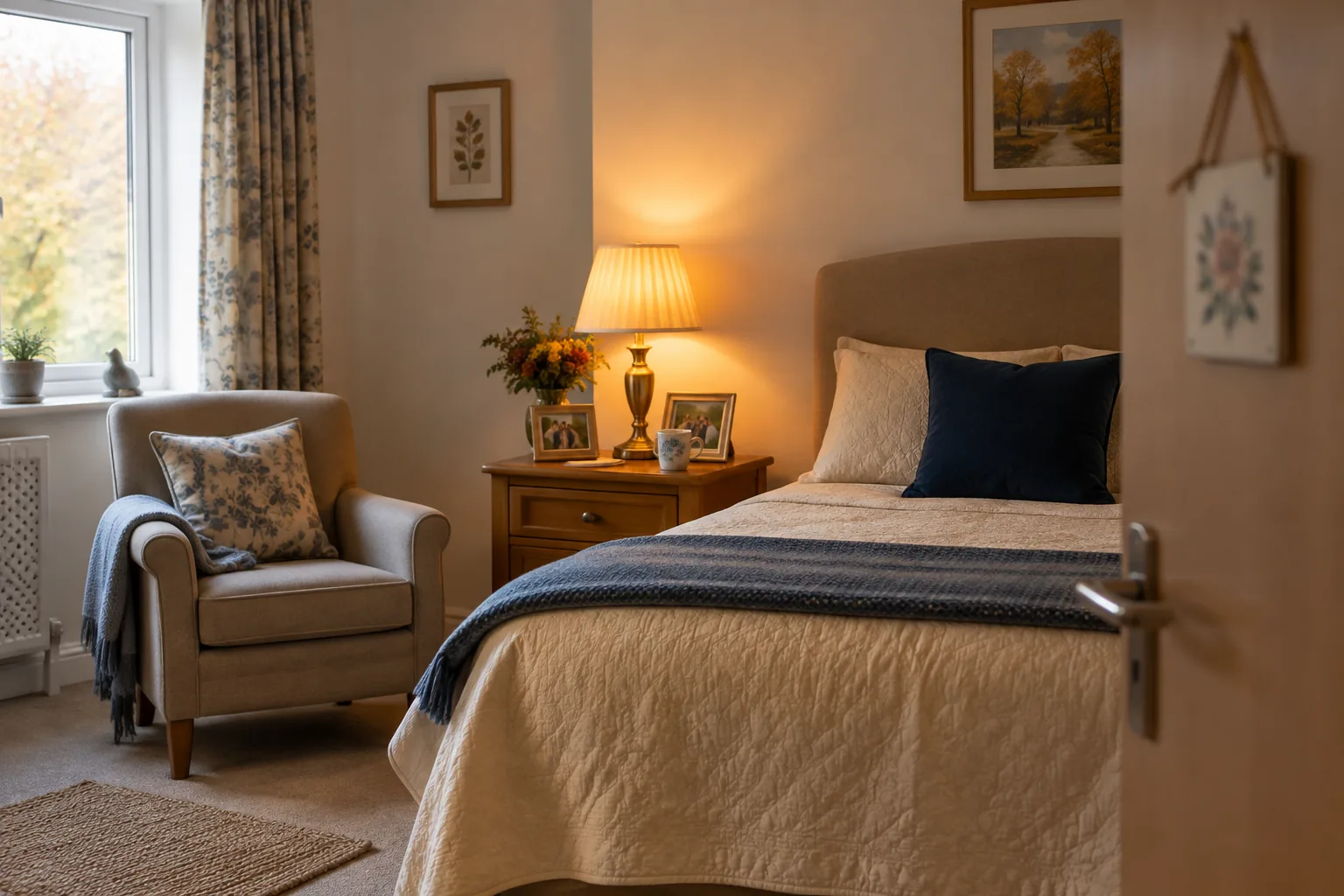
The first few weeks are about a room that feels like theirs. Familiar bedding, their own lamp or cushion, framed photographs, a favourite mug and a decorated door sign all help more than novelty. Stick to the toiletries and everyday items they already use, so the daily routine stays recognisable. Families may find Oakland Care’s practical guides to moving into a care home and supporting a parent through a move useful.
Affordable Gifts for Care Home Residents
A modest, useful gift can be easier to enjoy than a large present, especially when it suits the person’s routine and available storage.
Related readingMaking Your Parent’s Care Home Room Feel Like HomeRead the guide →| Low-cost gift | Effort | Why it lands well |
|---|---|---|
| A bundle of handwritten letters | An hour | Can be read again and again, and needs no battery or setup |
| Printed photos in a simple album | An hour | Prompts conversation with staff and other residents, not only family |
| New flannel, soap and hand cream set | Minutes | Replaces items that genuinely run out |
| A favourite biscuit or sweet, diet permitting | Minutes | Familiar taste, shared easily with visitors |
| Warm socks or new underwear | Minutes | Practical replacements may be welcome; check size, preference and what is already available |
| Group gift funded by several relatives | Shared | Turns small budgets into one good armchair blanket or recliner cushion |
Some of the best options cost nothing. A visit at the same time each week, half an hour of reading aloud, a slow walk in the garden, or a phone call on a set day give something no parcel can. Visiting arrangements differ, so check the home’s current guidance before planning a regular visit.
Unique Gifts for Care Home Residents
These less common ideas add a personal touch, but check the resident’s preferences and the home’s guidance before arranging them.
With the resident’s agreement, a life story book or memory box can bring together selected photographs, recipes or other meaningful objects. Ask before including private documents, valuables or anything the person may not want shared; the item may also give visitors a prompt for conversation. A commissioned line drawing of the house they raised a family in carries real weight for little cost. A year of letters, twelve notes written in advance and left with the home to hand over monthly, spreads the gift across the calendar. A recorded storytelling session, or a video of a grandchild’s school play or a wedding they could not attend, brings the event into the room.
An experience often beats an object: a hairdresser or manicure appointment, a request to the activities team for a visiting musician, or a family afternoon tea booked in the home’s lounge or cafe.
Handmade and DIY Gift Ideas
Handmade gifts can be thoughtful when they suit the person and are easy to clean. Ask the care team before giving knitted twiddlemuffs or fidget blankets, particularly if the resident may pull at loose threads or small parts. Fleece lap blankets need no sewing machine. Children’s artwork laminated for easy cleaning survives a care home far better than paper. Recipe cards copied in a relative’s handwriting, pressed flowers under glass, and a hand-decorated photo frame all pair low cost with high personal value.
Gifts for Residents Who Live With Dementia
Start with the person’s known preferences rather than assuming what they will enjoy. Dementia UK explains that music can help people with dementia maintain relationships; its guidance on music and dementia may help you consider whether a simple player with familiar songs would suit the person. Check with the care team about its use in shared spaces.
| Dementia-friendly gift | What it supports | Choose instead of |
|---|---|---|
| Twiddlemuff or textured blanket | Busy hands and self-soothing | Fiddly puzzles with many small pieces |
| Familiar music on a one-button player | Mood, recall and calm | A streaming subscription that needs a login |
| Photo book with large images and named captions | Recognition and conversation | Unlabelled loose photographs |
| Reminiscence card packs and old magazines | Talk about a period they remember well | Current affairs or fast-changing content |
| Soft, warm clothing with easy fastenings | Comfort and dignity at dressing time | Buttons, hooks and tight cuffs |
People’s preferences and abilities differ. Ask someone who knows the resident well whether a particular item is comfortable and suitable.
Gifts to Avoid and Why
| Gift to avoid | Reason | Better alternative |
|---|---|---|
| Food or drink chosen without checking | May conflict with allergies, dietary requirements or swallowing guidance | Check with the resident and care team first; the home’s guidance also covers safe handling of gift food |
| Candles, oil burners, anything with a flame | May not be permitted under the home’s fire-safety policy | Ask first; consider a flameless alternative if appropriate |
| Untested electrical items and extension leads | The home may need to check electrical safety, placement and its own policy | Ask the home before purchasing or bringing one in |
| Valuable jewellery, heirlooms or cash | The resident may prefer to keep valuables secure; ask about the home’s arrangements | Consider a less valuable keepsake or a photo of the item |
| Rugs, bulky furniture, large plant pots | Could take up space or affect safe movement, depending on the room and person | Check room layout and staff guidance first |
| Strong aerosols, latex balloons, heavily scented flowers | May bother the resident or others; preferences and sensitivities vary | Ask first; choose a suitable alternative |
Why a Quick Call to the Care Home Helps
Before buying, ask the resident or care team about room space, electrical items, dietary or swallowing guidance, laundering and whether the person already owns the item. The home’s advice can help you avoid bringing something unsuitable or difficult to store. The Care Quality Commission’s guidance on safe care and treatment requires providers to assess relevant risks and manage the safety of care, premises and equipment; it does not mean every item is automatically banned.
If you are comparing homes, Oakland Care’s family advice resources cover wider practicalities. Oakland Care currently lists two homes in West Sussex: Oakland Court in Felpham and Oakland Grange in Littlehampton.
Christmas and Celebration Gifts in a Care Home
At Christmas and other celebrations, check whether the home has planned activities or guidance about decorations, food and visitors. The December celebrations at Oakland Court give a good sense of how a home marks the season. Gifts that fit a shared celebration work best: a door wreath or a decoration for the room, a festive jumper, or a family visit booked in advance so it sits in the diary. Birthdays, anniversaries and religious festivals deserve the same thought.
Gifts for Care Home Staff and Carers
If you would like to thank the care team, ask the home about its gift policy first. A card addressed to the team or a modest shared treat may be suitable, but policies differ. You can also ask the manager how best to pass on specific feedback about staff.
Cash and high-value personal gifts may not be accepted, so check the home’s policy before giving anything. If appropriate, ask whether the home accepts donations for resident activities. Oakland Care describes the values that guide its work.
Gifts for Residents With Few Visitors
Some residents may have fewer visitors or receive little post. If a group is considering cards or donated items, contact the home first to ask what residents would welcome, how to arrange delivery, and whether an ongoing letter-writing or befriending activity is appropriate. Avoid assuming what any individual wants; ask the resident or their representative where possible.
I’m making up Gift hampers for care home residents in memory of my Grandad. This year There are 8 residents with no visiting relatives or friends. …Read on Reddit ↗
Key Takeaways
| Situation | Strongest choice | Why |
|---|---|---|
| Newly moved in | Familiar bedding, own lamp, framed photos | Makes an unfamiliar room feel like theirs |
| Living with dementia | Familiar music, twiddlemuff, labelled photo book | Works through the senses rather than new skills |
| Tight budget | Letters, printed photos, socks, toiletries | Personal, used daily, easy to repeat |
| Family far away | Recorded messages, refillable photo frame, a year of letters | Keeps contact visible in the room between visits |
| Christmas or a birthday | Door decoration plus a booked visit | Fits the home’s own celebrations |
Choose for the person, their room and their routine.
Check with the home first, and remember that a visit or shared activity may be as welcome as a wrapped gift.
Frequently asked questions
What gifts are useful for care home residents?
What should I check before taking a gift into a care home?
What if my relative does not use or enjoy the gift?
What is a thoughtful gift for care home staff?
Speak to a Care Home Team About What Your Loved One Needs
The people who support someone each day may be able to advise on room space, routines and the home’s gift policy. Their guidance can help you choose something the resident is more likely to enjoy.
If your family is choosing gifts, planning a visit or considering care, Oakland Care’s teams can answer questions about their homes. Explore Oakland Grange in Littlehampton and Oakland Court in Felpham, or use the group’s contact details to get in touch.