
Adult day care, also called day care, day services or a day centre in the UK, offers daytime support while a person continues living at home. Families often want to know what the day involves, what help is available and what it costs. Depending on the provider, a day may include refreshments, activities, a meal and social time. Some services also offer personal care or medication support. Schedules, transport and health-related tasks vary, so ask the service what it includes.
What Adult Day Care Means in the UK
Day care is non-residential: the person attends for an agreed session and returns home afterwards. Some services focus on social activities and meals, while others may also provide personal care or medication support. Ask what the provider can offer and whether the service is suitable for your relative’s needs.
Day care may suit an older person who wants more social contact or daytime support, or a family carer who needs planned time away. Whether a particular service is suitable depends on the person’s needs, preferences and the support the provider can offer. Ask about an assessment if you are unsure.
A Typical Day at Adult Day Care
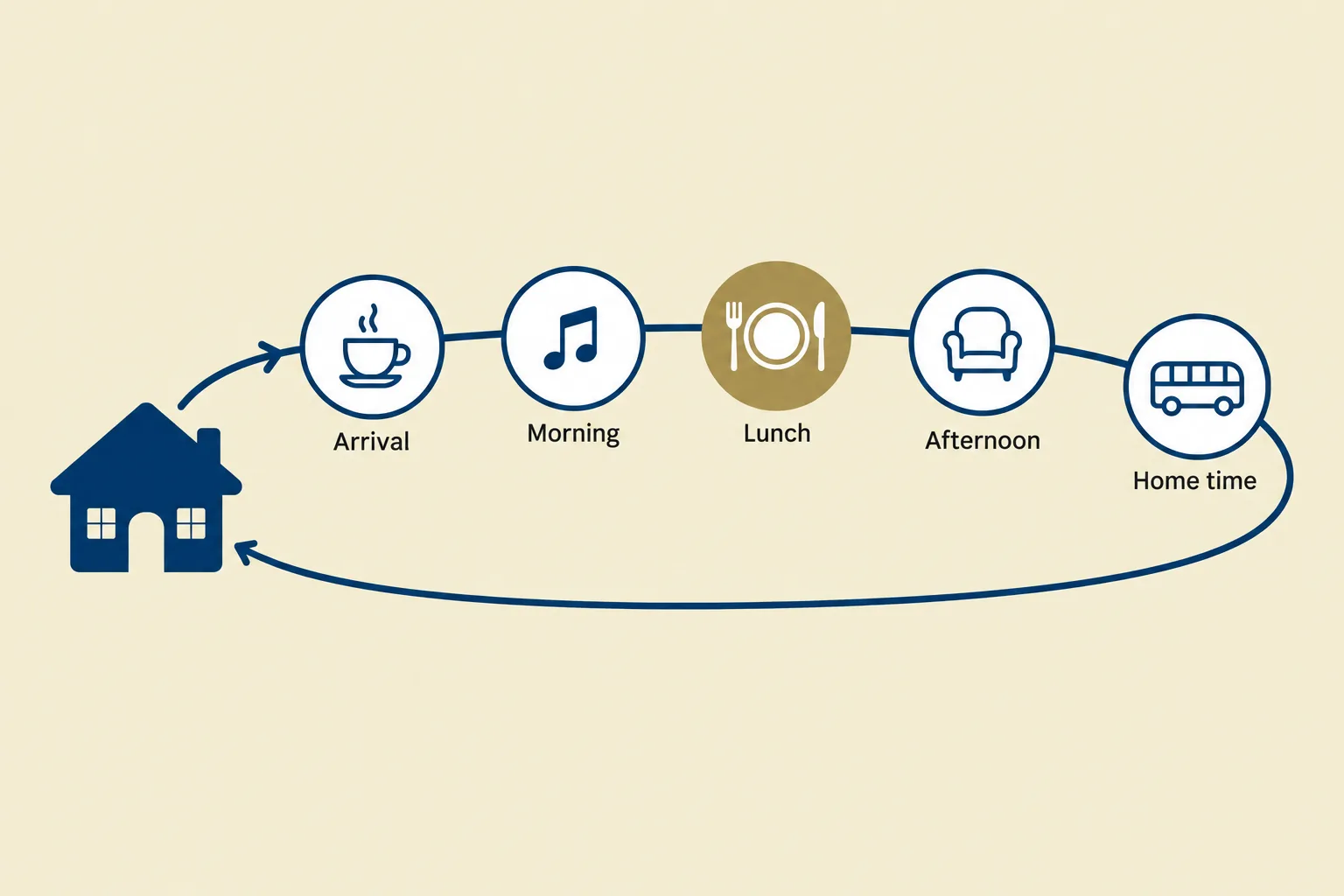
| Example point in the day | What may happen | What families can check |
|---|---|---|
| Arrival | A welcome, refreshments and time to settle in | How staff learn about the person’s mood, needs or changes that day |
| Morning | Conversation, gentle movement or a group activity | Whether people can take part at their own pace or choose another activity |
| Lunch | A meal or lunch break, depending on the service | What food and drinks are included and how dietary needs are recorded |
| Early afternoon | A quieter period, rest or one-to-one conversation | Whether there is a suitable place to rest |
| Afternoon | Another activity, refreshments or an arranged visit | Which extras are available and whether they cost more |
| Home time | Belongings are gathered and the person leaves with family or transport | How handover and return transport are arranged |
This is an example, not a standard timetable. Each provider sets its own hours and routine, and may adapt the day to the people attending. Ask how the service supports someone with memory loss and whether a taster session is available.
Activities Through the Day
| Activity type | Examples a service may offer | How to check the fit |
|---|---|---|
| Gentle movement | Seated exercise, stretching or a short garden walk | Ask about mobility adaptations and whether participation is optional |
| Music | Singing, listening to familiar music or live performances | Ask how staff include people who prefer not to join a group |
| Creative activities | Painting, crafts or flower arranging | Check whether activities can be adapted to different abilities |
| Reminiscence | Photos, familiar objects or music from earlier years | Ask how staff tailor prompts to each person |
| Games | Quizzes, cards, dominoes or other group games | Ask what alternatives are available |
| Outdoors and visitors | Gardening, time in the grounds or arranged visits | Check what is actually on the programme and whether extra fees apply |
Activities differ between services. Ask to see a recent programme and how staff adapt sessions for personal interests, communication needs or a preference for quieter activities. Our guide to care home activities that work covers activity ideas used in care-home settings.
Meals, Snacks and Dietary Needs
Meals and refreshments vary by provider and may be included in the fee or charged separately. Before the first visit, ask what is served and whether the service can meet dietary, allergy, cultural or texture-modified food requirements. You can also ask how staff record concerns about eating or drinking and how they share them with the family, where appropriate.
Personal Care and Health Support: What Varies by Service
| Possible support | What to ask the provider |
|---|---|
| Toileting or continence support | Whether staff can provide the specific help your relative needs |
| Mobility and transfers | What equipment and staffing are available for the person’s assessed needs |
| Medication prompts or administration | Whether the service offers this, and what records or consent it requires |
| Health checks or observations | Whether these are part of the service or arranged separately |
| Hairdressing, foot care or bathing | Whether these are available and whether an extra charge applies |
The level of support differs between services. A social day club may not provide hands-on personal care or medication administration. Ask what the provider has agreed to deliver, how it records support, and how it contacts family or relevant professionals if a concern arises.
Who May Work at a Day Centre?
Staffing depends on the service. The team may include care staff, activity staff, catering staff and drivers; health professionals may be involved at some services but are not a standard feature. Ask how many staff are present, what training is relevant to your relative’s needs, and how the provider handles safeguarding and recruitment checks. Also ask which regulator oversees the service, if applicable, and where to find its latest inspection information.
Transport, Hours and What to Bring
Opening days, session lengths and transport options vary. Some providers offer door-to-door transport; others expect families to arrange travel. Ask whether transport is accessible for your relative, whether it costs extra, and who will help them at pickup and drop-off. Before attending, confirm what to bring, including any medication information, mobility aids, glasses or hearing aids. Do not send medication until the provider explains its process. Ask whether a taster session is available before arranging regular attendance.
How Adult Day Care Helps Family Carers
Day care can give a family carer planned time for work, appointments or rest while their relative spends time with other people. The amount of support and the benefit for each family depend on the service and the person attending. Age UK reported in December 2024 that 270,000 people aged 65 and over in England go a week without speaking to a friend or family member. Day care may offer an opportunity for social contact, but it is not a substitute for checking whether a particular service suits the person.
What Day Care Costs and How Families Pay for It in the UK
Day-care prices and charging methods vary by provider, session length, location, transport and the support included. Ask for a written breakdown covering the session fee, meals, transport and any optional extras. Check whether a half-day or taster session is available.
If you want the council to arrange or help fund support, contact the local authority’s adult social care team and ask about a needs assessment, a carer’s assessment and any financial assessment. The NHS guide to carers’ breaks and respite care explains the role of assessments in arranging council-funded support. Rules and charging arrangements depend on where you live. In England, Wales and Northern Ireland, eligible people may qualify for Attendance Allowance, which is not means-tested. In Scotland, the equivalent benefit for people over State Pension age is Pension Age Disability Payment. Check current eligibility and rates with the relevant authority.
Before the first session, the provider may ask about emergency contacts, medication, mobility, continence and other support needs. Confirm what information is required and how it will be used. If you are also comparing longer-term care options, our guide to care home fees covers that separate decision.
How to Choose a Day Service: Questions to Ask on a Visit
| What to ask | What to listen for |
|---|---|
| How many staff are present during the session? | A clear number and an explanation of how staffing responds to attendees’ needs |
| What experience do staff have supporting people with dementia? | Relevant training and practical examples of how they adapt support |
| Can I see a current activity programme? | A varied schedule and alternatives for people who prefer not to join groups |
| What happens if someone falls or becomes upset? | A clear process for responding and telling the family |
| How will I hear how the day went? | An agreed handover method and a named contact |
If possible, visit during a normal session. Notice how staff interact with attendees, whether people have a choice of activities and whether the environment feels comfortable for your relative. Involve them in the decision and discuss any concerns with the provider.
The First Few Weeks: What to Expect
Some people need time to get used to a new setting; others may decide it is not right for them. Ask whether the provider can agree a gradual start or taster session, and share what helps your relative feel comfortable. Notice how they respond over time and discuss ongoing distress with the provider before deciding what to do next.
Day Care, Respite Stays and Residential Care Compared
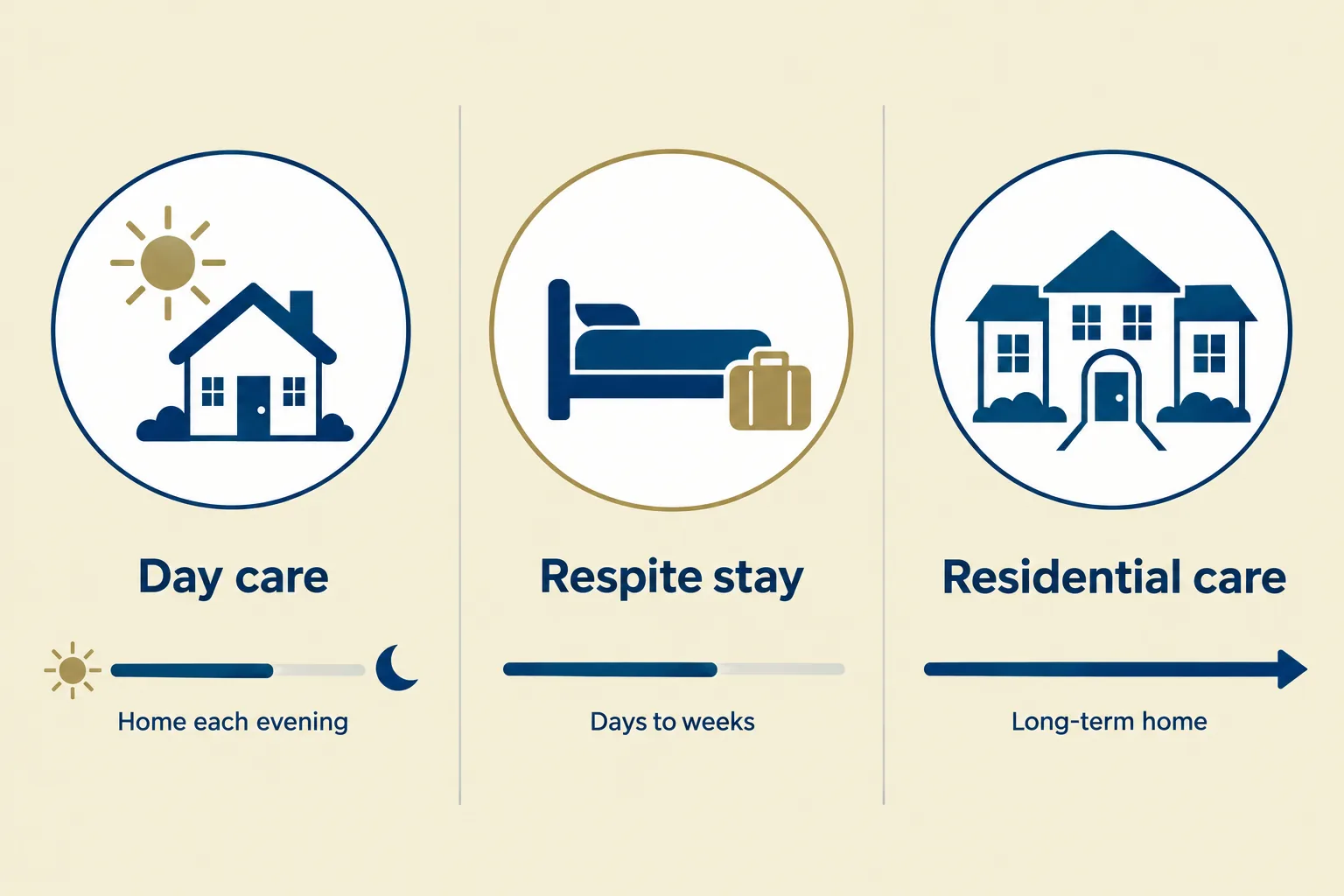
| Option | Typical arrangement | Questions to consider |
|---|---|---|
| Day care | A session during the day; the person returns home afterwards | Does the service offer the activities and support they need? |
| Home-care visits | A care worker visits the person at home for agreed tasks | Would support at home suit their routines better? |
| Respite stay | A temporary stay in a care home | Would a short stay provide the break or support the family needs? |
| Residential or nursing care | A move into a care home for ongoing accommodation and support | Have the person’s needs and preferences been discussed with providers and relevant professionals? |
The right option depends on the person’s assessed needs, preferences and available support. Our comparison of care at home and care in a care home explains the differences between those arrangements.
Oakland Care Day Care in West Sussex
Oakland Care offers day care at Oakland Court in Felpham and Oakland Grange in Littlehampton. Its day-care page currently lists a full-day session from 10am to 6pm for £95 and a half-day session from 10am to 2pm for £55.
The full-day listing includes morning and afternoon activities, lunch and supper; the half-day listing includes a morning activity and lunch. The page also says a no-obligation taster session can be arranged and that some excursions or direct services may cost extra. Confirm current fees, availability, dietary arrangements and support needs with the home before booking.
You can ask about day care at Oakland Court in Felpham or Oakland Grange in Littlehampton.
Related readingSpecial Offer – Oakland Care GroupRead the guide →Frequently asked questions
Is adult day care the same as a care home?
Do all day-care services provide meals or personal care?
Can a family arrange a taster session at Oakland Care?
Key Takeaways
| Question | Short answer |
|---|---|
| What may happen during a day? | Activities, social time, meals and support depend on the provider. |
| Are meals included? | Check the service’s current offer and fee details. |
| What support is available? | Personal care and medication support vary by service. |
| What does it cost? | Fees vary; ask for a breakdown of sessions, meals, transport and extras. |
| How can families explore funding? | Ask the local authority about assessments and check current benefit eligibility. |
| How may it help a carer? | It may provide planned time away while the person attends a service. |
For some older people, day care offers a way to spend time with others and receive daytime support while continuing to live at home. Suitability depends on the person and the service.
Talk to Oakland Care About Day Care and Short Stays
If you are exploring daytime support, speak with the relevant home about current availability, the support offered and whether a taster session is suitable. Contact Oakland Care to arrange a conversation or visit.