
Care home fees are absolutely brutal. But here’s something most people don’t know – there’s actually a way to protect a massive chunk of your house value using something called tenants in common to avoid care home fees.
It’s completely legal, has been around for ages, and could literally save your family hundreds of thousands. The problem? Hardly anyone knows about it because, frankly, it’s not in certain people’s interests to tell you.
What’s All This “Tenants in Common to Avoid Care Home Fees” Stuff Then?
Right, so most couples own their house together as “joint tenants” – basically means you both own the whole thing. Sounds fair enough, but it’s actually terrible for care home planning because when the council comes sniffing around to see what you’re worth, they count the entire house value.
Tenants in common is different. You each own a specific bit – could be 50/50, could be 60/40, whatever works. The massive difference is that when one of you needs care, they can only look at your actual share, not the whole property.
Here’s a real example. Margaret and Frank had a £350,000 house. Frank developed Alzheimer’s and needed care. Under joint ownership, the whole £350,000 would’ve counted towards his means test. But they’d switched to tenants in common five years earlier, so only his £175,000 share mattered. Saved them a fortune.
The thing is, this has to be done way before you need care. Can’t just decide to do it when someone’s already poorly – the council will see right through that and ignore it completely.
How This Actually Saves You Money
The maths is pretty straightforward once you get your head around it. Care homes cost around £50,000 a year, sometimes more for specialist dementia care. If you’ve got assets over £23,250, you’re paying the lot yourself until you get down to that level.
Now, let’s say you’ve got a £400,000 house under joint ownership. Person needs care, council says “right, you’ve got £400,000 in property, start paying.” But if you’d restructured as tenants in common years ago, they can only count your 50% share – that’s £200,000. Massive difference.
Plus, here’s the clever bit. The other person still lives in the house, so their share is completely protected. It’s not like the whole place gets sold off to pay fees.
But you’ve got to be smart about timing. Local authorities are getting wise to people trying to shuffle assets around at the last minute. Generally speaking, if you do this within seven years of needing care, they might challenge it as deliberate deprivation of assets.

Getting the Legal Bit Sorted
You can’t just shake hands and call yourselves tenants in common. It needs proper legal paperwork through a solicitor who knows what they’re doing. Don’t try to bodge this yourself with some template you found online.
The solicitor will redraft your property deeds and update everything with the Land Registry. Usually takes a couple of months and costs anywhere from £500 to £2,000, depending on how complicated your situation is. Sounds like a lot, but compare that to care fees of £50,000+ per year.
They’ll also need to look at your wills because with tenants in common, you can leave your share to whoever you want. Some people get creative here and leave their bit to the kids in a trust rather than to their spouse. Adds extra protection but makes things more complicated.
Make sure your solicitor actually understands care fee planning, though. Plenty of them know property law but haven’t got a clue about the care funding side of things. Worth asking specific questions about their experience in this area.
Tax Stuff (It’s Not as Bad as You Think)
Everyone panics about taxes when you mention restructuring property ownership, but for most married couples, there’s usually no immediate tax hit. Transfers between spouses are generally exempt from capital gains tax and stamp duty.
Can get a bit more complicated if you’re not married, if your property’s gone up loads in value, or if you start involving trusts. But for straightforward cases, the tax implications are minimal.
One thing to watch – your buildings insurance might need updating. Some insurers get funny about tenants in common arrangements, so make sure you tell them. The last thing you want is a claim getting rejected because you didn’t update your policy.
Also, if you’ve still got a mortgage, the lender needs to know. Most are fine with it, but they like to be kept in the loop about changes to ownership.
Other Ways to Protect Your Cash
Tenants in common arrangements are brilliant, but they’re not the only game in town. Smart families often use several different strategies together because, let’s face it, you don’t want to put all your eggs in one basket.
Some people use immediate needs annuities – basically insurance products where you pay a lump sum and they guarantee to cover your care fees. Others look at whether care home vs nursing home options might work out cheaper, or explore care home vs home care to see if staying at home is viable.
The rules keep changing too. There are new rules for care home payments coming in, and people always ask about whether there’s a cap on care home fees in the UK. Staying on top of all this stuff is a full-time job.
Best approach is usually a mix of different strategies rather than relying on just one thing. Diversification and all that.
When Things Don’t Go to Plan
This stuff doesn’t always work perfectly. Local authorities are getting more aggressive about challenging asset protection arrangements, especially when the timing looks dodgy.
Sometimes, councils will argue that tenants in common arrangements are just paper exercises designed to avoid fees. Usually happens when people try to rush things through at the last minute, or when the arrangement doesn’t match what the family actually intended.
Family fallouts can also mess things up. If you and your co-owner have a massive row, being tied together in property ownership can get very messy indeed. It’s worth thinking about how well you get on with people before committing to shared ownership.
And sometimes the market just doesn’t cooperate. Property prices crash, interest rates go mental, the government changes all the rules – these things happen, and they can affect how well your strategy works.
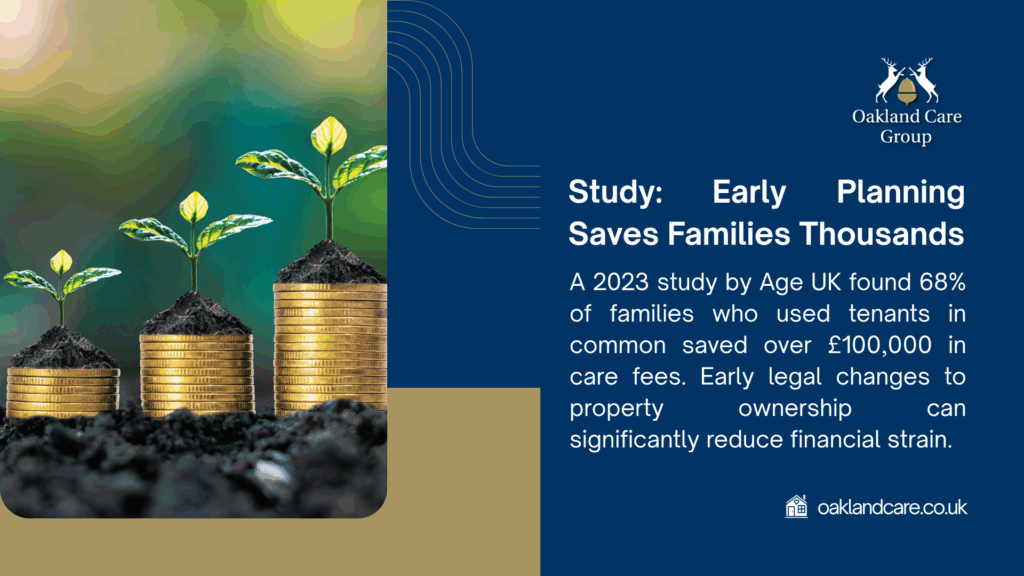
Getting the Timing Right
This is probably the most important bit – you’ve got to do this while everyone’s healthy and thinking clearly. Can’t wait until someone’s already showing signs of dementia or other health problems.
The seven-year rule is often mentioned, but honestly, the longer you can leave between restructuring and needing care, the better. Ten years is safer if you can manage it. Gives clear evidence that you were doing proper estate planning, not just trying to dodge care fees.
The process usually goes like this: Initial consultation to work out if it’s right for your situation, property valuation if needed (especially for unequal shares), legal paperwork and Land Registry updates, and then regular reviews to make sure everything’s still working properly.
Don’t leave this until you’re 85 and already wobbly on your feet. Do it in your 60s or early 70s when you’re still sharp and can make proper decisions.
What Can Go Wrong
Plenty, if you’re not careful. The most common mistake is waiting too long – people often only start thinking about care fee planning when health problems are already visible on the horizon.
Another issue is trying to do it on the cheap. Yes, proper legal advice costs money, but bodging this could cost you hundreds of thousands later. A false economy doesn’t begin to cover it.
Some people also assume this is a magic bullet that solves everything. It’s not. It’s one tool in the toolkit, but you need other strategies as well for proper protection.
And don’t believe anyone who tells you this is risk-free. No asset protection strategy is completely bulletproof, especially with councils getting more sophisticated about investigating arrangements.
Why Your Financial Adviser Might Not Know About This
It’s a bit awkward, this one. Many financial advisers and even solicitors don’t specialise in care fee planning, so they might not know about tenants in common strategies or might be nervous about recommending them.
Some worry about the reputational risk if things go wrong, even when the strategy is perfectly legitimate. Others just don’t keep up with developments in this area because it’s quite specialised.
That’s why it’s worth finding advisers who actually focus on care fee planning rather than generalists who do a bit of everything. They’ll know the current rules, local authority practices, and how different strategies work together.

Planning for Different Scenarios
What happens if both of you need care at the same time? What if property prices tank? What if the government changes all the rules overnight?
Good planning thinks about these scenarios upfront. Some families build in flexibility with trust arrangements that can adapt to changing circumstances. Others keep some assets liquid so they’re not completely dependent on property-based strategies.
Key is thinking through the “what ifs” before they happen, not trying to figure it out when everything’s already gone wrong.
Making This Work Long-Term
Care funding rules keep evolving, so whatever you set up today needs to be flexible enough to cope with changes. Build in review mechanisms and don’t assume what works now will work forever.
Annual check-ins with your adviser help spot when adjustments might be needed. Rules change, family circumstances change, property values change – your strategy needs to keep up.
Most successful families treat this as ongoing planning rather than a one-off transaction. Set it up properly, then keep an eye on it and tweak as needed.
| Key Success Factors | Why They Matter |
| Early planning | Avoids accusations of deliberate asset stripping |
| Professional advice | Complex rules need expert guidance |
| Family communication | Everyone needs to understand the arrangement |
| Regular reviews | Rules and circumstances change over time |
| Realistic expectations | No strategy is completely risk-free |
The Bottom Line
Using tenants in common to avoid care home fees isn’t some get-rich-quick scheme or dodgy tax fiddle. It’s a legitimate planning strategy that’s helped thousands of families protect their assets and preserve inheritance for their children.
But it requires proper planning, professional advice, and realistic expectations about what it can and can’t do. Most importantly, it needs to be done well before any care needs become apparent.
The families who benefit most are the ones who plan ahead, get proper advice, and treat this as part of a broader strategy rather than a magic solution to everything.
If you’re sitting there wondering whether your family could benefit from this approach, the answer is probably yes, but only if you act while there’s still time to do it properly.
