
Care home expenses have reached unprecedented levels across the UK, with residential care averaging £73,000 annually and nursing care costs climbing to £81,000 per year. Weekly fees typically range from £1,406 for residential care to £1,558 for nursing homes, creating significant financial pressure on families who have accumulated assets throughout their working lives.
Research indicates that one in four individuals will require care home accommodation during their final years, yet most families fail to consider the financial implications until circumstances force urgent decisions. Any estate planning conversation should start with a realistic view of what a care home actually costs in 2026, since the numbers shape every decision that follows.
With care home fees potentially reaching £52,000 annually or higher, the erosion of lifetime savings occurs rapidly, prompting many to explore protective measures, including the controversial deed of variation to avoid the care home fees approach.
Understanding Deeds of Variation
A deed of variation functions as a legal mechanism allowing beneficiaries to alter inheritance distributions after death occurs.
The document provides flexibility to redirect assets to different recipients, establish trusts, or modify existing arrangements within specific legal parameters. These instruments require execution within two years of death to maintain tax advantages and legal validity.
The legal framework surrounding deeds of variation establishes strict conditions for their implementation. Any beneficiary whose interest faces modification must possess full legal capacity and absolute entitlement to their inheritance.
Additionally, all parties affected by the variation must provide explicit consent to the proposed changes.
Essential Requirements for Deed Validity
| Requirement | Specification |
| Time Constraint | Completion within 24 months of death |
| Unanimous Consent | Agreement from all impacted beneficiaries |
| Legal Capacity | Participants must be over 18 with mental capacity |
| Tax Elections | Proper IHT/CGT elections must be filed |
| Formal Documentation | Correct witnessing and legal execution are required |
Using a Deed of Variation to Avoid Care Home Fees
Despite its apparent simplicity, employing a deed of variation to avoid care home fees creates significant legal vulnerabilities that extend beyond the immediate beneficiaries.
Legal experts consistently warn that such strategies rarely achieve their intended objectives while exposing families to substantial financial risks.
The fundamental challenge lies in local authority sophistication regarding asset transfer detection. Care funding assessments scrutinize historical financial movements, particularly those occurring shortly before or after care needs arise.
When authorities identify inheritance redirections designed to reduce assessable assets, they frequently classify these actions as deliberate deprivation.
Deprivation of Assets Consequences
Local authorities maintain extensive powers to address deliberate asset deprivation, including the authority to treat transferred assets as if they remain under the original beneficiary’s control.
This “notional capital” concept means that redirected inheritance continues affecting care fee calculations despite legal ownership changes.
The implications extend to inheritance recipients who may face direct liability for care costs. Authorities possess legal mechanisms to pursue asset recovery from individuals who received diverted inheritance, creating dual financial exposure for families attempting to protect their wealth.
Current Care Fee Structure and Assessment Criteria
The UK care funding system operates through clearly defined asset thresholds that determine individual contribution requirements. For 2025-2026, the upper capital limit remains at £23,250, with a lower threshold of £14,250 establishing the framework for means-tested support.
Asset Threshold Impact on Care Contributions
| Asset Range | Financial Responsibility |
| Below £14,250 | Income-based contributions only |
| £14,250 – £23,250 | Income plus weekly tariff of £1 per £250 assets |
| Above £23,250 | Complete self-funding obligation |
Property ownership typically elevates total assets beyond the upper threshold, necessitating full self-funding for most homeowners. This reality drives families to consider protective strategies, even when such approaches carry substantial legal risks.
Regional Cost Disparities
Care expenses vary dramatically across UK regions, intensifying financial pressures on families.
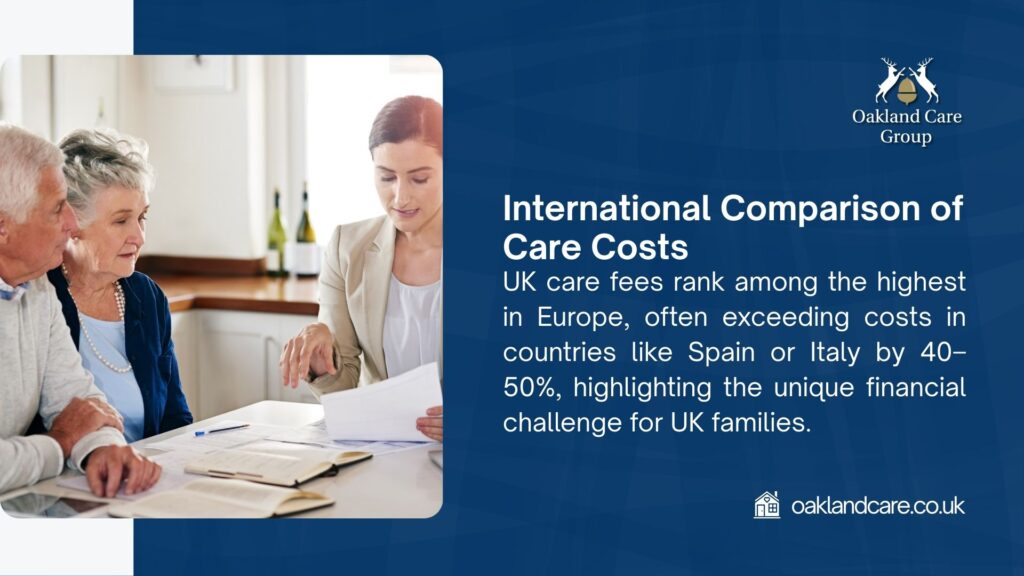
Northern England typically offers more affordable options, with residential care averaging £1,076 weekly in the North East, compared to London’s £1,710 weekly average. This £634 differential translates to annual differences exceeding £30,000.
Legal Risks Associated with Care Fee Avoidance
Attempting to use a deed of variation to avoid care home fees exposes families to multiple legal challenges that can persist for extended periods.
Local authorities employ experienced assessors who examine timing, circumstances, and motivations surrounding asset transfers with particular scrutiny.
Assessment Factors for Deprivation Determination
Authorities evaluate several key elements when investigating potential asset deprivation:
- Temporal relationship between inheritance variation and care needs assessment
- Availability of alternative motivations for the redistribution decision
- Evidence of family discussions regarding care cost avoidance strategies
- Financial circumstances necessitate care funding support
Recovery Powers and Enforcement
When deliberate deprivation is established, local authorities possess significant recovery powers that extend beyond the original beneficiary. These powers include direct pursuit of care costs from inheritance recipients and the authority to disregard asset transfers when calculating ongoing care contributions.
The enforcement mechanism creates compound liability scenarios where families face care fee obligations while lacking access to assets that generated the liability. This particularly problematic outcome often exceeds the financial impact of conventional care funding arrangements.
Legitimate Care Planning Alternatives
Rather than risking problematic deed of variation strategies, families should explore established protective mechanisms that comply with care funding regulations while achieving meaningful asset protection.
Property Trust Arrangements
Life interest trusts provide robust protection for property assets when implemented correctly. These arrangements require property ownership conversion to tenants in common status, combined with appropriately structured wills that create protective trusts upon the first death.
The mechanism operates by:
- Establishing separate ownership interests in jointly-owned property
- Creating life interest provisions that protect the deceased’s share
- Maintaining residence rights for the surviving spouse
- Limiting care fee liability to the survivor’s property interest only
Families interested in this approach should explore tenants in common arrangements to avoid care home fees and investigate putting property in trust to avoid care home fees.
Advance Planning Strategies
Effective care fee protection requires proactive implementation well before care needs arise. Asset protection services achieve optimal results when families engage with planning while all parties maintain full capacity and good health.
Strategic planning components include:
- Property restructuring through ownership modification
- Trust-based protection via properly drafted wills
- Asset diversification into care-exempt categories
- Income optimization to maximize retained funds
Professional Advisory Services
Care fee planning complexity demands specialist expertise that extends beyond conventional estate planning. Professional advisors assess individual circumstances and recommend compliant strategies that balance protection objectives with regulatory requirements.
Care Funding Options and Support Mechanisms
Before pursuing risky approaches like deed of variation to avoid care home fees, families should thoroughly understand available funding support that can substantially reduce personal financial exposure.
NHS Continuing Healthcare
NHS Continuing Healthcare provides comprehensive funding for individuals whose care needs qualify as primarily health-related rather than social care requirements. This funding source covers complete care costs regardless of personal asset levels, making qualification extremely valuable for eligible individuals.
Assessment criteria focus on:
- Primary health needs requiring specialized medical intervention
- Complex care requirements necessitating qualified nursing support
- Unpredictable conditions requiring continuous professional oversight
Local Authority Support Mechanisms
Even individuals with modest assets may qualify for partial local authority support that reduces overall care costs. Understanding funding mechanisms helps families make informed decisions about care options and financial planning strategies.
Additional considerations include:
- Responsibility of next of kin for care home fees
- Options when funding is exhausted for care home fees
- Application of seven-year rule to care home fees
Financial Impact of Care Costs
The substantial expenses driving families to consider deeds of variation to avoid care home fees reflect broader challenges within UK care funding systems. Specialized care requirements, particularly for dementia-related conditions, command premium rates that can rapidly deplete family resources.
Care Cost Analysis by Service Type
| Care Category | Weekly Cost | Annual Cost |
| Standard Residential | £1,406 | £73,112 |
| Nursing Care | £1,558 | £81,016 |
| Dementia Residential | £1,449 | £75,348 |
| Dementia Nursing | £1,683 | £87,516 |
These figures demonstrate why advance planning becomes essential for families seeking to preserve inheritance while ensuring appropriate care quality.
