
The right games for elderly adults don’t just pass the time. They protect independence, encourage connection, and quietly support cognitive and emotional health at every stage of later life.
This guide examines games for elderly adults with a clear, practical lens. It addresses what works at home, in care settings, and in assisted living, with attention to memory, mobility, motivation, and dignity. The focus stays on enjoyment that serves a purpose, not busywork.
What are Games for Elderly?
Games for elderly adults sit at the crossroads of enjoyment and purpose. When chosen thoughtfully, they offer more than entertainment. They bring rhythm to long days, spark conversation, and reinforce a sense of identity that often fades with age.
Not every older adult enjoys the same pace or style of play, which is why the phrase games for elderly covers a wide range of experiences. Some prefer calm, familiar routines, while others still enjoy mental challenge. The most effective games for elderly people adapt to ability rather than forcing engagement, creating moments of satisfaction instead of pressure.
Why Games Matter More as We Age
Ageing changes how the brain processes information, but it does not remove the need for stimulation. In fact, it increases it. Cognitive engagement supports attention, emotional regulation, and motivation, all of which tend to decline when daily life becomes repetitive.
Research on Aging shows that older adults who engage in mentally stimulating activities and cognitive training can experience slower declines in cognitive skills such as processing speed compared with those who do not.
Research shows that social activities, including games and group engagement, can help reduce feelings of isolation among older adults and support overall well-being.
When games become part of a routine, they offer structure, reduce anxiety, and provide a sense of achievement that many older people quietly miss.
Memory Games for Seniors That Support Cognitive Health
Memory games for seniors work best when they balance challenge and familiarity. Word recall, pattern recognition, and simple strategy activate different areas of the brain. Familiar formats such as word games for seniors or easy trivia for seniors often outperform novelty-heavy options because recognition feels safe and rewarding.
Research explains that regularly challenging the brain through mentally stimulating activities such as reading, puzzles, or social engagement helps build cognitive reserve, which is linked to slower memory and thinking decline even as dementia develops.
| Game Type | Primary Cognitive Benefit | Suitable Setting | Difficulty Range |
| Word association | Language recall and focus | Home or care home | Low to medium |
| Trivia for seniors | Long-term memory access | Group settings | Low |
| Picture matching | Visual recognition | Nursing home | Low |
| Number puzzles | Logical sequencing | Independent home | Medium |
Sit-Down Games for Senior Citizens With Limited Mobility
Sit-down games for senior citizens support participation without demanding physical effort. For older adults with arthritis, balance concerns, or fatigue, seated play offers dignity and inclusion. Table-based activities such as card games, dominoes, and senior word games, free of time pressure, encourage engagement while respecting physical limits. These games for elderly adults also reduce frustration, as they allow players to participate at their own pace rather than competing against the clock.
| Game Type | Primary Benefit | Suitable Setting | Physical Demand |
| Card games | Focus and social interaction | Home or care home | Minimal |
| Dominoes | Pattern recognition | Group settings | Minimal |
| Tabletop puzzles | Problem-solving | Home | None |
| Verbal word games | Language stimulation | Nursing home | None |
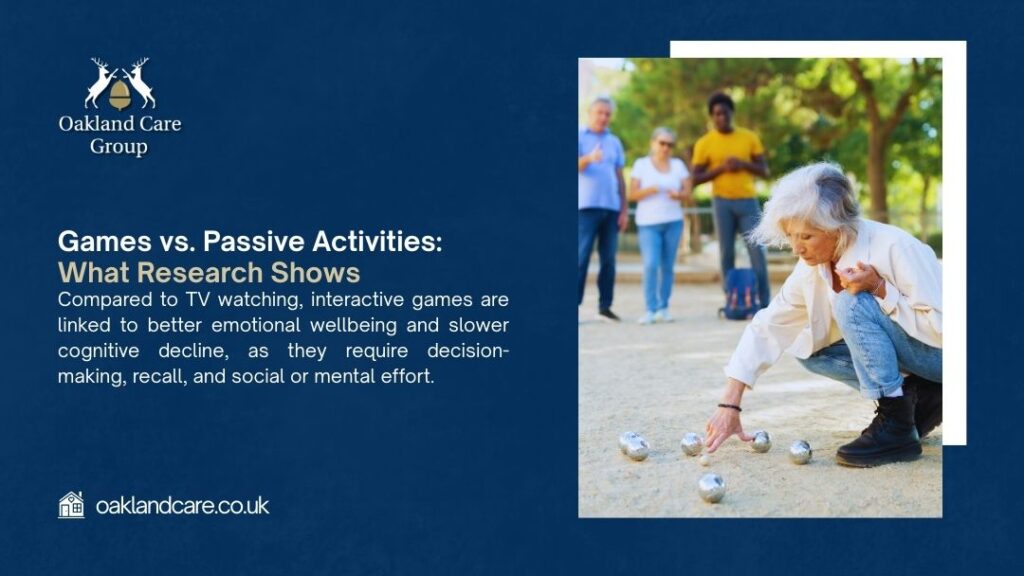
Group Games for Seniors in Care Homes and Social Settings
Group games for seniors succeed when they feel welcoming rather than performative. In care homes, group games for elderly residents often work best in smaller numbers, where voices are heard, and pacing remains calm.
Familiar formats such as adapted trivia for seniors or gentle party games for senior citizens encourage participation without embarrassment. When facilitated well, these care home activities strengthen social bonds, reduce withdrawal, and create shared moments that improve the overall atmosphere within communal spaces.
| Game Type | Social Benefit | Group Size | Noise Level |
| Trivia sessions | Shared memory and conversation | Small to medium | Low |
| Name association games | Confidence building | Small | Low |
| Story-based games | Emotional expression | Small | Low |
| Seated group challenges | Cooperative engagement | Medium | Moderate |
Games for Elderly to Play Alone at Home
Not every older adult seeks group interaction every day. Games for elderly to play alone offer independence and quiet satisfaction. Free games for seniors to play alone, such as puzzles for elderly adults or senior solitaire, support focus while respecting personal space. Offline options matter, especially where internet access feels unreliable or frustrating.
| Solo Activity | Mental Benefit | Time Commitment | Equipment |
| Crossword puzzles | Vocabulary retention | 15–30 minutes | Paper or tablet |
| Free puzzles for seniors | Visual reasoning | Flexible | Puzzle book |
| Senior word games | Recall and fluency | Short sessions | Cards or print |
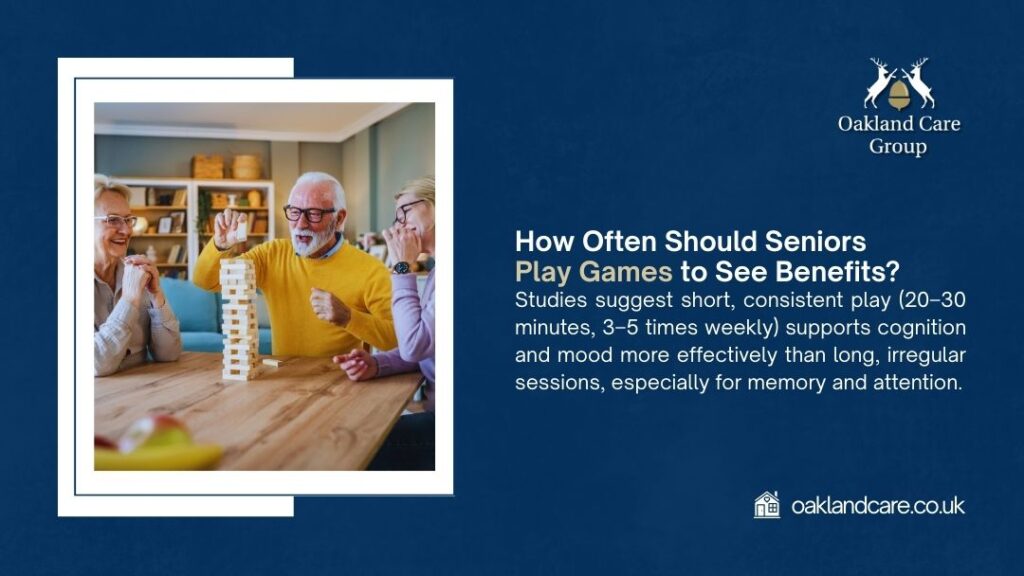
Online and Digital Games for Older Adults
Online games for seniors can be effective when technology feels accessible rather than intimidating. Free online games for seniors often work best when interfaces stay uncluttered, and rules remain simple.
Digital brain games for elderly users can motivate daily engagement, especially for those already comfortable with tablets or computers. Still, digital play should complement, not replace, real-world interaction. Choice matters, and forcing technology often leads to frustration rather than benefit.
| Digital Game Type | Cognitive Benefit | Best Device | Suitability |
| Online puzzles | Problem-solving | Tablet | Independent seniors |
| Word games online | Language retention | Tablet or PC | Mild decline |
| Matching apps | Visual memory | Tablet | Assisted living |
| Simple strategy games | Attention control | PC | Tech-comfortable users |
Games for Elderly in Nursing Homes and Assisted Living
Games for elderly in nursing homes require careful adaptation. Sensory sensitivity, reduced attention span, and emotional vulnerability shape what works. Activities based on repetition and recognition often feel safest.
Research shows that structured activities, including games, music, and movement, can improve engagement, mood, and quality of life for older adults in care settings, and providing meaningful daily routines is associated with reduced anxiety and agitation among people with memory-related challenges.
| Game Type | Therapeutic Value | Suitable Environment | Complexity |
| Recognition games | Emotional reassurance | Nursing home | Low |
| Sensory-based games | Stress reduction | Dementia care | Low |
| Repetitive card games | Routine reinforcement | Assisted living | Low |
| Music-based quizzes | Memory and mood | Group lounges | Low |
How to Choose the Right Games for Elderly Loved Ones
Choosing games for elderly loved ones works best when personal history leads the decision. A former accountant may enjoy number-based puzzles, while someone with a teaching background may prefer word games for seniors. Energy levels fluctuate, so flexibility matters. Games should invite participation, not demand it. Consider eyesight, hearing, patience, and confidence. A good game feels achievable on a tired day and engaging on a good one.
Common Mistakes Families Make When Choosing Games
One common mistake involves choosing games that feel childish. Older adults recognise this immediately and often disengage. Another issue lies in overstimulation. Too many options create fatigue and confusion. Games for elderly people work best when they feel familiar, respectful, and optional. Progress happens through consistency, not novelty.
The Link Between Activities, Wellbeing, and Care Quality
Activities for the elderly influence well-being in ways that extend beyond enjoyment. Regular engagement links to reduced agitation, improved sleep, and higher reported satisfaction. Many care providers track participation as part of quality indicators because engaged residents often require less emotional intervention.
Thoughtfully chosen games for elderly adults also reduce operational strain, save staff time, and support long-term wellbeing outcomes. Over time, this balance between engagement and calm creates environments where older people feel valued rather than managed.
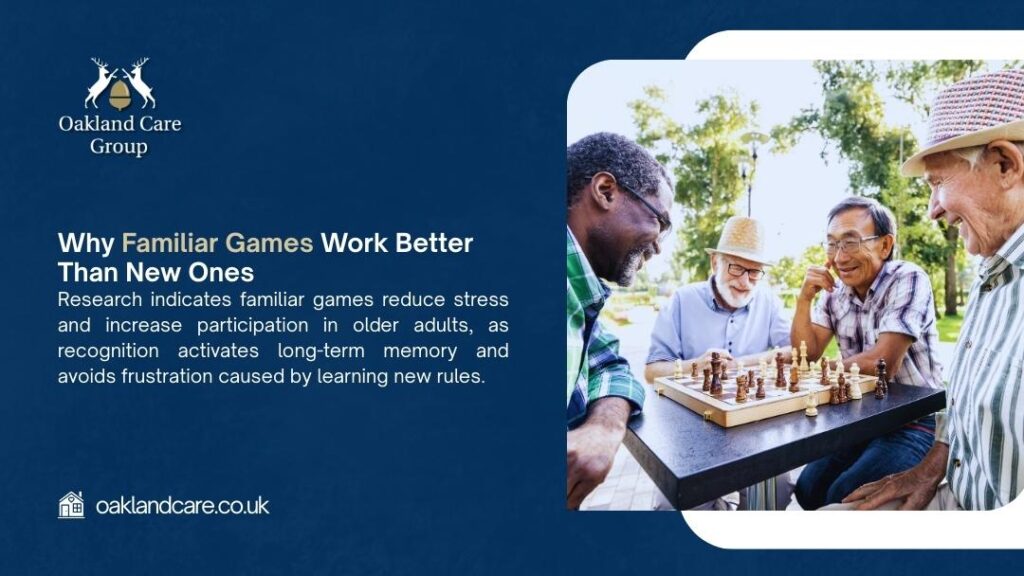
Conclusion
Games for elderly adults work best when they fit real lives. Consistency matters more than complexity. Whether at home or within professional settings, thoughtful activities help older people stay connected to themselves and others.
Families exploring structured support often look for clear direction on how to choose a care home that values engagement alongside comfort. For those seeking local options, exploring supportive environments such as a care home in Littlehampton or nearby communities can help align daily life with meaningful activity.
If you’re planning next steps, reviewing advice on moving into a care home and understanding how activity planning fits within daily routines can clarify decisions. Games for elderly people aren’t about passing time. They’re about preserving purpose, one shared moment at a time.
