
“I had no idea we could still claim benefits while paying for care ourselves.” This is what Sarah told me last month about her mother’s care home situation. If you’re reading this, you might be wondering the same thing – what benefits can you claim if you are in a care home and self-funding?
The reality is that many families miss out on thousands of pounds in benefits simply because they don’t know what’s available. When you’re already facing weekly care home fees that can range from £600 to well over £1,000, every bit of financial help makes a difference.
Understanding What Benefits You Can Claim If You Are in a Care Home and Self-Funding
Let’s start with the basics. When you’re self-funding, you’re paying the full cost of care without local authority support. But you can claim some benefits during your stay in a care home if you pay for all of your care yourself.
The key difference is that many benefits continue when you’re self-funding, whereas they often stop if the council is paying for your care. It’s a bit backwards, isn’t it? The very people who can afford to pay privately get to keep more benefits than those who need council support.
Attendance Allowance
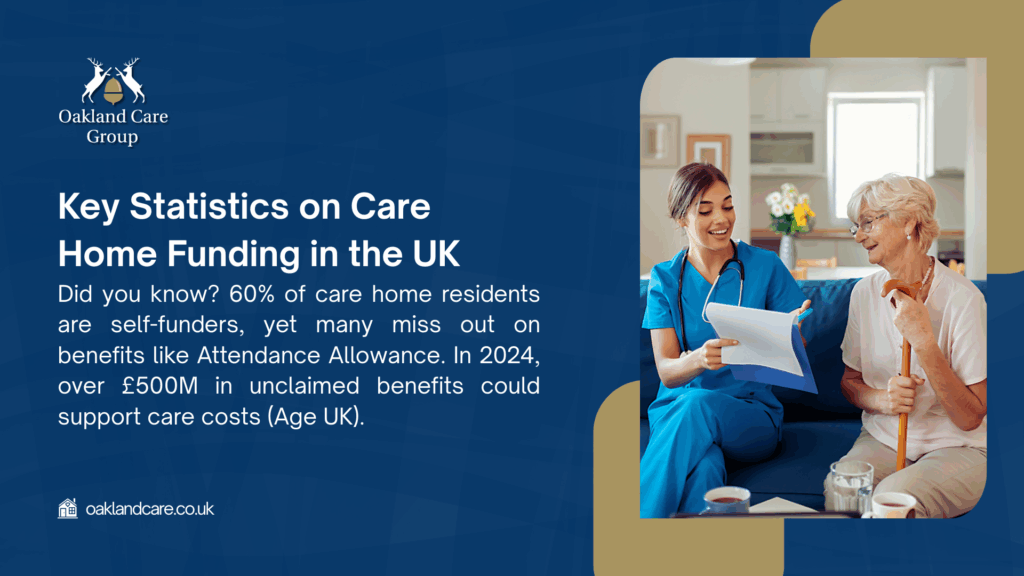
Attendance Allowance is a non-means-tested benefit for people over 65 who need help with personal care due to illness or disability. This is often the most significant benefit available to self-funders.
Here’s what you need to know:
| Attendance Allowance Rates (2024/25) | Amount |
| Lower rate (day or night care needed) | £72.65 per week |
| Higher rate (day and night care needed) | £108.55 per week |
If you live in a care home and are self-funding, you can continue getting Attendance Allowance. However, if you are receiving funding from your local authority, you will receive AA for the first 28 days only.That higher rate works out to over £5,600 a year – not an insignificant amount when you’re paying for care home fees yourself.
Personal Independence Payment (PIP) for Younger Self-Funders
Personal Independence Payment (PIP) is for people aged 16 to 64 who have long-term health conditions or disabilities. If you moved into care before reaching state pension age, this could apply to you.
PIP has two components:
- Daily living component (for help with everyday tasks)
- Mobility component (for getting around)
The beauty of PIP is that it’s not means-tested, so your ability to pay for care doesn’t affect your entitlement.
NHS Funding Options for Self-Funders
This is where things get really interesting, and potentially very valuable.
NHS Continuing Healthcare – The Holy Grail
NHS continuing healthcare is a package of care for people who are assessed as having a ‘primary health need’. If you receive NHS continuing healthcare in a care home, the NHS pays your care home fees.
Yes, the entire cost, including accommodation. If you receive care in your own home the NHS covers the cost of the care and support you need to meet your assessed health and associated care needs, which includes personal care such as help with washing and getting dressed.
The challenge is that eligibility isn’t based on whether you have a specific health condition. Instead, assessors look at:
- The complexity of your health needs
- The intensity of your condition
- How unpredictable your needs are
- Whether your needs are primarily health-related rather than social care
It’s worth fighting for this funding. We’ve seen families save £65,000+ per year when they successfully get NHS Continuing Healthcare approved.
NHS-Funded Nursing Care – A Guaranteed Contribution
If you don’t qualify for full NHS Continuing Healthcare but you’re in a nursing home, you’re likely entitled to NHS-Funded Nursing Care. NHS-funded nursing care is when the NHS pays for the nursing care component of nursing home fees. The NHS pays a flat rate directly to the care home towards the cost of this nursing care.
On 1 April 2025, the rate was set at £254.06 a week (standard rate). That’s over £13,000 a year knocked off your care home bills automatically if you qualify.
The brilliant thing about this funding is that NHS-funded nursing Care is available irrespective of who is funding the rest of the care home fees. So even as a self-funder, you get this contribution.
Other Financial Support Available
There is other funding available.
Pension Credit
Pension Credit is a means-tested benefit, evaluating various income sources, including State Pension, other pensions, earnings from employment and self-employment, and social security benefits.
While it’s means-tested, the income thresholds might still allow some self-funders to qualify, especially if most of their capital is tied up in property.
Council Tax Reduction
Don’t forget about council tax on your previous home if you still own it. You might be eligible for a reduction or exemption, particularly if the property is empty while you’re in care.
Property-Related Benefits
If you’ve retained ownership of your home (perhaps because your spouse still lives there), you might be eligible for:
- Housing benefit (if applicable)
- Warm home discount scheme
- Council tax support

What Happens When Benefits and NHS Funding Interact?
If you receive NHS Continuing Healthcare in a nursing home, Attendance Allowance, and both parts of Disability Living Allowance and PIP, stop after 28 days from when NHS funding starts.
It might seem unfair, but the logic is that the NHS is now covering all your care needs, so individual disability benefits become redundant.
However, if you live at home and receive NHS Continuing Healthcare, you can keep getting these disability benefits.
How to Navigate the Benefits System as a Self-Funder
Getting these benefits isn’t always straightforward. Here’s what I’ve learned from helping families through this process:
- Start early: Don’t wait until you’re established in care. Some benefits can be backdated, but others can’t.
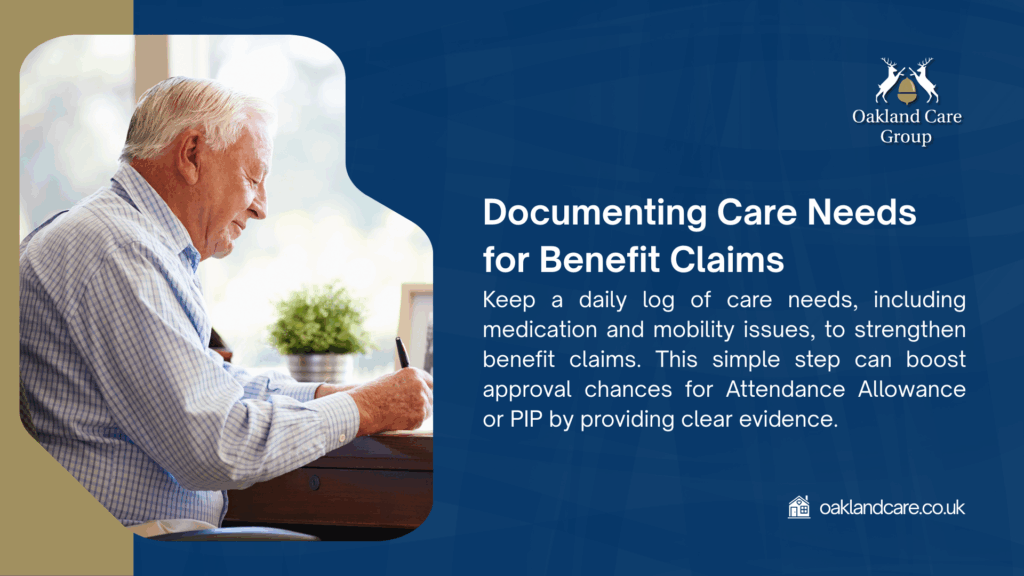
- Keep detailed records: Document all health conditions, care needs, and how they affect daily life. This information is crucial for benefit applications.
- Don’t be put off by initial rejections: Many valid claims are rejected the first time around. The appeals process exists for a reason.
- Get professional help: Benefits advisors who specialize in care funding can be worth their weight in gold. They know the system inside out.
| Key Benefits for Self-Funders | Eligibility | Potential Value |
| Attendance Allowance | Over 65, needs personal care | Up to £5,644/year |
| NHS-Funded Nursing Care | In a nursing home | £13,211/year |
| NHS Continuing Healthcare | Primary health need | Full care costs |
| PIP | 16-64, long-term conditions | Varies |
What to Consider
When you’re looking at care options, factor in potential benefit entitlements. A more expensive nursing home might actually cost less overall if you qualify for NHS-funded nursing care.
Similarly, if there’s any possibility of qualifying for NHS Continuing Healthcare, it’s worth exploring nursing homes that can provide the level of medical support that might strengthen your case.
Remember, is there a cap on care home fees UK? Currently, there isn’t – which makes maximizing your benefit entitlements even more crucial for long-term financial planning.
Common Misconceptions About Benefits for Self-Funders
- “We earn too much to qualify for anything” – This isn’t true for non-means-tested benefits like Attendance Allowance.
- “If we’re paying privately, we can’t get NHS funding” – Wrong. NHS-funded nursing care is available regardless of who pays the rest.
- “It’s too complicated to bother with” – Yes, it’s complex, but the potential savings are enormous. Even getting just Attendance Allowance covers about 10-15% of typical care home fees.
The Role of Financial Assessments
Even as a self-funder, you may want to have a financial assessment done. This isn’t just about getting council funding – it can help identify benefit entitlements you might not have considered.
Plus, if your capital drops below £23,250, you’ll want the council assessment process already in motion. It’s better to be prepared than scrambling when money gets tight.
Maximizing Your Benefit Entitlements
Here’s a strategic approach to getting what you’re entitled to:
Step 1: Apply for Attendance Allowance or PIP immediately if you haven’t already. These can often be backdated.
Step 2: If you’re in a nursing home, ensure NHS-funded nursing care is being claimed. The care home should initiate this, but don’t assume they have.
Step 3: Request an NHS Continuing Healthcare assessment if there’s any possibility you might qualify. The worst they can say is no.
Step 4: Review all other potential benefits annually. Circumstances change, and new entitlements may arise.
Special Considerations for Tenants in Common
If you’ve arranged your property ownership as tenants in common to protect assets, this might affect your benefit entitlements in complex ways. The interaction between property ownership structures and benefit rules requires specialist advice.
When to Seek Professional Help
If you’re dealing with multiple health conditions, complex financial arrangements, or if initial benefit applications have been rejected, professional help becomes invaluable. Look for advisors who specialize in:
- Care funding
- Benefit entitlements for older people
- NHS funding applications
The money you might save often far exceeds the cost of professional advice.
Changes and Reviews
Benefit rates change annually, usually in April. NHS funding rates also change, typically upward. Keep track of these changes as they might affect your overall care funding strategy.
Also, remember that benefit entitlements should be reviewed whenever your care needs change significantly. What you’re entitled to today might be different in six months if your health deteriorates or improves.
